How to Keep Squirrels Out of Your Garden (Without Losing Your Mind or Your Tomatoes)
A practical, step-by-step plan for protecting vegetables, bulbs, containers and bird feeders from squirrels, using barriers, smart cleanup, repellents and a little psychology.
Table of Contents (tap to open)
- Why Squirrels Love Your Garden
- Step 1: Confirm It Is Squirrels
- Step 2: Remove the Free Buffet
- Step 3: Build a Wire Barrier
- Step 4: Net Beds and Containers
- Step 5: Protect Bulbs and Seedlings
- Step 6: Use Scent and Taste Repellents
- Step 7: Baffle the Bird Feeders
- Step 8: Add Motion Deterrents
- Plants Squirrels Avoid
- Methods Compared
- Seasonal Game Plan
- FAQs
- Conclusion
You water, weed and wait for weeks. Then one morning the first ripe tomato is sitting on the lawn with a single neat bite taken out of it, and the tulip bed looks like a small excavation crew passed through overnight. If that sounds familiar, you are in very good company. Squirrels are clever, athletic and relentlessly motivated, and a garden is the best restaurant in the neighborhood.
The good news is that you do not have to surrender. Keeping squirrels out of a garden is far less about one miracle product and far more about stacking a few simple layers: take away the easy food, block the access points, make the remaining targets unpleasant, and keep the animals slightly unsure about your yard. This guide walks through each layer as a numbered step, with diagrams, so you can build a defense that actually holds up through the whole growing season.
Why Squirrels Love Your Garden (and Why They Keep Coming Back)
Before you buy anything, it helps to understand what you are up against. A squirrel is not being malicious when it chews through a pumpkin. It is solving a daily problem: find calories, store calories, repeat. Your garden happens to be an enormous, well-labeled pantry that is watered for free.
They are driven by three things
Food. Ripe tomatoes, strawberries, sweet corn, peaches, sunflower heads, squash seeds and freshly planted bulbs all rank high. Fruit also doubles as a water source during dry spells, which is why you often see damage spike in the hottest weeks.
Caching. Gray and fox squirrels bury nuts and seeds in hundreds of small spots each autumn. Loose, freshly turned garden soil is ideal for digging, so your containers and beds get used as storage lockers. Many of those little holes have nothing to do with hunger at all.
Safe routes. Squirrels like travel corridors: fence tops, branches, rooflines, wires and the edges of decks. If your garden sits near any of these, it is effectively on their commuter route.
Why they are so hard to beat
Squirrels have excellent memory, remarkable balance and the ability to jump several feet from a standing start. They also learn quickly. A deterrent that works for three days can become background noise on day four if nothing bad ever follows it. That is the single biggest reason people say “nothing works.” In reality, most single tactics fail, while combinations work well.
If you are still setting up your growing space, it is worth reading our walkthrough on how to start a vegetable garden with protection in mind, because planning barriers at the design stage is much easier than retrofitting them later.
Start with the basics: sturdy wire mesh and garden netting are the backbone of almost every squirrel defense.
Shop Garden Wire Mesh on AmazonConfirm It Is Actually Squirrels
Rabbits, chipmunks, raccoons, voles, birds and even your own dog can leave damage that looks similar at first glance. Spending ten minutes on diagnosis saves you from buying the wrong solution. Walk your garden at dawn or dusk, when most feeding happens, and look for these clues.
Telltale squirrel signs
- Half-eaten fruit left in plain sight. Squirrels sample, drop and move on. Bite marks are usually clean, with visible incisor grooves.
- Small, shallow holes about two to three inches wide. Often one or two per spot, and the soil around them is scattered a little. Sometimes there is a dent where a nut was pressed in and covered.
- Bulbs missing without a trace. Crocus and tulip bulbs vanish, and the hole looks freshly dug rather than gnawed.
- Snipped stems and clipped flower buds. Squirrels can nip off tender tips and flower heads, sometimes dropping them whole.
- Shredded bark or torn pot liners. They may strip bark for nesting material and pull coir liners out of hanging baskets.
- Plant debris scattered on patios and decks. This usually points to a squirrel working through containers overhead.
Clues it is something else
Ragged, angled cuts on young stems often mean rabbits. Whole plants pulled under the soil can be voles. Large messy digging with overturned turf is typically raccoons or skunks hunting grubs. Cleanly stripped corn with husks peeled neatly is classic raccoon or squirrel behavior, so look at other evidence too.
Wear sturdy gloves while you inspect and repair damage; compost, soil and wildlife droppings can carry bacteria. Our roundup of the best gardening gloves will help you pick a pair that holds up through the whole routine.
A weatherproof trail camera takes the guesswork out of identifying garden visitors.
Browse Trail Cameras on AmazonRemove the Free Buffet Around Your Garden
The cheapest and most overlooked tactic is also the most effective: stop feeding squirrels by accident. Every nut, seed and windfall in your yard teaches them that the property is a reliable food source. If you remove the easy stuff, the garden becomes less attractive by comparison.
Your cleanup checklist
- Pick up fallen fruit and nuts daily. This applies to apples, plums, peaches and any tree nuts. Fermenting fruit draws them in quickly.
- Harvest on time. Pick tomatoes just as they blush, then ripen them on the counter. Squirrels often go for fruit at the exact moment of peak color.
- Sweep seed from beneath feeders. Spilled sunflower hulls and seed make a daily snack bar. Use seed catchers or choose no-mess blends.
- Secure compost and trash. Use a lidded compost bin or tumbler, and bury food scraps deep inside the pile. Keep garbage lids locked down.
- Store pet food and birdseed indoors. Metal bins with tight lids work far better than plastic bags in a shed.
- Cut back overhanging branches. Aim for at least six to eight feet between tree limbs and fences, roofs or garden structures.
Water matters too
In hot, dry weather squirrels often chew fruit for the moisture rather than the sugar. Offering a shallow dish of water in a far corner of the yard, away from your vegetables, can reduce the pressure on tomatoes and melons. It sounds counterintuitive, but giving them a better option works surprisingly well.
If you grow in tight spaces, cleanup is even more important, since a single dropped tomato on a balcony is a loud invitation. Our guide to growing tomatoes on a balcony covers harvest timing and container care that fits neatly with this step.
Lidded metal bins and sturdy compost tumblers keep scraps out of reach.
See Compost Bins on AmazonBuild a Wire Barrier That Squirrels Cannot Beat
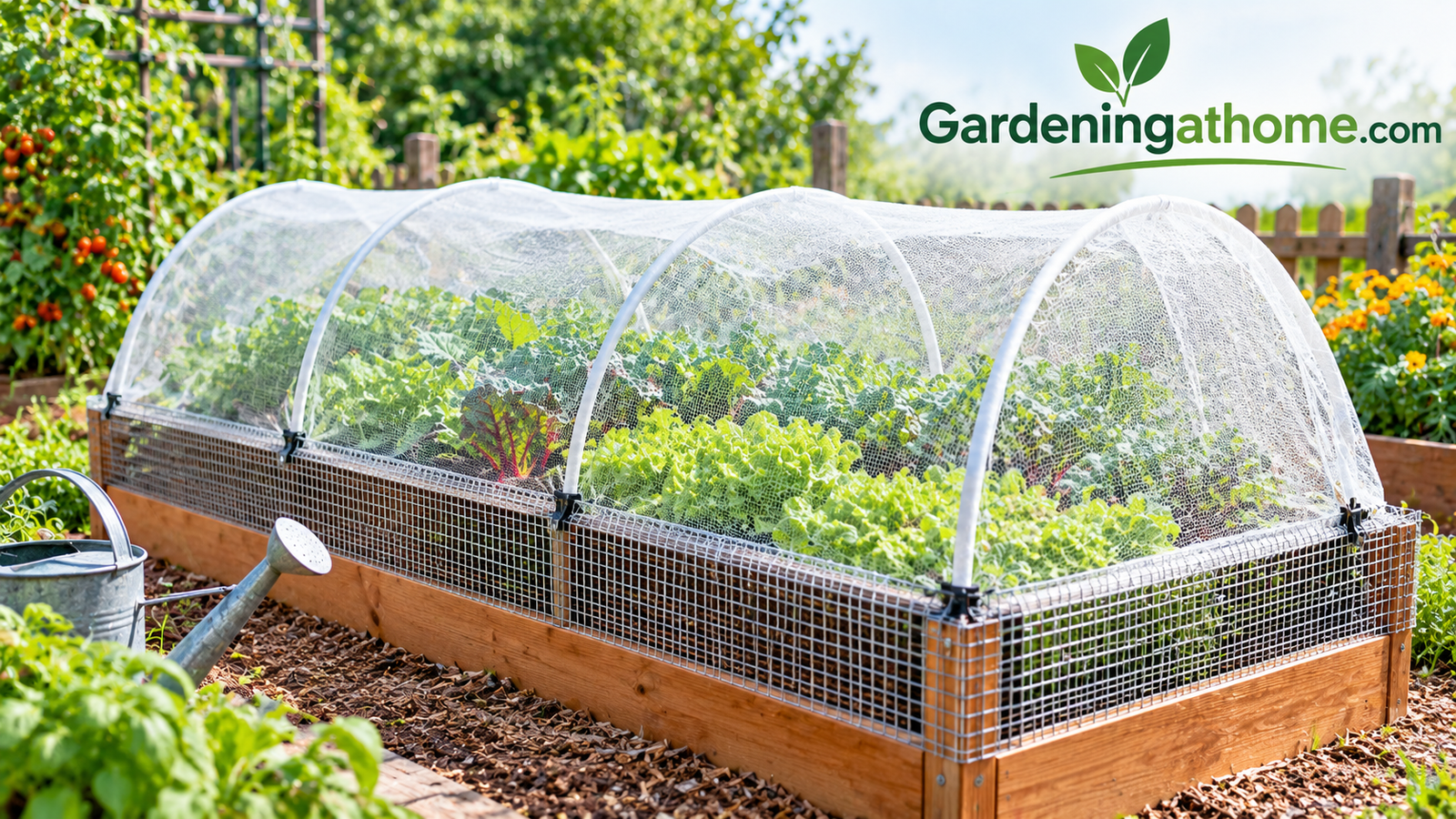
Physical exclusion is the most reliable answer for valuable crops. No scent, sound or spray outperforms a well-built barrier. The trick is to match the material and design to how squirrels actually behave: they climb, they squeeze through small gaps and they dig under edges.
Choosing the right material
Hardware cloth (galvanized welded wire with half-inch openings) is the gold standard. Chicken wire is cheaper but has larger hexagonal gaps and flexes easily, so determined squirrels can tear or squeeze through it. Vinyl-coated mesh lasts longer in wet climates.
How to build it
- Frame the perimeter. Use wooden posts or metal stakes every four feet. For raised beds, you can staple mesh directly to the bed frame.
- Add a buried skirt. Dig a shallow trench six to twelve inches deep. Bend the bottom of the mesh outward in an L shape, away from the bed, and backfill. When a squirrel starts to dig at the base, it hits wire rather than soil.
- Make the top difficult. Squirrels climb mesh like a ladder and go over the top. Either roof the whole structure or fold the upper foot of mesh outward at a 45-degree angle so it is awkward to climb.
- Build in a hinged door. You still need access for watering and harvesting. Use a snug gate with no gaps and a latch the animal cannot lift.
- Check the seams. Use zip ties, hog rings or heavy staples every few inches. Squirrels will pry at corners until they find a weak spot.
Pros
- Works year after year
- Protects against rabbits and voles too
- No chemicals or maintenance
Cons
- Higher upfront cost and labor
- Can look utilitarian
- Needs a clean, tight build to work
Building your barrier from the start of a new bed is easier than it sounds. Our guide to starting a garden from scratch shows where to place beds so fencing is simple, and the essential gardening tools for beginners list covers the cutters and staplers that make this job painless.
Galvanized hardware cloth, tin snips and heavy-duty staples make a durable, long-lasting build.
Shop Hardware Cloth on AmazonNet, Cage and Cover Beds and Containers
Not every garden needs a full enclosure. For smaller beds, patios and balconies, a lightweight cover can do the job with far less effort. The goal is simple: put something between the squirrel and the fruit.
Hoop tunnels for raised beds
Bend flexible PVC pipe or metal conduit into arches and stake each end into the bed. Drape bird netting or fine mesh over the hoops, then clip the edges to the bed frame with spring clamps or clothespins. Weigh the bottom with bricks or stakes so nothing can be pushed up from underneath. Check for gaps at the corners; a squirrel needs just a couple of inches.
Cloches and cages for individual plants
Prized plants like strawberries, young pepper plants or a single sunflower can be protected with small wire cloches. Inverted wire baskets, tomato cages wrapped in mesh, and collapsible pop-up cages work well and can be moved around.
Containers and hanging baskets
Squirrels love digging in pots because the soil is loose and elevated. Cover the surface of the soil with a layer of rocks, decorative pebbles or a circle of hardware cloth with a hole cut for the stem. A ring of chicken wire pushed into the soil and bent upward also deters digging. Understanding the correct container size helps too, since a well-sized pot with a planted-up surface leaves less open soil to dig; see our guide on choosing the right pot size for plants.
Small-space gardeners will find extra inspiration in our collection of balcony gardening ideas for apartments and our list of the easiest vegetables to grow in pots, which pairs well with the covers described here.
Pros
- Fast, flexible and affordable
- Easy to remove for pollination
- Doubles as bird and pest protection
Cons
- Light nets can sag or be chewed
- Needs tight edges
- Must be lifted for harvest
Hoop kits and fine-mesh netting make a quick, renter-friendly squirrel shield.
Find Garden Netting Kits on AmazonProtect Bulbs, Seeds and Seedlings From Digging
Autumn is the hardest season for bulb lovers. Squirrels are busy burying their winter stash, and a freshly planted tulip bed smells and looks like loose, workable soil. Seedlings in spring face a different threat: digging and uprooting as squirrels search for last year’s buried treasure.
Bulb protection that works
- Plant at the proper depth. Follow bulb size guidelines. A bulb buried at the right depth is harder to smell and harder to dig out.
- Lay mesh over the bed. Place a sheet of hardware cloth or chicken wire directly over the planted area, pin it down with landscape staples, and cover it with a thin layer of soil or mulch. Shoots will grow through; digging paws will not get in.
- Mulch with something unpleasant. Pebbles, crushed oyster shell, sharp gravel, bark chunks and pine cones are all awkward to dig through.
- Press and tidy. Remove paper bulb wrappers and any scattered skins, because the smell of fresh bulb skin attracts attention. Water the area well to settle the soil, which hides the “freshly dug” look.
- Choose less appealing bulbs. Daffodils, alliums, fritillaria and hyacinths are toxic or foul-tasting, so squirrels leave them alone. Plant them around more vulnerable tulips as a border.
Protecting seedlings
For young sprouts, cut-off plastic bottles, berry baskets and mesh domes are cheap, instant guards. Use them until plants are sturdy and hard to uproot. Keep an eye out for gaps along the base.
Cheap fixes can go a long way here. If you are watching your budget, our collection of cheap gardening ideas for beginners includes plenty of recycled materials that double as seedling shields.
Landscape staples and flexible mesh sheeting make bulb beds nearly dig-proof.
Shop Bulb Protection on AmazonUse Scent and Taste Repellents the Smart Way
Repellents are the most popular choice because they feel easy: spray once and walk away. In reality they are a helpful supporting layer, not a stand-alone solution. Squirrels have a strong sense of smell and a high tolerance for strong flavors, so you need to apply repellents consistently and rotate them.
Common repellent options
- Capsaicin (hot pepper) sprays. Squirrels dislike the burn. Spray leaves and soil, but avoid fruit you plan to eat soon, and always wash produce before eating.
- Cayenne or chili flakes. Sprinkle around bulb beds and containers. Rain washes it away quickly, so reapply after each shower. Wear gloves and avoid touching your eyes.
- Peppermint or garlic oil. Mix a few drops of essential oil with water and a drop of dish soap, then mist around planting areas. Scent barriers fade within days.
- Predator urine granules. Fox or coyote scent can make squirrels cautious at first, but animals often get used to it if no real predator ever shows up.
- Commercial animal repellents. Look for products labeled for squirrels and safe for edible gardens, and follow the label on timing and reapplication.
Simple homemade recipe
Combine one tablespoon of cayenne pepper, one tablespoon of mild dish soap and one quart of water in a spray bottle. Shake well before each use, test on a leaf first, and spray in the evening to avoid sun scorch. Reapply every few days and after any rain.
Pros
- Low cost and quick to apply
- Works as an add-on to barriers
- Good for plants you cannot cover
Cons
- Needs frequent reapplication
- Squirrels can get used to it
- Not ideal on food you will soon eat
Look for pepper-based sprays and granules made for squirrels and safe around plants.
See Squirrel Repellents on AmazonBaffle the Bird Feeders and Offer a Decoy Snack
If you feed birds, your feeders are probably the main reason squirrels showed up in the first place. Once they have learned your yard has seed, the garden is the next stop. Controlling feeder access protects your plants and lowers the number of squirrels around.
Feeder setup rules
- Mount high and away. Put the feeder on a smooth metal pole at least five feet off the ground and about ten feet from fences, trees, rooflines or railings. Squirrels can jump that far but rarely farther.
- Install a baffle. A cone or dome baffle below the feeder, or a tube-style baffle sleeve around the pole, stops climbers. Make sure it is wide enough that a squirrel cannot reach around it.
- Choose squirrel-resistant feeders. Weight-activated models close the ports when something heavy lands, and caged feeders keep large bodies away from the seed.
- Use the seed they hate. Birds love safflower and nyjer seed, while many squirrels will not touch them. Seed treated with pepper extract is another smart choice, since birds cannot taste capsaicin.
- Offer a decoy station. A separate feeding spot with corn cobs or peanuts, placed far from your garden, can draw squirrels away. It is not for everyone, since it can attract more animals, but many gardeners find it helpful when used alongside other measures.
A good baffle plus a weight-sensitive feeder is the strongest combination for keeping seed where it belongs.
Shop Squirrel-Proof Feeders on AmazonAdd Motion, Water and Noise Deterrents
Surprise is the squirrel’s enemy. A harmless startle, delivered at the moment they approach, makes a yard feel unpredictable. These tools work best as a finishing layer after you have blocked the easy routes.
Deterrents worth considering
- Motion-activated sprinklers. These are among the most consistently praised options. A sudden burst of water startles squirrels, and the units double as an irrigation boost. Point them at the approach route rather than at the plants.
- Ultrasonic devices. Results are mixed, and squirrels often tune them out. If you try one, treat it as an extra, not your only defense.
- Reflective tape, pinwheels and shiny objects. Flashing and flapping may keep them cautious for a few days. Move them regularly so they stay unfamiliar.
- Decoy predators. Fake owls and hawks lose their effect quickly. If you use them, relocate them every day or two.
- Dogs and cats. A yard dog is a squirrel’s worst nightmare. Even the scent of a pet can change their behavior, though it is not a reliable fix on its own.
Placement tips
Locate sprinklers near the places squirrels enter, such as fence lines and tree bases. Test the detection angle, then adjust the sensitivity so it does not trigger for passing leaves. Keep spray patterns clear of walkways and windows.
Anything that uses water should be balanced with plant care. Overly wet soil causes problems of its own; our guide to signs of overwatering vs underwatering helps you spot trouble early.
A motion-activated sprinkler gives you hands-free defense and waters nearby plants too.
Shop Motion Sprinklers on AmazonPlants Squirrels Tend to Avoid
You cannot plant your way out of a squirrel problem completely, but you can tilt the odds. Squirrels generally steer clear of plants with strong scents, bitter foliage, fuzzy leaves or toxic compounds. Mixing a few of these into borders and bed edges gives your garden a built-in perimeter of unpleasant options.
| Plant | Why It Helps | Best Spot |
|---|---|---|
| Daffodils | Toxic bulbs that squirrels leave alone | Border around tulip beds |
| Alliums (ornamental onion) | Strong onion scent | Beds and borders |
| Hyacinth | Fragrant and mildly toxic bulbs | Spring beds and containers |
| Fritillaria | Musky smell squirrels dislike | Mixed bulb plantings |
| Mint and peppermint | Sharp aroma | Containers (it spreads fast) |
| Lavender | Strong fragrance and woody stems | Sunny borders |
| Geraniums | Pungent leaves | Pots and window boxes |
| Marigolds | Bitter scent | Vegetable bed edges |
| Garlic and chives | Pungent oils | Between vegetable rows |
| Rosemary | Resinous scent | Sunny containers and beds |
How to use this list wisely
Think of these plants as a helpful frame around your garden, not as a force field. A hungry squirrel in a dry summer will sample almost anything. Plant them in a ring around the most vulnerable crops and combine them with the barriers described earlier.
Herbs are an excellent starting point, because most of the strongly scented ones are also kitchen staples. If you want to try them indoors or on a sill, our guide on how to start an indoor herb garden will get you going quickly, and you can move extra pots outside as living deterrents once they are established.
Add fragrant herbs, alliums and daffodil bulbs to build a natural scent border.
Shop Deterrent Bulbs on AmazonSquirrel Control Methods Compared (Plus What Doesn’t Work)
With so many options, it helps to see them side by side. The table below rates each approach on effectiveness, effort and cost, based on how well each tends to work in typical home gardens.
| Method | Effectiveness | Effort | Cost | Best For |
|---|---|---|---|---|
| Hardware cloth enclosure | Very high | High (one time) | Medium | Vegetable beds, long-term protection |
| Hoop netting | High | Medium | Low | Raised beds, berries, seasonal cover |
| Bulb mesh and mulch | High | Low–Medium | Low | Autumn bulb plantings |
| Cleanup and harvesting | Medium–High | Ongoing | Free | Every garden |
| Feeder baffles | High | Low | Low–Medium | Bird feeding areas |
| Motion sprinklers | Medium–High | Low | Medium | Open yards with clear paths |
| Spray repellents | Medium | Ongoing | Low | Ornamentals, extra layer |
| Deterrent plants | Low–Medium | Low | Low | Borders, supporting role |
| Ultrasonic or decoy owls | Low | Low | Low–Medium | Short-term extra only |
Common mistakes to avoid
- Relying on one method. A single repellent or a lone plastic owl rarely lasts.
- Using mothballs. They are toxic to pets, children, wildlife and soil, and are not approved for this use. Skip them completely.
- Leaving gaps. A good barrier with one loose corner is no barrier.
- Forgetting maintenance. Netting sags, sprays wash off and batteries die. Build a routine check into your weekly garden rounds.
- Using poisons. They can harm pets, birds of prey and neighbors’ animals. They are also illegal or restricted in many areas.
A note on trapping and relocation
Many gardeners wonder about live trapping. Rules vary widely by location, and in many places relocating wildlife is restricted or prohibited. Relocated animals often struggle to survive, and other squirrels will quickly move into the empty territory anyway. If you have a serious indoor intrusion or nesting issue, contact a licensed wildlife professional or your local wildlife agency instead of trying to handle it yourself.
If squirrels are only one of several pests you manage, the beginner-friendly overview in what is urban gardening shows how city growers deal with animals in tight spaces, and our main hub, gardening at home, links to plenty of related guides.
Bundle your defenses: netting, mesh, baffles and a repellent cover most scenarios.
Browse Garden Protection on AmazonA Seasonal Game Plan for Long-Term Success
Squirrel pressure changes throughout the year, and so should your tactics. Following a simple seasonal rhythm means you spend your effort when it matters most instead of fighting a constant battle.
| Season | Main Squirrel Behavior | What to Do |
|---|---|---|
| Early spring | Hungry after winter, digging up caches | Cover seedlings, mulch containers, repair fencing, refresh repellents |
| Late spring | Nesting, nipping buds and shoots | Install netting, trim branches near beds, secure feeders |
| Summer | Seeking moisture and ripe fruit | Harvest early, place water elsewhere, use sprinklers, cage tomatoes |
| Early autumn | Caching and nut gathering | Clear fallen nuts and fruit, check barriers, prepare bulb mesh |
| Late autumn | Burying food for winter | Plant bulbs with mesh and mulch, add daffodil borders |
| Winter | Foraging for stored food | Maintain feeders and baffles, inspect structures, plan upgrades |
Build a ten-minute weekly routine
- Walk the perimeter and check for new gaps, chewed netting or loose stakes.
- Pick up any fallen produce, hulls or seed.
- Reapply repellents on plants that need them, especially after rain.
- Move any movable decoys or reflective items to a new spot.
- Test your sprinkler batteries and baffle positions.
Think about the neighborhood
Squirrels move freely between yards. If a neighbor keeps a heavy-duty feeder or an overloaded fruit tree, you may see pressure that is out of your control. A friendly conversation can help, and sharing a tip or two often leads to a more squirrel-resistant block.
Accept a little loss
A perfect result is unrealistic, and you do not have to wage a total war. Many gardeners choose to plant a little extra and share. Protect the crops that matter most, tolerate the occasional nibble, and enjoy watching a clever animal in your yard. Understanding how much light your plants need also helps them thrive and stay resilient; our explainer on full sun vs partial shade makes planning your protected beds easier.
Stock up on a few essentials now so you are ready when each season’s pressure arrives.
Shop Garden Protection SuppliesFrequently Asked Questions About Keeping Squirrels Out of the Garden
What is the best way to keep squirrels out of a vegetable garden?
The most dependable method is a physical barrier, such as a hardware cloth enclosure with a buried skirt or a tightly secured hoop netting cover. Combine it with daily cleanup and, if needed, a repellent or motion sprinkler for the best results.
What smell do squirrels hate the most?
Squirrels tend to dislike hot pepper, peppermint, garlic, vinegar and predator scents. Strong smells fade quickly, so reapply after rain and rotate products to keep them effective.
Does cayenne pepper really keep squirrels away?
It helps in many gardens because squirrels dislike the burning taste, but it washes away and must be reapplied often. It works best as a supporting layer alongside barriers, not as the only defense.
How do I stop squirrels from digging up my pots and containers?
Cover the soil with stones, pebbles or a circle of hardware cloth with a hole for the stem. A ring of wire pushed into the soil and angled up also discourages digging.
How can I protect tulip and crocus bulbs from squirrels?
Plant bulbs at the correct depth, lay wire mesh over the bed, then mulch with gravel or bark. You can also surround vulnerable bulbs with daffodils or alliums, which squirrels typically avoid.
Do fake owls and ultrasonic devices work?
They offer short-lived results at best. Squirrels get used to anything that never causes real consequences, so treat these tools as a small extra and change their position often.
Are motion-activated sprinklers effective against squirrels?
Many gardeners report good results because the sudden spray startles squirrels without harming them. Aim the sprinkler at approach routes and adjust sensitivity so it does not run constantly.
How do I keep squirrels off my bird feeders without hurting them?
Use a pole-mounted feeder with a baffle, place it about ten feet from jump-off points, and choose weight-activated or caged feeders. Safflower seed or pepper-treated seed also helps.
Why do squirrels bite one tomato and leave it?
They often sample fruit for moisture and test whether it is ripe. A single bitten tomato can mean the squirrel was thirsty rather than hungry. Providing water elsewhere and picking fruit early helps.
Will mothballs or poison keep squirrels away?
No, and you should avoid both. Mothballs are toxic to people, pets and wildlife and are not meant for this use, and poisons can harm non-target animals. Safe barriers and cleanup are better choices.
Can I relocate a squirrel that keeps raiding my garden?
Rules differ by area, and relocation is restricted or banned in many places. It is rarely effective because new squirrels simply move into the vacant territory. Focus on exclusion and consult local wildlife authorities for serious problems.
How often do I need to reapply deterrents?
Plan to reapply sprays and granules every few days and after every rain, and move reflective items or decoys regularly. Physical barriers need only periodic inspection and repair.
Final Thoughts: Make Your Garden More Trouble Than It Is Worth
Keeping squirrels out of a garden comes down to a handful of habits and a few smart purchases. Start by confirming who is visiting, then remove easy food and secure whatever you cannot remove. Protect your most valuable crops with a solid barrier or well-fitted netting, shield bulbs and seedlings from digging, and use repellents, baffles and motion deterrents as supporting players.
The gardeners who win this contest are rarely the ones with the fanciest gadget. They are the ones who layer their defenses, stay consistent and check their setup every week. Do that, and the squirrels will eventually decide your yard is not worth the effort, leaving you with the tomatoes you worked so hard to grow.
Ready to build your defense? Gather your mesh, netting, baffles and repellents in one place and get started this weekend.
Shop Squirrel-Proofing Essentials on Amazon