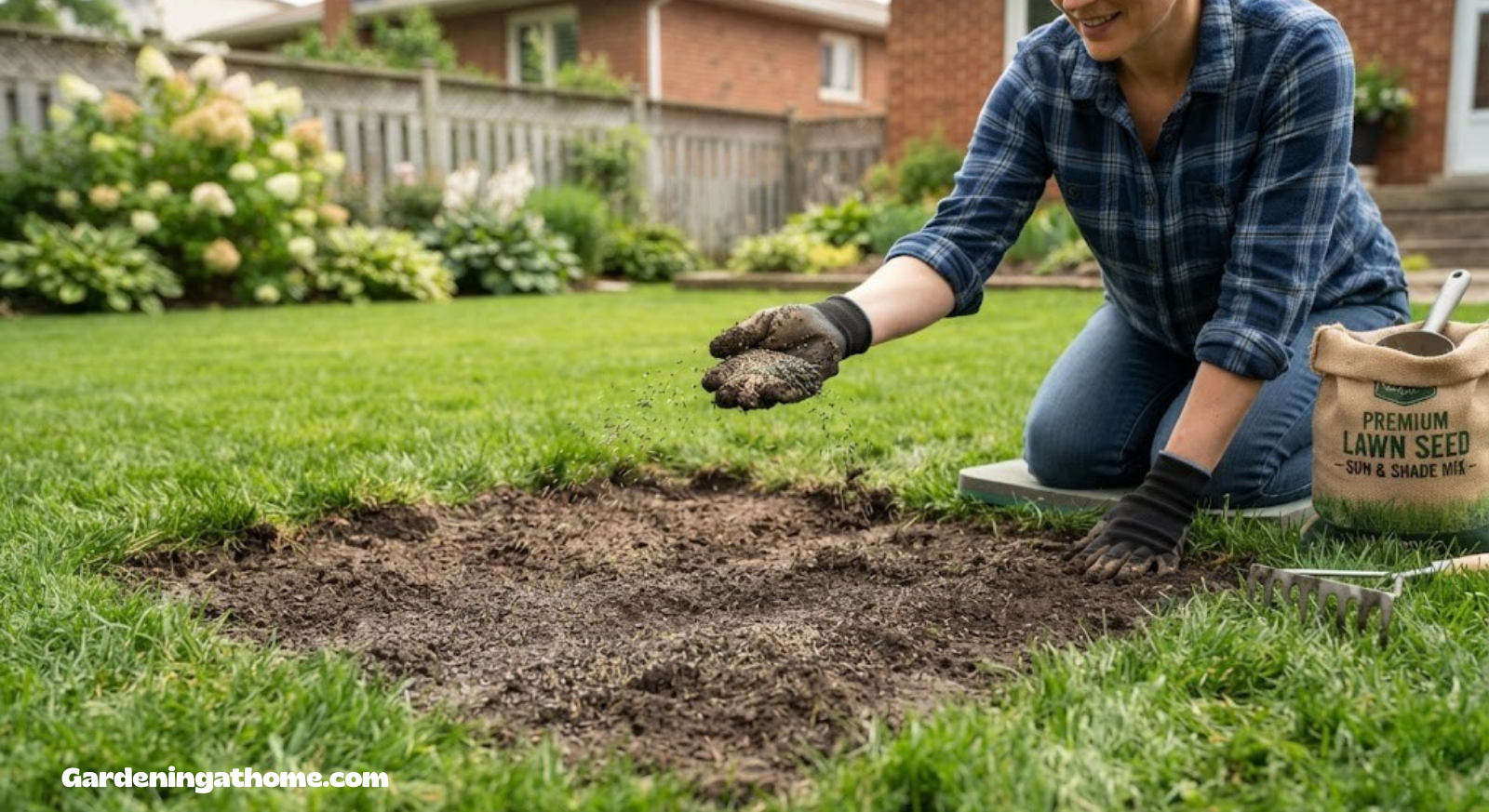
How to Spread Grass Seed Evenly: A Complete Step-by-Step Guide
Uneven seeding is the single biggest reason DIY lawns end up striped, patchy, or thin. Here’s exactly how the pros get consistent, edge-to-edge coverage every time.
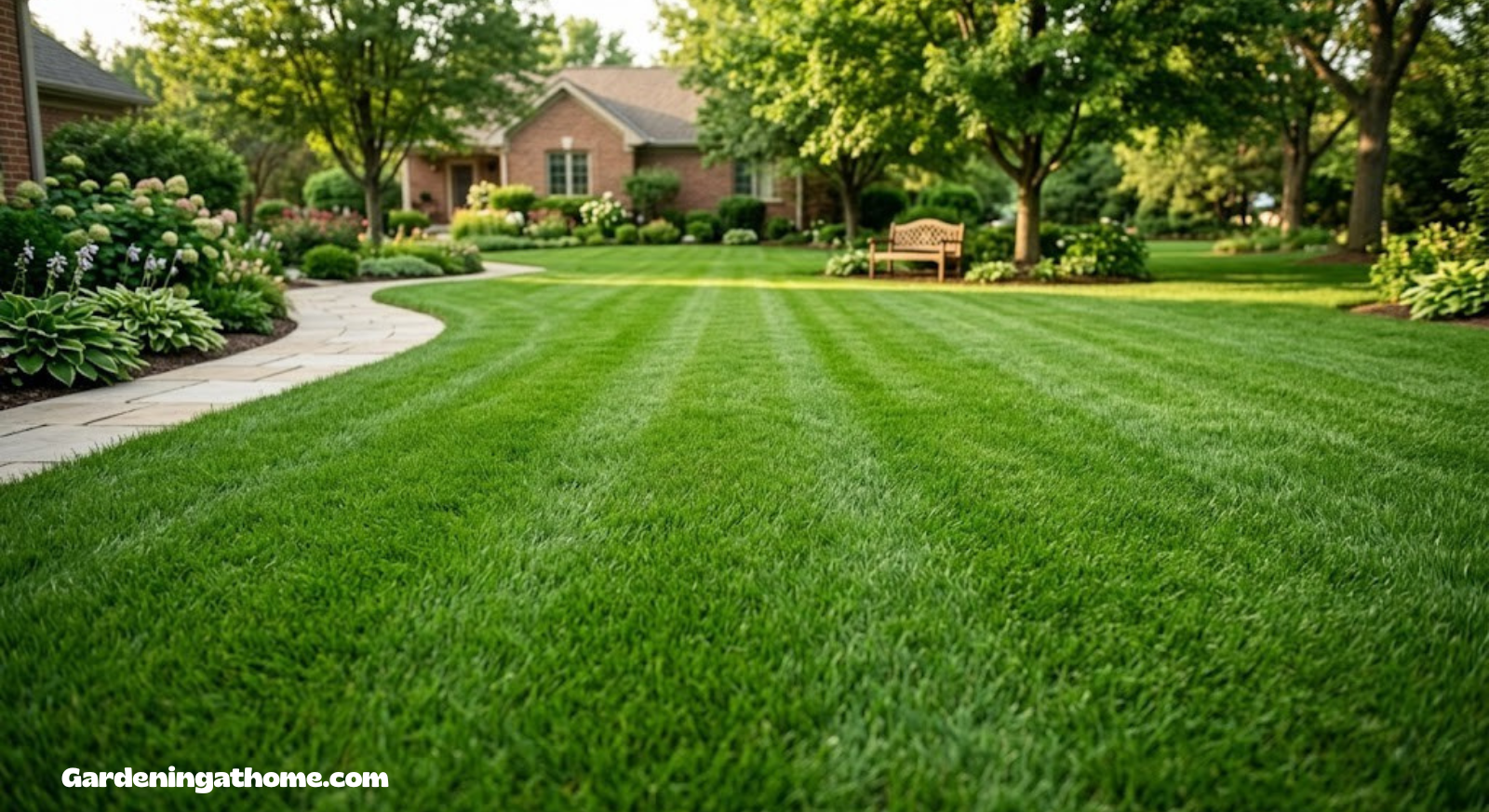
A properly seeded lawn should look uniform in density from one edge of the yard to the other — no stripes, no bald patches.
Why Even Coverage Matters More Than You Think
Every year, homeowners buy the right seed, pick the right week, water on schedule — and still end up with a lawn that looks like a bad haircut. Thick in some spots, bare in others, with faint stripes running across the yard like tractor tracks in a field. Almost every time, the culprit isn’t the seed or the weather. It’s the way the seed was applied to the ground in the first place.
Grass seed is deceptively easy to misjudge. A pound of seed looks like a lot in your hand, but spread across even a modest 1,000 square foot lawn, that same pound has to stretch remarkably thin and remarkably evenly to do its job. Apply too heavily in one pass and you get overcrowded seedlings competing for light, water, and nutrients — many of which will simply die off before they mature. Apply too lightly, or skip a strip entirely, and you get bare dirt that weeds will happily colonize before grass ever gets the chance.
Even coverage isn’t a cosmetic nice-to-have. It directly determines germination rate, root density, disease resistance, and how quickly your lawn can outcompete weeds. A lawn seeded unevenly will always need more follow-up work — more spot-seeding, more weeding, more reseeding next season — than one that was spread correctly the first time.
This guide walks through every practical method for spreading grass seed evenly, from simple hand-tossing on small patches to properly calibrated broadcast and drop spreader techniques for full lawns. If you’re working with a larger spreader, our guide on how to use a broadcast spreader pairs well with the technique-focused steps below.
Before You Start Seeding: Preparing the Ground
Even the best spreading technique in the world can’t compensate for poor ground preparation. Seed needs good soil-to-seed contact to germinate reliably, and a lawn full of thatch, debris, or compacted soil will trap seed on the surface where it dries out and dies before it ever sprouts.
1. Mow Low Before Seeding
Cut your existing grass shorter than usual — around 1.5 to 2 inches — before you begin. This lets more sunlight reach the soil surface and reduces competition for new seedlings trying to establish themselves.
2. Rake Out Thatch and Debris
A thick thatch layer physically blocks seed from reaching soil. Use a dethatching rake or power rake to expose bare soil in thin or bald areas — this is where new seed needs to land.
3. Loosen Compacted Soil
If your lawn sees a lot of foot traffic, consider core aerating before seeding. Loosened soil allows seed to settle into small pockets and grooves, dramatically improving germination compared to seed sitting on a hard, compacted crust.
4. Check the Calendar
Timing affects far more than germination speed — it affects how forgiving your spreading technique needs to be. Seeding during the optimal window gives seedlings the best chance to establish even if coverage isn’t perfectly uniform. For a full seasonal breakdown, see our guide on the best time to spread grass seed.
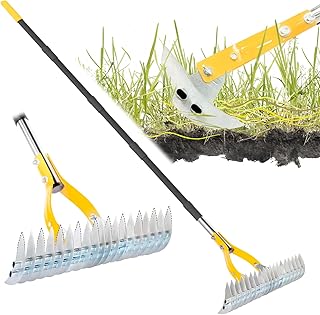
Prep Your Lawn Right the First Time
A quality dethatching rake makes soil-to-seed contact dramatically better before you spread a single seed.
Check Price on AmazonChoosing the Right Spreading Tool for Your Lawn
Not every lawn needs a spreader, and not every spreader is the right choice for every lawn. The tool you choose should match the size of the area, the precision you need near edges and beds, and how much control you want over the seeding rate.
| Method | Best For | Coverage Precision | Effort Level |
|---|---|---|---|
| Hand spreading | Small patches, spot repairs under 200 sq ft | Moderate (technique dependent) | Low |
| Handheld broadcast spreader | Small to medium yards, tight spaces | Good | Low–Medium |
| Push broadcast spreader | Medium to large lawns | Very good | Medium |
| Push drop spreader | Precision jobs, near beds/edges | Excellent | Medium |
| Tow-behind spreader | Very large properties, acreage | Good (wide swaths) | Low (requires mower/ATV) |
If you’re shopping for a new spreader, our full roundup of the best lawn seed spreaders compares models across all of these categories in more detail.
Step-by-Step: How to Spread Grass Seed Evenly
Below is the complete process, broken into individual steps. Each step includes a simple diagram showing exactly what correct technique looks like, so you’re not just reading instructions — you’re seeing the pattern in action.
Step 1: Calculate the Correct Seeding Rate
Before you spread anything, measure your lawn area and check the seed bag for its recommended application rate (usually listed in pounds per 1,000 square feet). Split this total amount into two equal halves — you’ll apply each half in a different direction, which is the secret to eliminating stripes.
Step 2: Set Your Spreader to the Right Setting
Every spreader brand has its own numbered dial settings correlating to a hole size or flow rate. Check the manufacturer’s chart (often printed on the spreader or included in the manual) and match it to your specific seed type — fine seeds like Kentucky bluegrass need a smaller opening than larger seeds like tall fescue.
Step 3: Apply the First Half in Straight, Parallel Passes
Walk in straight lines across the lawn — north to south, for example — overlapping each pass slightly with the one before it. Consistent walking speed matters just as much as the spreader setting; rushing one section and slowing in another creates uneven density even with a perfectly calibrated machine.
Step 4: Apply the Second Half at a 90° Angle
This is the step most people skip, and it’s the one that fixes stripes. Turn 90 degrees and walk east to west with the remaining half of your seed. Crossing your original pattern fills in any thin spots left by the first pass and evens out variations in walking speed or spreader flow.
Step 5: Handle Edges and Borders Separately
Turn off the spreader’s flow (or use a handheld unit) along sidewalks, driveways, and flower beds. Feathering the edges by hand or with a lower flow setting prevents seed waste on hardscaping while still ensuring the lawn’s border gets full coverage.
Step 6: Rake or Drag Lightly to Improve Seed-to-Soil Contact
After spreading, lightly rake the area (or drag a piece of chain-link fence or a leaf rake sideways) to work seed slightly into the top layer of soil. Don’t bury it deep — grass seed germinates best within about a quarter inch of the surface.

Get Consistent Results Every Pass
A calibrated broadcast spreader takes the guesswork out of even coverage across the whole lawn.
Check Price on AmazonSpreading Grass Seed by Hand (For Small Patches)
For small repair areas — bare spots, thin patches under a tree, or a strip along a fence — a spreader can actually be overkill. Hand spreading works fine as long as you use a consistent technique.
The Sowing Motion
Take a small handful of seed, hold your hand low and close to the ground, and release it in a sweeping side-to-side motion, similar to how you’d toss bird feed. Overlap your sweeps by about half their width, and always work in a grid pattern — one direction, then the perpendicular direction — exactly like the spreader method above.
Pros of Hand Spreading
- No equipment needed or to clean afterward
- Great control for small, irregular-shaped areas
- Zero cost beyond the seed itself
Cons of Hand Spreading
- Hard to keep consistent on areas over a few hundred square feet
- Prone to human error and fatigue-related unevenness
- No numeric calibration — relies purely on technique
Using a Broadcast (Rotary) Spreader for Even Coverage
Broadcast spreaders fling seed outward in a wide fan pattern as you walk, covering more ground per pass than a drop spreader. They’re the go-to tool for full lawns because of their speed, but that wide fan pattern is also where unevenness sneaks in if you’re not careful.
Key Technique Points
- Keep a steady, moderate walking pace. Speeding up thins out coverage; slowing down overloads it.
- Overlap each pass by roughly 10–15%. The edges of a broadcast fan are always lighter than the center, so slight overlap compensates for that natural drop-off.
- Close the spreader before turning around. Seed tends to pile up at turnaround points if the flow gate stays open while you pivot.
For a full walkthrough of operating this type of equipment safely and efficiently, see how to use a broadcast spreader.
Using a Drop Spreader for Precision Areas
Drop spreaders release seed in a straight, narrow band directly beneath the hopper — no fan pattern, no overspray. They’re slower to cover a full lawn but far more precise, which makes them the better choice near flower beds, ponds, property lines, or anywhere overspray would waste seed or create a mess.
Key Technique Points
- Never overlap wheel tracks. Unlike broadcast spreaders, overlapping a drop spreader’s pass doubles the seed rate in that strip.
- Instead, align each pass edge-to-edge with the previous one, using the wheel track as your guide.
- Slow down near curves or obstacles — a drop spreader has no fan pattern to compensate for gaps if you turn too sharply.
Calibrating Your Spreader Before You Begin
Calibration is the step almost everyone skips — and it’s the reason two people using the exact same spreader on the exact same lawn can get wildly different results. Every spreader’s numbered settings are only a starting reference; actual flow rate can vary by seed brand, seed size, humidity, and even how full the hopper is.
Quick Calibration Test
- Measure out a small, known amount of seed (say, 1 pound).
- Mark off a measured test strip of lawn or driveway at the width of your spreader.
- Walk the spreader across the strip at your normal pace and see how much of the pound you used relative to the strip’s area.
- Adjust the dial up or down and repeat until the output matches the bag’s recommended rate for that area.
For the full, detailed process — including how to handle different seed types and spreader brands — check out our dedicated guide on how to calibrate a spreader.
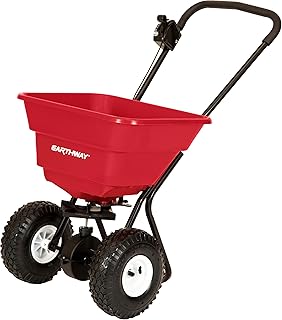
A Spreader Worth Calibrating
The Earthway 2050P is a popular pick among reviewers for reliable, adjustable flow control on larger lawns.
Check Price on AmazonSee our in-depth breakdown in the Earthway 2050P 80lb broadcast spreader review if you’re comparing models for a bigger property.
The Criss-Cross Overlap Pattern Explained
If there’s one technique that matters more than any single tool choice, it’s this: apply half your seed in one direction and the other half at a right angle to it. This “criss-cross” method is standard practice among lawn care professionals because it’s mathematically forgiving — even if your walking speed or overlap isn’t perfect on either individual pass, the two passes combined average out any inconsistencies.
This same criss-cross approach is worth using any time you overseed an existing lawn, not just for full renovations. Our guide on how to overseed a lawn with a spreader walks through how to adapt the pattern when you’re seeding into established turf rather than bare soil.
Common Mistakes That Cause Streaky or Patchy Lawns
| Mistake | Why It Happens | Fix |
|---|---|---|
| Visible stripes | Only seeding in one direction | Always cross with a second perpendicular pass |
| Bald patches | Missed overlap between spreader passes | Overlap 10–15% on broadcast spreaders |
| Overcrowded clumps | Spreader setting too high, or stopping while flow gate is open | Calibrate before starting; close gate on turns |
| Seed washing away | Heavy watering right after seeding on a slope | Use light, frequent misting instead of heavy soaking |
| Wasted seed on hardscape | Full flow rate carried across sidewalks/driveways | Close gate or use edge-mode near borders |
| Inconsistent density year to year | Different spreader settings each time without recalibration | Recalibrate every new bag or brand of seed |
What to Do Immediately After Spreading Seed
1. Water Lightly and Frequently
Newly spread seed needs consistent surface moisture, not a deep soak. Light watering once or twice a day (more in hot weather) keeps the top layer of soil damp enough for germination without washing seed into puddled low spots.
2. Keep Foot Traffic Off the Area
Walking across freshly seeded soil compacts it and can physically displace seed, undoing your careful even spread. Mark off the area if needed, especially if pets or kids use the yard.
3. Hold Off on Mowing
Wait until new grass reaches roughly three inches tall before the first mow, and make sure your mower blade is sharp to avoid pulling up shallow-rooted seedlings.
4. Clean Your Spreader
Leftover seed and fertilizer residue left in a hopper can corrode metal parts and clog the flow gate on your next use. A two-minute rinse and dry after each session saves a lot of frustration later — see our guide on how to clean a lawn spreader for the full process.
Spreading Method Comparison at a Glance
| Feature | Hand Spreading | Broadcast Spreader | Drop Spreader |
|---|---|---|---|
| Best lawn size | Under 500 sq ft | 500 sq ft and up | Any size, precision-focused |
| Coverage pattern | Manual sweep | Wide fan | Narrow straight band |
| Overlap style | Half-width overlap | 10–15% overlap | Edge-to-edge, no overlap |
| Edge precision | High (manual control) | Moderate (overspray risk) | Very high |
| Speed | Slow | Fast | Moderate |
Recommended Tools for Even Seed Application
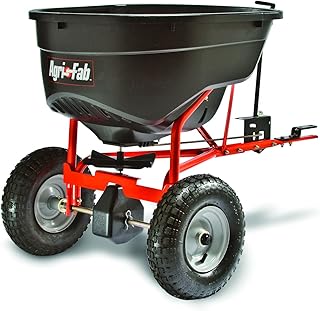
If you’re working a larger property — half an acre or more — a pull-behind spreader attached to a mower or ATV can save hours compared to walking a push spreader back and forth.
For Larger Properties
A tow-behind spreader like the Agri-Fab covers wide swaths quickly, ideal for acreage or commercial-style lawns.
Check Price on AmazonRead the full write-up in our Agri-Fab pull-behind broadcast spreader review for capacity, hopper size, and towing compatibility details. And if you’re still deciding which type of spreader fits your yard best overall, our best lawn seed spreader guide compares handheld, push, and tow-behind models side by side.
Frequently Asked Questions
How do I know if I’m spreading grass seed too thick?
Overly thick seeding looks like clusters of seed piled close together rather than a light, even dusting across the soil. As a rule of thumb, you should still be able to see patches of bare soil between individual seeds — a solid, unbroken layer of seed almost always means you’ve overapplied.
Can I spread grass seed evenly without a spreader?
Yes, for small areas. Mixing seed with sand or fine topsoil and using a consistent sweeping hand motion in a criss-cross pattern works well for patches under a few hundred square feet. For anything larger, a spreader becomes far more reliable.
Why does my lawn have stripes after seeding?
Stripes almost always come from seeding in only one direction. The fix is to apply half your seed north-to-south and the other half east-to-west, crossing the two passes so any gaps in one direction get filled by the other.
What spreader setting should I use for grass seed?
It depends on the specific spreader brand and seed type — always check the settings chart on the spreader or in its manual, then confirm with a quick calibration test rather than trusting the dial number alone.
Should I water immediately after spreading seed?
Yes, a light watering right after spreading helps settle seed against the soil. Keep future waterings light and frequent rather than one heavy soak, which can wash seed into low spots and create uneven density.
How much overlap should I use with a broadcast spreader?
Around 10–15% overlap between passes is typical, since broadcast spreaders throw seed in a fan pattern that’s naturally lighter at the edges than in the center.
Is a drop spreader more accurate than a broadcast spreader?
For precision along edges and beds, yes. Drop spreaders release seed in a narrow, controlled band directly under the hopper with no overspray, though they take longer to cover a full lawn than a broadcast spreader.
Do I need to rake after spreading grass seed?
A light rake or drag afterward helps work seed slightly into the top layer of soil, improving seed-to-soil contact and germination rates, without burying seed too deep to sprout.
What happens if I spread grass seed unevenly?
Unevenly spread seed leads to patchy density — overcrowded, weak seedlings in heavily seeded spots and bare soil prone to weeds in under-seeded spots. It typically requires follow-up spot-seeding to correct.
Can I mix grass seed with fertilizer before spreading?
It’s generally better to apply starter fertilizer separately, either right before or right after seeding, since combining products in the hopper can create uneven distribution of both.
How often should I recalibrate my spreader?
Recalibrate any time you switch seed brands, seed types, or notice the hopper flow behaving differently than expected — humidity and seed size can both affect flow rate even at the same dial setting.
What’s the best walking speed for spreading seed evenly?
A steady, moderate pace — similar to a relaxed walking speed while mowing — keeps flow consistent. Sudden speed changes are one of the most common causes of uneven coverage even with a well-calibrated spreader.
Conclusion: Even Coverage Is a Technique, Not Luck
Spreading grass seed evenly isn’t about buying the most expensive spreader on the market — it’s about following a repeatable process: prepping the soil properly, calculating the right rate, splitting your seed into two directional passes, overlapping consistently, and handling edges with care. Get those fundamentals right, and even a basic handheld spreader can produce a lawn that looks like it was done by a professional crew.
If your current spreader has been giving you inconsistent results, it might be worth comparing options in our best lawn seed spreader guide, or reviewing your calibration process with our spreader calibration guide before your next seeding session.

Ready for an Even, Full Lawn?
Pair the right spreader with the technique in this guide for consistent, professional-looking coverage.
Shop Spreaders on Amazon