Kids’ Garden Gear Guide
The Best Gardening Gloves for Kids Who Actually Want to Get Dirty
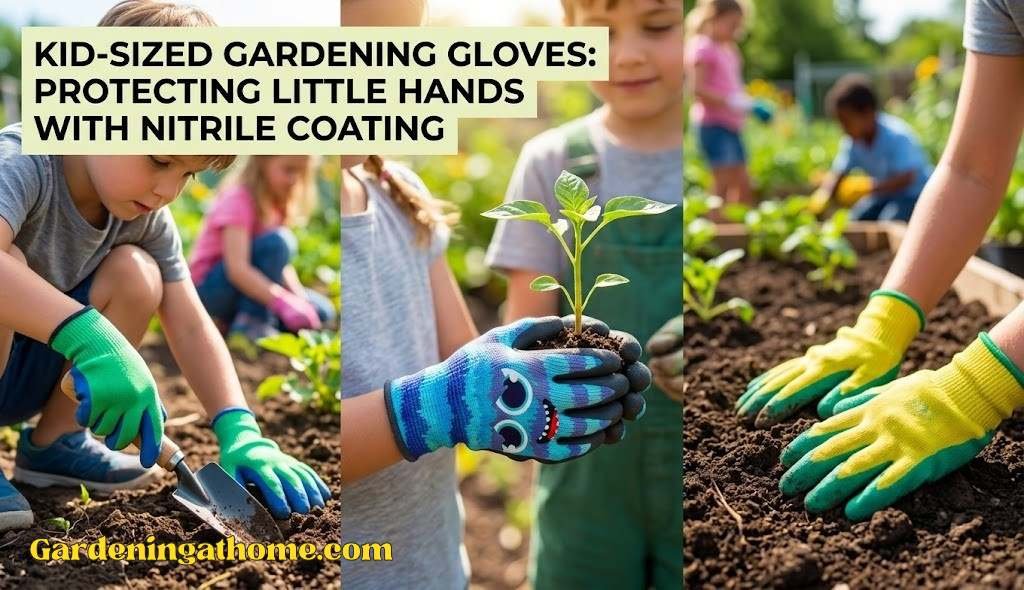
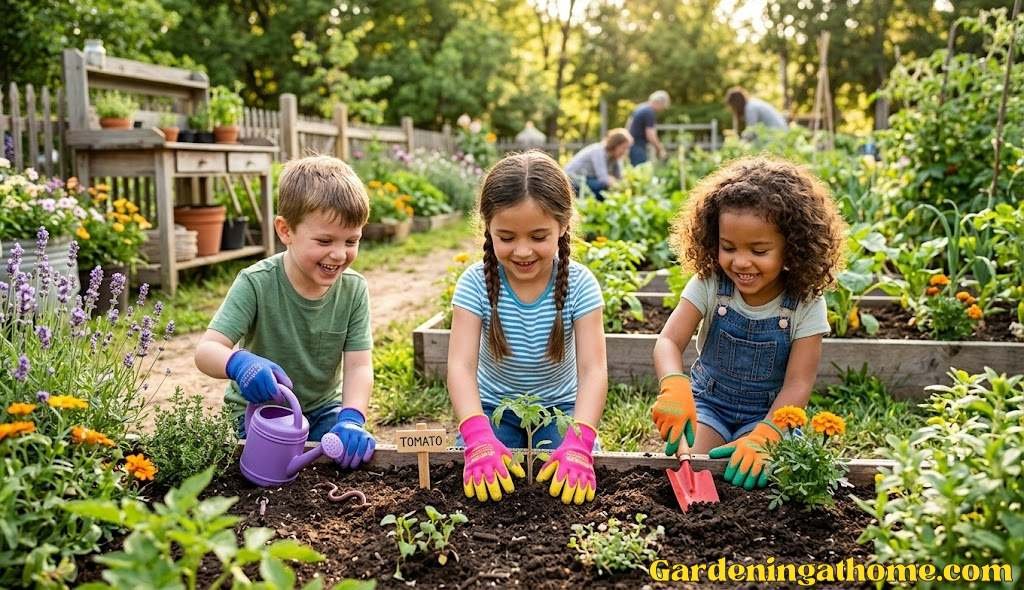
There’s a specific kind of joy in watching a kid kneel down in the dirt, both hands buried up to the wrist, absolutely convinced they’ve found a worm the size of a garden hose. That joy tends to last right up until the moment a thorn, a splinter, or a handful of prickly mulch turns the whole afternoon into a meltdown. The fix isn’t complicated — it’s a properly fitted pair of gloves built for small hands, not a pair of adult gloves folded over twice and held on with a rubber band.
Kids’ gardening gloves have quietly become one of those small purchases that make an outsized difference in how much time your child actually spends outside. The right pair turns hesitant “I don’t want to touch that” kids into confident little diggers, while the wrong pair — too stiff, too big, too hot — ends up abandoned in a drawer by June. We looked closely at the gloves parents are actually buying right now, compared their materials, grip, sizing, and durability, and put together this guide so you can skip the trial and error.
If you’re also outfitting the whole family, our broader roundup of best gardening gloves covers adult options too, but this guide is entirely focused on what actually works for small hands.
We know the feeling of standing in an aisle — or scrolling through page after page online — staring at a wall of nearly identical-looking kids’ gloves, most of them promising the same vague things: “durable,” “comfortable,” “fun design.” None of that tells you whether a glove will still be intact by August, whether it’ll actually stay on a wriggly six-year-old’s hand, or whether the coating will crack the first time it gets left out in the sun. So instead of repeating marketing copy, we dug into the details that actually separate a glove your kid loves from one that ends up buried under a pile of abandoned toys within a week.
This guide walks through six specific gloves currently popular with parents, breaks down what materials and grip styles actually mean in practice, and answers the sizing and safety questions that come up most often. By the end, you should be able to pick a pair with confidence instead of guessing and hoping for the best.
Why Kids Need Gloves Made Specifically for Them
It’s tempting to think a glove is a glove, but hand proportions in children aren’t just a scaled-down version of an adult hand. Kids’ fingers are proportionally shorter relative to palm width, their skin is thinner and more sensitive to friction and heat, and their grip strength is a fraction of an adult’s. A glove designed around adult hand geometry will bunch at the fingertips, gap at the wrist, and rob a child of the dexterity they need to actually pick up a trowel or pull a weed.
There’s also a durability mismatch. Kids are rougher on gear than adults tend to be — they’ll drag their hands through gravel, grip tools at odd angles, and use gloves as makeshift oven mitts for holding sun-warmed rocks. Gloves designed for children usually reinforce the fingertips and palm specifically because manufacturers know exactly how kids use them.
Finally, there’s the simple matter of buy-in. A child who feels like their gear was made “for real gardeners” — sized to fit, maybe with a fun print — is far more likely to actually wear it instead of ripping it off after five minutes. That’s not a minor detail; it’s the difference between gloves that protect and gloves that sit in a drawer.
There’s a practical safety angle here too. Gardening involves a surprising number of small hazards for little hands: rough mulch and bark that can scratch bare skin, insects hiding under leaves that kids don’t expect to touch, tiny splinters from wooden garden stakes or raised bed frames, and soil that can harbor bacteria if it makes contact with a small scrape or hangnail. None of these are dramatic risks, but they add up to a lot of minor discomforts that can sour a child’s whole impression of gardening as “not fun.” A properly fitted pair of gloves quietly removes most of that friction, letting kids focus on the parts of gardening that are actually enjoyable — digging holes, discovering roots, and watching something they planted grow.
It’s also worth noting that ill-fitting gloves can actually create new hazards rather than removing them. A glove that’s too big can catch on branches or get pulled into a hand rake; one that’s too tight can restrict circulation over a long session or leave marks at the wrist. Kid-specific sizing isn’t just about comfort — it’s about making sure the glove does its job without introducing new problems.
What to Look for When Choosing Gardening Gloves for Kids
Before diving into specific products, it helps to know which features actually matter versus which are just marketing. Here’s what we prioritized while evaluating options:
- Accurate kid sizing: Look for gloves with a clear size chart based on hand length, not just vague labels like “kids” or “youth.”
- Palm and fingertip coating: Nitrile, rubber, or latex coatings improve grip and keep soil and moisture from soaking through to little hands.
- Breathable backing: A knit or mesh back keeps hands from overheating during warm-weather sessions.
- Elastic cuff: An easy-on, easy-off elastic cuff is far more practical for young children than a wrist strap or Velcro closure.
- Reinforced fingertips: This is usually the first place a glove wears through, especially with kids who like to dig with their fingers as much as with tools.
- Washability: Gloves that can be rinsed or hand-washed hold up much better across a full gardening season.
- Fun factor: Prints, colors, and characters aren’t essential, but they meaningfully increase how often a glove actually gets worn.
For a wider look at grip and durability standards across all ages, our guide to the best gloves for weeding breaks down palm coatings in more technical detail.
It’s worth spending a moment on each of these individually, because they interact with each other more than most parents expect. A glove with excellent grip but a poorly fitted cuff, for example, still ends up frustrating a child because dirt constantly works its way in at the wrist, undoing the benefit of the grip entirely. Similarly, a beautifully breathable glove with weak fingertip reinforcement might feel great for the first few uses but develop holes within weeks if your child tends to dig directly with gloved fingers rather than using a tool.
Think of these criteria as a checklist rather than a single deciding factor. The best overall gloves tend to score reasonably well across most categories rather than excelling at one thing while failing badly at another. A glove that’s perfectly grippy but falls apart in three weeks isn’t actually a better buy than a moderately grippy one that lasts the whole season.
One more consideration that’s easy to overlook: how the glove performs when slightly damp. Morning dew, recently watered soil, and humid summer air all mean gloves rarely stay perfectly dry during actual use. Coatings that get slick when wet effectively lose their grip advantage right when kids need it most, so it’s worth checking user feedback specifically about damp-weather performance rather than assuming a “grippy” label holds up in every condition.

Quick Pick: Want a durable, grippy option without overthinking it? The DIGZ Stretch Garden Gloves with nitrile coating are one of our top all-around picks below.
Check Price on AmazonHow We Evaluated These Gloves
Rather than judging gloves purely on spec sheets, we weighed them against the practical realities of how kids actually use garden gear. That means looking closely at product photos and listed materials, cross-referencing size charts against typical hand measurements for each age range, and comparing verified buyer feedback for recurring themes — particularly complaints about sizing accuracy, coating durability, and how the gloves held up after repeated washing.
We paid special attention to details that don’t always show up in a product description: how the elastic cuff is constructed, whether the coating extends far enough to cover the fingertips where wear happens fastest, and whether a glove’s grip pattern is dense enough to matter or just decorative. We also looked at how each brand’s sizing compared to the others, since a “medium” from one company can run noticeably different from a “medium” elsewhere.
Finally, we considered value in context — not just the sticker price, but how that price compares to the expected lifespan of the glove and how well it matches its intended age range. A glove that’s slightly pricier but lasts twice as long, or fits accurately enough that you don’t need to size up and down through returns, often ends up being the better value even at a higher upfront cost.
Kids’ Gardening Gloves Comparison Table
Here’s a side-by-side snapshot of how our top picks stack up on the things that matter most for kids: fit, grip, breathability, and overall durability.
| Glove | Best For | Coating | Cuff Style | Durability |
|---|---|---|---|---|
| DIGZ Stretch Garden Gloves | Everyday all-around use | Nitrile | Elastic knit | High |
| COOLJOB Grippy Children’s Gloves | Extra grip on tools | Latex dot grip | Elastic cuff | Medium-High |
| EvridWear Garden & Play Gloves | Multi-activity kids | Rubber palm | Elastic cuff | Medium |
| KDK Children’s Safety Gloves | Younger toddlers | Rubber dot | Elastic knit | Medium |
| OSDUE Non-Slip Kids’ Gloves | Active, hands-on digging | Non-slip rubber | Elastic cuff | Medium-High |
| Butterfly & Ladybird Print Gloves | Younger kids who love fun prints | Light rubber dot | Elastic cuff | Medium |
Our Top Picks Reviewed
1. DIGZ Stretch Garden Gloves with Nitrile Coating
The DIGZ Stretch Garden Gloves are one of the more balanced options for kids who split their time between digging, planting, and general yard exploration. The nitrile coating on the palm and fingers gives a noticeably firmer grip on tool handles and slippery pot rims than a plain fabric glove, while the stretch knit backing flexes with small hands instead of fighting against them.
Parents tend to like that the coating holds up to repeated use without cracking after just a few sessions, which is a common complaint with cheaper coated gloves. The snug elastic cuff keeps soil from sneaking in at the wrist, a small detail that matters more than it sounds once you’ve dealt with a child dumping dirt into their sleeve.
These gloves tend to shine most with kids around six to eleven who are doing genuine hands-on garden chores — filling raised beds, transplanting seedlings, or helping haul small bags of soil — rather than younger kids who mostly want to poke around in the dirt for fun. The stretch fit means there’s a bit more forgiveness in sizing than some of the other options on this list, which is helpful if you’re buying between two size charts and aren’t entirely sure which one fits. Because the nitrile coating is genuinely one of the more weather-resistant options available, these also tend to be a good pick for families who garden across multiple seasons rather than just a few weeks in spring.
Pros
- Strong grip from nitrile coating
- Stretch fit adapts to different hand shapes
- Coating resists cracking over time
Cons
- Sizing runs slightly large for younger toddlers
- Fewer decorative print options
See current pricing and available sizes for the DIGZ Stretch Garden Gloves.
Check Price on Amazon2. COOLJOB Grippy Gardening Gloves for Children
If your child’s main complaint about gloves is that they can’t hold onto anything, the COOLJOB gloves address that directly with a textured latex dot grip pattern across the palm and fingers. This style of grip tends to work especially well for kids who are still developing fine motor control, since the raised dots create friction even when a tool handle gets slightly damp.
The knit backing is thin and breathable, which is a plus for warmer climates or kids who run hot, though it does mean these gloves are better suited to dry digging and planting than to wetter tasks involving hoses or muddy soil.
We’d point this pair toward families with younger kids, roughly four to eight, who are just starting to use small hand tools and need extra confidence holding onto them. The dotted grip pattern is intuitive in a way that seems to help kids who haven’t yet built up much hand strength — there’s less need to squeeze a tool tightly to keep it from slipping, which in turn makes tasks like scooping soil into pots or pressing seeds into the ground feel less frustrating. Because the backing is thinner than a full nitrile coating, these also tend to dry faster after a wash, which is convenient during a busy planting season when gloves get dirty more than once a week.
Pros
- Excellent tool grip from dotted texture
- Lightweight and breathable
- Good for fine motor tasks like seed planting
Cons
- Thinner backing offers less protection from scrapes
- Not ideal for wet or muddy conditions

Check sizing charts and colors for the COOLJOB kids’ gardening gloves.
Check Price on Amazon3. EvridWear Gardening & Play Gloves
The EvridWear gloves lean into versatility, marketed for painting, gardening, and general outdoor play rather than gardening alone. That makes them a solid pick for families who want one pair of gloves that can move from the garden bed to a messy craft project without a second thought.
The rubber palm coating handles moderate digging and weeding fine, though it’s not quite as thick or grippy as the nitrile coating found on the DIGZ pair. Where EvridWear stands out is in the print variety — kids who care about their gloves looking fun tend to gravitate toward this brand’s patterns.
This is a strong pick if your household treats garden gloves as general-purpose kid gear rather than something reserved strictly for yard work. Families who do a lot of mixed outdoor activity — a little gardening, a little painting or crafting, some rougher outdoor play — tend to get the most mileage out of a pair that isn’t overly specialized for one task. Just don’t expect the same level of heavy-duty protection you’d get from a glove built specifically around garden-only use; if your child’s main activity is serious digging in compact soil, one of the more grip-focused options above will likely hold up better over time.
Pros
- Multi-purpose use beyond gardening
- Wide range of fun patterns
- Comfortable, soft interior lining
Cons
- Grip coating is lighter-duty than dedicated garden gloves
- Less reinforced at fingertips

Browse available prints and sizes for EvridWear kids’ gloves.
Check Price on Amazon4. KDK Children’s Safety Gardening Gloves
The KDK gloves are pitched squarely at younger children, with a sizing range that tends to run smaller than most competitors — useful if you’ve struggled to find gloves that don’t swallow a toddler’s hand. The rubber dot grip is moderate, enough for handling a small trowel or patting soil around a seedling without being so thick that it limits dexterity.
Because they run smaller, these tend to be a better fit for the three-to-six age range than for older kids who need more room to grow into a glove over a season.
Parents of younger kids consistently mention two things about this pair: the fit is noticeably more accurate for small hands than competitors that label themselves “kids” but actually run closer to a youth-sized fit, and the soft interior lining seems to bother even sensitivity-prone kids less than stiffer alternatives. If you’ve previously bought a “kids” glove that still swam on your toddler’s hand, this is one of the more reliable options specifically because the smaller end of its size range is genuinely small rather than a marketing label slapped on a standard youth cut.
Pros
- True-to-size fit for younger children
- Soft interior comfortable for sensitive skin
- Easy elastic cuff for independent use
Cons
- Runs small for kids over age seven
- Grip is moderate rather than heavy-duty
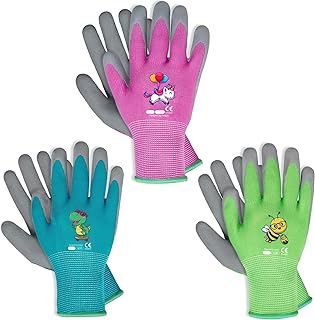
See sizing details and reviews for the KDK children’s gardening gloves.
Check Price on Amazon5. OSDUE Non-Slip Gardening Gloves for Kids
The OSDUE gloves prioritize grip above almost everything else, with a non-slip rubber coating that extends further up the palm than most kid-focused gloves. That extra coverage makes them a good match for active kids who tend to grip tools tightly or use their whole hand to steady a pot while transplanting.
The tradeoff is slightly less breathability, since the thicker coating doesn’t flex or vent quite as well as a thinner dot pattern. For most seasonal use this isn’t a major issue, but it’s worth keeping in mind for kids doing extended sessions in hot weather.
We’d recommend this pair specifically for kids who are rougher on gear than average — the ones who grip a shovel handle with their whole fist, drag their hands through gravel paths, or insist on carrying a full watering can by themselves. The extended coverage of the non-slip coating means there’s less exposed fabric at the fingertips and side of the palm to wear through first, which in practice tends to translate into a longer usable life for active kids compared to gloves with a lighter, more limited grip pattern.
Pros
- Extensive non-slip coverage
- Good for active digging and tool handling
- Durable stitching at stress points
Cons
- Less breathable in hot weather
- Slightly stiffer out of the package

Check current availability for the OSDUE non-slip kids’ gloves.
Check Price on Amazon6. Butterfly & Ladybird Print Gardening Gloves
For younger kids who need a little extra motivation to head outside, the butterfly and ladybird print gloves lean fully into the fun-factor approach. The grip is a lighter rubber dot pattern, suited to gentle digging, planting, and general exploring rather than heavy tool use, which fits the younger age range this style tends to appeal to most.
These won’t be the most durable option on this list if used daily for months on end, but for kids who need convincing to try gardening in the first place, the appeal of a glove covered in butterflies can be the deciding factor in whether they wear gloves at all.
This pair tends to work best as a starter glove — something to introduce a reluctant or nervous young gardener to the idea of touching soil, bugs, and plants without overwhelming them with a stiff, heavy-duty glove on day one. Once a child is fully on board with gardening and starting to take on more hands-on tasks like digging holes or handling small tools regularly, it’s worth graduating to one of the more durable, grippier options above. But as an entry point specifically designed to get a hesitant kid excited about the idea of gardening, the fun-print approach earns its place on this list.
Pros
- High “wants to wear it” factor for younger kids
- Lightweight and comfortable
- Good for light digging and planting
Cons
- Less durable under heavy or daily use
- Lighter grip than dedicated tool-use gloves

See colors and sizing for the butterfly and ladybird print kids’ gloves.
Check Price on AmazonMaterial Types Compared: Nitrile, Rubber Dot, and Fabric
Most kids’ gardening gloves fall into one of three categories, and understanding the difference helps explain why two gloves that look similar can perform very differently in actual use.
Nitrile-coated gloves use a synthetic rubber coating that’s more resistant to punctures, oils, and repeated flexing than natural latex. These tend to be the most durable option for kids who garden frequently, since the coating holds up to seasons of use without cracking as quickly.
Rubber dot or latex dot gloves apply small raised dots of rubber or latex across the palm rather than a full coating. This keeps the glove lighter and more breathable while still improving grip, which works well for lighter tasks like planting seeds or handling small pots.
Fabric-only gloves, without any coating, are the least common for gardening specifically since they offer little grip or moisture resistance, though they’re sometimes used for very light, dry tasks.
You generally won’t find true leather kids’ gardening gloves, since leather is stiffer and needs a break-in period that doesn’t suit smaller, more delicate hands well. Leather is much more common in adult gloves built for heavier-duty tasks like handling thorny bushes or rough branches; if your older kids or teens eventually graduate to that kind of yard work, our guide to the best leather gardening gloves is a useful next step once coated fabric gloves no longer offer enough protection.
For a deeper technical comparison of these coating types across all age groups, see our full breakdown of nitrile vs. latex gardening gloves. If your family also does rose pruning or handles thornier plants, it’s worth checking our separate guide to gloves for thorny roses, since kids’ gloves generally aren’t built for that level of puncture resistance.
There’s also a comfort dimension to material choice that’s easy to overlook. Nitrile coatings, while durable, can feel slightly stiffer straight out of the packaging, and some kids need a few uses to break them in before the glove flexes naturally with their hand movements. Rubber dot styles tend to feel more flexible immediately, which can matter for kids who are impatient with anything that feels awkward on first wear. Fabric backing quality also varies more than people expect — a tightly knit backing resists snagging on branches and rough surfaces far better than a looser knit, which can catch and stretch out of shape after just a few uses.
One detail that rarely gets mentioned in product descriptions is how a coating performs at the seams where it meets the fabric backing. This is often the first place a glove fails, since repeated flexing at the wrist and finger joints puts stress exactly where two different materials are bonded together. Gloves with a wider, more gradual transition between coated and uncoated fabric tend to hold up longer than those with a sharp, thin seam line, simply because there’s more surface area for the bond to hold.
Sizing Guide by Age
Sizing is where most kids’ glove purchases go wrong, mainly because brands don’t standardize their labeling the way adult clothing sizes are standardized. A “small” from one brand might fit a five-year-old, while a “small” from another fits an eight-year-old comfortably.
| Approx. Age | Hand Length (Palm Base to Middle Fingertip) | Typical Size Label |
|---|---|---|
| 2–4 years | ~4.5–5 inches | XS / Toddler |
| 4–6 years | ~5–5.5 inches | Small |
| 6–9 years | ~5.5–6.25 inches | Medium |
| 9–12 years | ~6.25–7 inches | Large / Youth |
The most reliable method is always to measure your child’s actual hand and compare it to the specific brand’s chart rather than relying on the age range printed on the packaging. When in doubt, sizing up slightly gives a little room to grow and tends to be more forgiving than a glove that’s already snug on day one.
To measure accurately, have your child lay their hand flat, fingers together but not stretched out, and measure in a straight line from the crease at the base of the palm to the tip of the middle finger. It helps to do this measurement without the child trying to “help” by spreading their fingers wide or curling them, since either habit throws off the number. If you’re between two sizes on a particular chart, consider how the glove will be used: a snugger fit gives better dexterity for fine tasks like seed planting, while a slightly looser fit is more comfortable for a child who’ll wear the gloves for longer stretches or through a growth spurt.
It’s also worth remembering that different glove styles fit differently even at the same labeled size. A thickly coated nitrile glove takes up more internal volume than a thin rubber dot style, so a child who fits a “medium” in one brand’s dot-style glove might actually need a size down in a thicker coated design from another brand. When possible, checking a few verified buyer photos or size-specific reviews for the exact product can help fill in the gaps that a size chart alone doesn’t capture.
Seasonal Considerations for Kids’ Garden Gloves
Spring planting, summer maintenance, and fall cleanup all put slightly different demands on a pair of gloves, and it’s worth thinking about which season your child will be using them in most before committing to one style.
Spring tends to mean wetter, cooler soil and more direct contact with seedlings and delicate transplants, which favors a glove with good grip and moderate breathability rather than the thickest, warmest option available. Summer maintenance — weeding, watering, and general upkeep — often happens in hot weather, making breathability a bigger priority than raw durability, since an overheated, sweaty hand inside a glove is uncomfortable enough that kids will simply stop wearing it. Fall cleanup, with leaves, twigs, and rougher yard debris, tends to be tougher on the fingertips and palm than spring or summer tasks, so a more reinforced glove holds up better during that stretch of the year.
If your family gardens across all three seasons, it may be worth having two pairs in rotation — a lighter, more breathable option for hot summer days and a more heavily coated pair for cooler, messier spring and fall work — rather than expecting a single glove to perform equally well in every condition.
Involving Kids in the Glove-Buying Decision
One detail that consistently improves how often a glove actually gets worn: letting the child weigh in on the decision, even in a small way. This doesn’t mean handing over the entire buying process, but giving a child a choice between two or three suitable options — a color, a print, or even just which of two similarly functional gloves they like the look of — tends to build a sense of ownership that carries over into actually wanting to wear them.
This matters more for younger kids, who are often motivated more by whether something feels like “theirs” than by any functional advantage a parent might prioritize. For older kids, involving them might look more like discussing the tradeoffs directly — explaining why a grippier glove might serve them better if they’re doing more hands-on digging, for example — which also happens to be a low-stakes way to introduce basic decision-making and product evaluation skills.
Either way, a glove that a child had some say in choosing is simply more likely to make it out the door with them on gardening day than one that was selected entirely without their input.
Safety Considerations for Kids in the Garden
Gloves are one layer of protection, not a complete safety solution on their own. It’s worth thinking through the broader picture of what your child will actually be doing in the garden before assuming gloves alone cover every risk.
Most kids’ gloves are designed for general digging, weeding, and planting rather than tasks involving thorns, sharp tool blades, or chemical exposure. If pruning is part of your routine, keep kids away from that task entirely or supervise closely with adult-grade, thorn-resistant gloves instead — our guide on gloves for thorny roses covers what real protection looks like for that kind of work.
It’s also worth checking gloves periodically for wear, especially at the fingertips, since a worn-through spot defeats the purpose of the glove entirely. Finally, always supervise young children around any garden tools, even hand tools that seem harmless — gloves reduce risk, they don’t eliminate the need for supervision.
It’s also worth thinking about what’s actually in the soil your child is handling. Garden soil, compost, and mulch can harbor bacteria and fungal spores that are generally harmless to healthy skin but can be irritating to any existing cuts, scrapes, or eczema flare-ups. Gloves act as a simple barrier here, but it’s still worth having kids wash their hands thoroughly after gardening, even if they wore gloves the entire time, since dirt inevitably finds its way to exposed wrists and forearms.
Sun exposure is another often-overlooked factor. Kids tend to spend longer stretches outside once gardening becomes a favorite activity, so it’s worth pairing gloves with the same sun protection habits you’d use for any other outdoor play — hats, sunscreen on exposed skin, and reasonable breaks in shade during the hottest part of the day.
Getting Kids Excited About Gardening With the Right Gear
There’s a reason so many kids’ gloves lean into bright colors, insects, and playful prints — it works. Kids are far more likely to willingly put on gear that feels like it was made just for them, and a glove covered in ladybugs or dinosaurs can turn “do I have to?” into genuine enthusiasm.
Beyond the glove itself, letting kids pick their own small section of the garden to manage — even something as small as a single pot of cherry tomatoes — tends to build lasting interest far more effectively than gloves alone. The gear is the entry point; ownership over a small piece of the garden is what keeps kids coming back.
Pairing gloves with small, achievable wins also helps. Fast-germinating seeds like radishes or sunflowers give kids visible progress within days rather than weeks, which reinforces the connection between “I did this task wearing my gloves” and “something is actually happening because of what I did.” That fast feedback loop tends to matter more to sustained interest than the gloves themselves, though having gear that feels fun and fits well certainly doesn’t hurt.
Some families also find it helpful to introduce a small ritual around gloving up before heading outside — treating it a bit like a costume or a badge for “the gardener” rather than a chore. Kids who already enjoy imaginative play tend to respond well to framing gardening gear this way, especially with prints like ladybugs or dinosaurs that lean into a bit of playful identity.
Cleaning and Caring for Kids’ Gardening Gloves
Most coated kids’ gloves respond best to a gentle hand wash with mild soap and cool water, followed by air drying away from direct heat. Machine washing and drying can cause coatings to crack or peel prematurely, especially with nitrile and rubber dot styles.
If your family also owns any leather-accented gloves for adult use, the care routine is quite different — our dedicated guide on how to clean leather gardening gloves walks through the conditioning steps leather needs that coated fabric gloves don’t.
Letting gloves fully air out between uses also helps prevent the interior lining from developing odor, especially during warmer months when kids’ hands tend to sweat more inside a snug-fitting glove.
A quick rinse immediately after a muddy session, before soil has a chance to dry and cake into the coating’s texture, makes a noticeable difference in how long the grip pattern stays effective. Dried mud that’s left to sit tends to work its way into the small grooves of a dot or textured grip pattern, gradually filling them in and reducing the very texture that provides traction in the first place.
Storing gloves flat or loosely paired rather than balled up or stuffed into a tight drawer also helps prevent the coating from developing permanent crease marks, which can eventually turn into crack lines with repeated folding in the same spot. A small hook near a back door or garage entrance, low enough for a child to reach independently, tends to work well both for storage and for encouraging kids to actually put their gloves away rather than leaving them out in the yard where they can be rained on or lost.
Common Mistakes Parents Make When Buying Garden Gloves for Kids
- Buying based on age alone: Hand size varies enormously between kids of the same age; always check measurements.
- Choosing adult gloves “for now”: Oversized gloves reduce dexterity and are more likely to be abandoned.
- Prioritizing print over grip: A fun design matters, but not at the expense of a coating that actually helps a child hold a tool.
- Ignoring the cuff style: Wrist straps are often too fiddly for young kids to manage independently.
- Skipping the size chart entirely: Every brand sizes differently, so relying on general size labels alone leads to returns.
- Overlooking cuff closures kids can’t manage alone: A glove your child can’t put on or take off independently often just doesn’t get worn regularly.
- Assuming one pair covers every season: A glove that’s perfect for cool spring planting might be too hot for peak summer weeding.
- Buying without involving the child at all: Kids are simply more likely to wear gear they had some say in choosing.
Most of these mistakes share a common thread: they prioritize what looks reasonable on paper — a slightly bigger size for growing room, a strap that seems more “secure,” a glove marketed broadly as multi-purpose — over what will actually get worn consistently by a real child in real conditions. Keeping that practical lens front and center tends to prevent most of the buyer’s remorse that comes with kids’ gear in general, not just gloves.
Pairing Gloves With the Right Kid-Friendly Tools
Gloves work best as part of a matched set of gear rather than in isolation. A grippy coated glove paired with an oversized adult trowel still won’t feel comfortable in a small hand, so it’s worth choosing child-sized tools alongside child-sized gloves.
Weeding is usually one of the first tasks kids are old enough to help with safely, and our guide to the best gloves for weeding covers grip patterns that hold up well to that specific repetitive motion, which overlaps closely with what makes a glove work well for kids too.
A small hand trowel, a lightweight watering can sized to be manageable, and a soft-bristled brush for cleaning up spilled soil tend to round out a starter kit well alongside a properly fitted glove. Avoid tools that are simply miniaturized versions of adult tools without regard for actual usability — a tiny trowel with a full-length adult handle, for instance, is often just as awkward for a small hand as no trowel at all. Look instead for tools explicitly designed around child hand size and grip strength, the same way you’d look for gloves designed around those same proportions.
Matching gloves and tools by color or theme can also add to the “this is my real gardening gear” feeling that keeps kids engaged, though this is very much a nice-to-have rather than a functional requirement.
Storage and Longevity Tips
Beyond basic cleaning, a few small habits go a long way toward extending how many seasons a pair of gloves lasts. Keeping gloves out of direct, prolonged sun exposure when not in use helps prevent coatings from becoming brittle faster than normal wear alone would cause, since UV exposure degrades rubber and nitrile materials over time even without active use.
It also helps to have kids get in the habit of removing gloves by pulling from the cuff rather than yanking at the fingertips, since repeated fingertip pulling is one of the more common ways seams and coatings start to separate prematurely. This is a small enough habit that most kids pick it up quickly once shown, and it noticeably reduces the rate of fingertip wear compared to gloves that get peeled off finger-first every time.
Finally, keeping a spare pair on hand — especially for younger kids who are harder on gear or for families gardening multiple times a week — means one pair can always be drying or resting while the other is in use, which in practice extends the usable life of both pairs compared to relying on a single set worn continuously.
Choosing Gloves for Sensory-Sensitive Kids
For kids who are particular about textures, the seam placement, lining softness, and coating thickness of a glove can matter more than any other feature on this list. A soft knit interior lining with flat seams tends to be tolerated better than gloves with a rougher lining or bulky seams across the fingers.
It’s often worth starting with a lighter, more breathable glove style — like a rubber dot pattern rather than a full nitrile coating — since the reduced bulk and increased flexibility can make the glove feel less overwhelming for a child who’s sensitive to how things feel on their skin.
It can also help to let a sensory-sensitive child try a glove on indoors, without any pressure to actually go outside and use it right away, so they can get used to the feeling on their own terms. Some kids need repeated short exposures — wearing gloves for a few minutes at a time around the house — before they’re comfortable enough to wear them through a full gardening session. Avoiding gloves with rough interior tags, thick seams across the palm, or noticeably strong odors straight out of the packaging (some coatings have a stronger initial rubber smell than others) can also make the adjustment period smoother.
Budget vs Premium: Is It Worth Spending More?
Kids’ gardening gloves span a fairly narrow price range compared to adult options, so the gap between a budget pick and a premium one is usually more about durability and coating quality than a dramatic price jump. A slightly pricier nitrile-coated glove that lasts two full seasons often works out cheaper per use than a budget pair that needs replacing every few months.
That said, if you’re buying for a toddler who will likely outgrow the size within a single season regardless of durability, a lower-cost option makes more practical sense than investing in a premium pair they’ll only wear a handful of times.
It’s also worth factoring in how many kids will actually be using the gloves. In households with siblings close in age who can share a size for a while, spending a bit more on a genuinely durable pair tends to pay for itself across multiple kids and seasons. In households where sizing turnover is fast — a child growing quickly through several sizes in a single year — it often makes more sense to buy modestly priced gloves more frequently rather than investing heavily in a size that will be outgrown within a few months regardless of how well it holds up.
Ultimately, the “right” amount to spend has less to do with finding the single best glove on paper and more to do with matching the purchase to how your specific child gardens, how quickly they grow, and how many seasons you realistically expect to get out of one pair.
Frequently Asked Questions
At what age can a kid start using gardening gloves?
Most kid-sized gardening gloves fit children roughly three to twelve years old, with the smallest sizes suited to toddlers and larger youth sizes fitting kids up to eleven or twelve. Hand size matters more than age when choosing a fit.
Are rubber or nitrile-coated gloves better than fabric gloves for kids?
Nitrile-coated gloves generally hold up better against dirt and moisture and offer a firmer grip, while fabric gloves breathe better but wear out faster and offer less protection during wetter tasks.
Can kids wear regular adult gardening gloves instead?
Adult gloves are usually too loose and too long in the fingers for children, which limits dexterity and increases the chance of the glove slipping off during use.
How do I know what size gardening gloves to buy for my child?
Measure your child’s hand from the base of the palm to the tip of the middle finger and compare it to the specific brand’s size chart, since sizing labels aren’t standardized across manufacturers.
Are kids’ gardening gloves machine washable?
Most coated gloves are better hand washed and air dried, since machine washing can shorten the life of the coating. Always check the manufacturer’s specific care instructions.
Do kids’ gardening gloves protect against thorns?
Lightweight kids’ gloves offer limited protection against thorns, since they’re built for general digging and planting rather than heavy-duty pruning tasks.
What should I look for in a kids’ gardening glove besides size?
Grip texture, breathable backing, an easy elastic cuff, and reinforced fingertips are the features that matter most beyond a proper fit.
Can toddlers safely use gardening gloves?
Many brands offer extra-small sizing for toddlers, though at that age gloves work best for simple, supervised tasks rather than tool use.
Do fun designs like ladybugs or dinosaurs affect glove quality?
Prints and characters are cosmetic and don’t typically affect grip or durability, but they do meaningfully increase how willingly kids wear their gloves.
How long do kids’ gardening gloves usually last?
With regular seasonal use, a well-made pair typically lasts one to two growing seasons before the coating cracks or fingertips wear through.
Should I buy gloves with a wrist strap or an elastic cuff?
Elastic cuffs are usually easier for young children to manage independently, making them the more practical everyday choice over a wrist strap.
Final Verdict
If you want one all-around pick, the DIGZ Stretch Garden Gloves with nitrile coating balance grip, durability, and comfort well enough to suit most kids and most tasks. For younger toddlers, the KDK Children’s Safety Gloves run smaller and fit little hands more accurately, while kids who need a little extra motivation to head outside tend to respond best to the butterfly and ladybird print option.
Whichever pair you choose, the real goal is simple: gloves your child will actually put on without a fight, sized well enough that they can still use their fingers, and durable enough to survive a full season of digging, planting, and the occasional worm excavation.
Measure your child’s hand before you buy, match the coating style to how they’ll actually be using the garden, and don’t underestimate how much a fun print can matter in getting reluctant little hands into the dirt in the first place. Get those three things right, and the rest of the season tends to take care of itself.
Ready to gear up your little gardener? Start with our top overall pick.
Check Price on Amazon