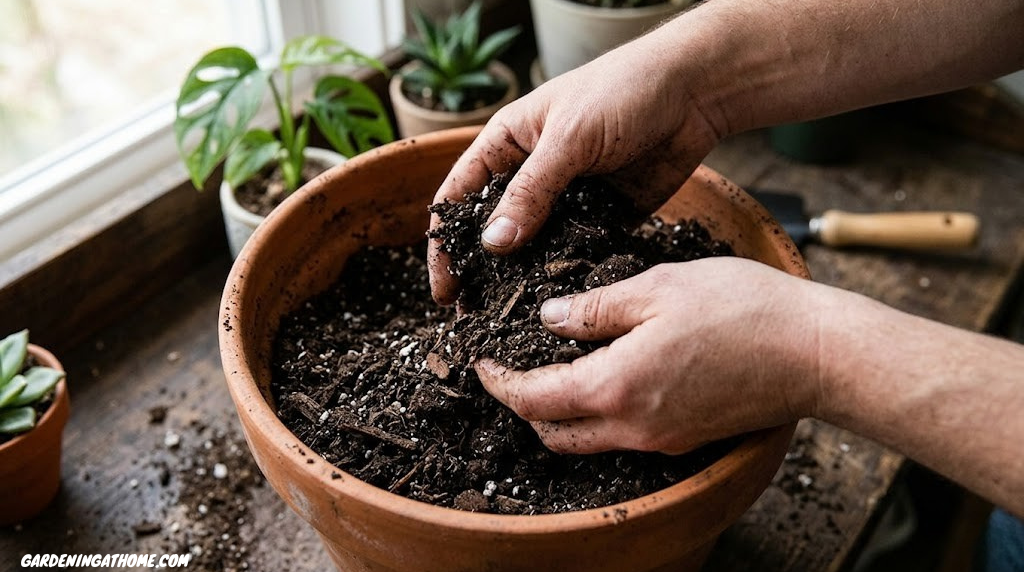
The Best Potting Soil Mix for Indoor Plants (And How to Choose One That Actually Works)
A practical, ingredient-by-ingredient guide to picking or building a potting mix your houseplants will actually thrive in — not just survive in.
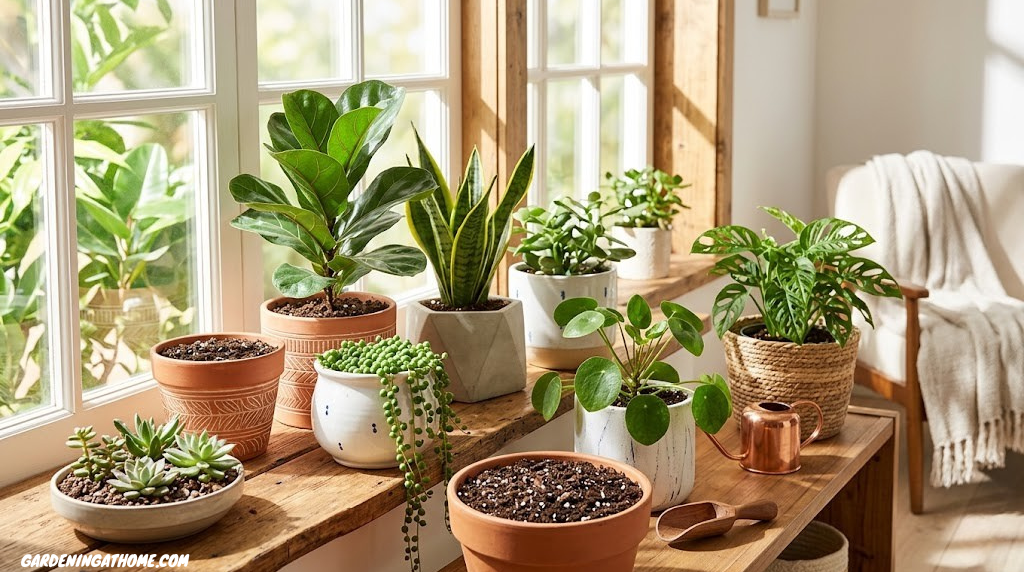
Good soil is invisible when it’s working — and obvious when it isn’t.
If you’ve ever bought a houseplant, repotted it into “regular potting soil,” and watched it sulk for months afterward, the problem usually wasn’t your watering schedule or your light. It was the dirt.
Soil is the single most overlooked variable in indoor plant care. People obsess over light levels, humidity, and fertilizer schedules, but the actual material a plant’s roots are sitting in determines whether all of that other effort even matters. A plant in the wrong soil can get perfect light and still rot from the roots up, simply because water has nowhere to go.
This guide walks through what potting soil mixes are actually made of, how to read a bag at the store, how to match a mix to the plant you’re growing, and how to build your own blend at home if you’d rather mix it yourself. If you’re just getting your indoor growing habit off the ground, it pairs well with our broader guide on starting a garden from scratch and our rundown of essential tools for beginners, since the right soil and the right basic toolkit tend to solve most early plant problems together.
Why Soil Choice Matters More Than People Think
Outdoors, soil is part of a living system. Earthworms aerate it, rain leaches through it, and roots can spread sideways for feet in search of water and nutrients. Indoors, none of that exists. A houseplant is confined to whatever volume of material happens to be inside its pot, and that material has to do every job soil normally does outside: hold water long enough to be useful, drain fast enough to avoid suffocating roots, supply air pockets for root respiration, and anchor the plant physically.
That’s a lot of competing demands for one material, which is exactly why generic “potting soil” so often disappoints. A bag formulated for outdoor garden beds or large planters is usually too dense and too moisture-retentive for a houseplant in a six-inch pot. It looks fine on the shelf and feels fine in your hands, but inside a container with no real evaporation surface and far less airflow than open ground, it stays soggy for days after every watering. Roots that sit in saturated soil are starved of oxygen, and that’s the single most common reason healthy-looking houseplants quietly decline.
The flip side is also true. A mix that’s too lean and fast-draining for a moisture-loving fern will dry out before the plant can take up enough water, leading to crispy leaf edges and stunted growth even when you’re watering on schedule. The “best” soil isn’t a single product; it’s a structural match between drainage, water retention, and the specific plant’s native growing conditions.
This is also where light and watering habits intersect with soil more than people expect. A plant kept in lower light conditions uses water more slowly, so it needs a mix that doesn’t stay saturated for long after each watering — otherwise low light and slow drainage compound into a perfect recipe for root rot.
What’s Actually in a Bag of “Potting Soil”
Pick up almost any bag labeled potting soil or potting mix and flip it over. The ingredient list is rarely soil in the traditional sense — it’s a blend of organic and mineral components chosen for structure rather than fertility alone. Understanding these components is the fastest way to stop guessing and start reading bags like a label, the same way you’d check ingredients on packaged food.
Most commercial mixes are built around four functional categories, even if the exact products vary by brand:
- A base material that bulks out the mix and holds some moisture — typically peat moss, coconut coir, or composted bark.
- An aeration and drainage component that keeps the mix from compacting — usually perlite, pumice, or coarse sand.
- A nutritional component such as compost, worm castings, or a slow-release fertilizer charge.
- Optional additives like wetting agents, lime (to balance pH), or moisture-retaining polymers.
The ratio between the base material and the drainage component is really what defines a mix’s personality. A bag that’s mostly peat with a small amount of perlite will be moisture-retentive and dense; a bag that’s heavy on bark and perlite with less peat will be chunky, airy, and fast-draining. Neither is universally “better” — it depends entirely on what you’re growing.
Potting Soil vs. Potting Mix vs. Garden Soil
These three terms get used interchangeably at the store, which causes most of the confusion. They are not the same thing, and using the wrong one in a container is one of the fastest ways to frustrate an otherwise healthy plant.
Garden soil is mineral soil dug from the ground, sometimes bagged and sold for raised beds or in-ground planting. It contains real clay, sand, and silt particles. In open ground, gravity and worm activity keep it loose. Inside a pot, with no escape route for excess water and no biological activity to keep it aerated, garden soil compacts into something closer to a brick within a few months. It’s also a common way to unintentionally bring in weed seeds, larvae, or fungal spores. Garden soil belongs outdoors, not in a houseplant container.
Potting soil, despite the name, is usually a soil-free blend in modern bags — the labeling is more about market familiarity than technical accuracy. Some potting soils do still include a portion of real compost or mineral soil, which can make them heavier and more nutrient-dense, but also more prone to compaction over time.
Potting mix is the more accurate term for what’s actually inside most quality bags: a soil-free blend of organic material (peat, coir, bark) and mineral aeration material (perlite, pumice), engineered specifically for container performance. When in doubt, “mix” labeling tends to correlate with a lighter, more container-appropriate product, though it’s worth checking the ingredient list regardless of which word is on the front.
| Type | What It Contains | Best Use | Container Suitability |
|---|---|---|---|
| Garden Soil | Mineral soil, clay, sand, silt | Raised beds, in-ground beds | Poor — compacts quickly |
| Potting Soil | Often a soil/compost-heavy blend, sometimes with peat | Larger outdoor containers, general use | Moderate — varies by brand |
| Potting Mix | Soil-free: peat or coir, bark, perlite/pumice | Houseplants, indoor containers | Excellent |
| Seed-Starting Mix | Fine-textured peat or coir, minimal nutrients | Germinating seeds and cuttings | Good for seedlings only |
| Cactus/Succulent Mix | Mineral-heavy: sand, pumice, small amount of organic matter | Succulents, cacti | Excellent for low-water plants |
Key Ingredients Explained
Once you know what each ingredient is doing structurally, choosing or adjusting a mix stops being guesswork.
Peat Moss
Peat has been the backbone of commercial potting mixes for decades because it’s lightweight, holds moisture well, and resists compaction longer than garden soil. It’s naturally acidic, which suits many houseplants but is unsuitable on its own for species that prefer neutral to alkaline conditions. Peat is harvested from bogs, which has made it a sustainability concern in recent years — more on peat-free alternatives later in this guide.
Coconut Coir
Coir is a byproduct of the coconut processing industry and has become the most common peat substitute. It holds moisture similarly to peat but rewets more easily once fully dried out, and it sits closer to neutral pH. The tradeoff is that coir alone provides essentially no nutrients, so mixes built around coir typically need more added compost or fertilizer.
Perlite
These are the small white, popcorn-like particles you’ll see scattered through most bagged mixes. Perlite is volcanic glass that’s been heated until it expands, creating a lightweight, porous material that creates air pockets and dramatically improves drainage. It doesn’t break down or compact over time, which makes it valuable for keeping a mix airy for years.
Vermiculite
Vermiculite looks similar to perlite but behaves almost oppositely — it’s a mineral that expands into flat, absorbent flakes that hold water and nutrients close to the roots. It’s a better fit for moisture-loving plants and for seed starting, where consistent dampness matters more than drainage.
Pumice
Pumice is a lightweight volcanic rock that functions similarly to perlite but is heavier and less prone to floating to the surface after watering. It’s a favorite among succulent and bonsai growers specifically because it doesn’t break down and provides excellent long-term drainage.
Bark and Wood Fines
Composted fir bark or wood fines create large air pockets and slow the rate at which a mix compacts. This is the ingredient that gives orchid and aroid mixes their chunky, almost gravel-like texture — ideal for plants whose roots actually prefer airflow over constant moisture, like many low-light tolerant aroids.
Compost and Worm Castings
These provide the nutritional component of a mix — organic matter broken down into a form plants can use, along with beneficial microbial activity. They’re not a substitute for ongoing fertilization but they do give a new plant a head start.

Want better drainage fast? A bag of horticultural-grade perlite is the single cheapest upgrade you can make to almost any bagged potting mix — just fold in 20–30% by volume.
Check Price on AmazonHow to Choose the Right Mix
The right approach to choosing a potting mix comes down to three questions, asked in order: What plant am I growing? What does it naturally grow in? What structure does the mix need to replicate that?
Most houseplants come from one of three broad environments — tropical forest floors (moisture-retentive, leaf-litter rich), rocky or semi-arid terrain (mineral, fast-draining, low in organic matter), or canopy and epiphytic conditions (practically no soil at all, with roots exposed to air). Each of those origin stories demands a structurally different growing medium.
Assess Your Plant’s Water Needs First
A moisture-loving plant like a calathea, peace lily, or maidenhair fern can handle a peat or coir-heavy mix that holds water for a few days between waterings. A drought-adapted plant like a snake plant, aloe, or echeveria will rot in that same mix if watered even slightly too often. Before you read a bag label, know which camp your plant falls into — that one variable does more to guide the choice than anything else.
Match Drainage to Pot Type
The mix and the pot interact. A terracotta pot wicks moisture out of the soil through its walls, which means a slightly more moisture-retentive mix may be appropriate. A glazed ceramic or plastic pot holds every drop until it evaporates or drains through the hole at the bottom, so it demands a leaner, faster-draining mix to compensate. If your pot has no drainage hole, the soil selection matters even more — you’ll need an extremely chunky, fast-draining mix and to water sparingly, or you’ll drown the roots regardless of species.
Consider the Growing Environment
A plant kept on a bright, sunny windowsill in a warm room will dry out faster than the same plant tucked into a dim corner. In brighter, warmer conditions, a slightly more moisture-retentive mix can work. In low-light or cool spots, lean toward faster drainage to prevent the soil from sitting wet for long stretches.
Best Mixes by Plant Type
Rather than searching for one universal mix, most experienced growers keep two or three on hand and adjust ratios based on the plant. Here are the most common categories and what each needs.
Tropical Foliage Plants (Pothos, Philodendron, Monstera, Peace Lily)
These are the most forgiving category and work well in a standard all-purpose potting mix, ideally with an extra handful of perlite folded in to improve aeration. They evolved in humid forest understories with rich, leafy organic matter at the surface — so a coir or peat base with 20–30% perlite and a small amount of worm castings is nearly ideal.
Aroids and Epiphytes (Hoya, Anthurium, Alocasia)
Aroids generally want even chunkier, more aerated conditions than standard tropical mixes. Many growers use a bark-heavy mix — a combination of fine orchid bark, perlite, and coir — to keep roots surrounded by air pockets rather than consistently wet. The roots of these plants actually breathe oxygen, and they’ll decline quickly in compacted or waterlogged soil.
Succulents and Cacti
These plants need a mineral-forward mix with a high proportion of coarse inorganic material. A good starting ratio is about 50% standard potting mix to 50% perlite or pumice, or a dedicated cactus and succulent mix purchased pre-formulated. The goal is a mix that dries out completely within a day or two of watering.
Orchids
Most orchids grown indoors — particularly phalaenopsis — don’t want traditional potting mix at all. Their roots need to dry almost completely between waterings and require high airflow. Standard orchid mixes are built from coarse fir bark, charcoal, and perlite, with almost no fine organic material.
Ferns, Calatheas, and Moisture-Lovers
These plants prefer consistently moist — not wet — conditions and do well in a mix with a slightly higher moisture retention than average. A peat or coir base with a smaller proportion of perlite (around 10–15% rather than 25–30%) works well. A small amount of compost can also help maintain the right balance of nutrition and structure.
Snake Plants, ZZ Plants, and Drought-Tolerant Houseplants
Despite being sold alongside tropical houseplants, snake plants and ZZs behave much more like succulents in terms of their water requirements. They store water in their rhizomes and roots and are genuinely at higher risk from overwatering than underwatering. Use a standard houseplant mix amended heavily with perlite or a pre-made cactus mix.
Tropical / General
Works for pothos, philodendron, spider plants, and most common houseplants.
Aroid / Epiphyte
Chunky and airy; ideal for monsteras, hoyas, anthuriums, and alocasias.
Succulent / Cactus
Drains fast; appropriate for any plant that stores water in leaves or stems.
Orchid
Maximum airflow; designed for roots that need to dry between waterings.
Moisture-Lovers
Retains moisture longer; good for ferns, calatheas, and peace lilies.
Seed Starting
Fine texture with gentle moisture retention for germination and cuttings.
Mix Comparison Table
This table compares the major structural properties of the ingredient types most commonly found in houseplant potting mixes — useful when you’re deciding what to add or adjust in an existing blend.
| Ingredient | Drainage Effect | Moisture Retention | Nutrient Value | Longevity | Best For |
|---|---|---|---|---|---|
| Peat Moss | Moderate | High | Low | 1–3 years before breaking down | General base for most houseplants |
| Coconut Coir | Moderate | High | Very low | 2–4 years; rewets better than peat | Peat alternative; moisture-loving plants |
| Perlite | High | Very low | None | Indefinite — doesn’t break down | Drainage improvement in any mix |
| Vermiculite | Low | High | Low (holds nutrients) | 2–3 years before compressing | Seed starting; moisture-loving plants |
| Pumice | Very high | Very low | None | Indefinite | Succulents, cacti, bonsai |
| Fir Bark | Very high | Low | Very low | 2–4 years; breaks down slowly | Orchids, aroids, epiphytes |
| Compost | Low–Moderate | Moderate | High | 6–18 months of active nutrition | Nutritional amendment; general use |
| Worm Castings | Low | Moderate | High; slow-release | Gentle and long-lasting | Nutritional amendment; seedlings |
| Coarse Sand | High | Very low | None | Indefinite | Succulents; drainage improvement |
| Charcoal (Horticultural) | Moderate | Low | None | Indefinite | Orchid mixes; terrarium layers; odor control |
DIY Potting Mix Recipes
Making your own potting mix is easier than it sounds and, once you have the base ingredients on hand, significantly more economical than buying separate specialty bags for each plant type. The recipes below use volume measurements so you can scale up or down with any container — a measuring cup, a coffee can, or a bucket all work equally well as your “part.”
General Houseplant Mix
- 2 parts coconut coir or peat-based potting mix
- 1 part perlite
- ½ part worm castings or compost
Works for pothos, philodendrons, monsteras, spider plants, peace lilies, and most common tropical foliage plants. Add an extra ½ part perlite for plants that prefer slightly drier conditions.
Aroid and Epiphyte Mix
- 2 parts fine orchid bark
- 2 parts coconut coir
- 2 parts perlite
- ½ part worm castings
- ¼ part horticultural charcoal (optional)
Excellent for monsteras, hoyas, anthuriums, alocasias, and similar aroids. The bark creates large air pockets that mimic the forest floor debris these plants grow in naturally.
Fast-Draining Desert Mix
- 1 part standard potting mix or coir
- 1 part pumice or perlite
- ½ part coarse horticultural sand
Ensure the sand is coarse builders’ sand or horticultural grit — fine beach or play sand actually worsens drainage by filling air pockets. This mix should dry out completely within 24–48 hours of watering.
Bark-Forward Orchid Mix
- 4 parts medium-grade fir bark
- 1 part perlite
- 1 part horticultural charcoal
For phalaenopsis and other epiphytic orchids. The bark chunks should be large enough that you can see air gaps throughout the pot. Replace this mix every 18–24 months as the bark breaks down.
Fern and Calathea Mix
- 3 parts coconut coir
- 1 part perlite
- 1 part compost or worm castings
A little moisture-retentive by design for plants that like consistency. Keep these in pots with drainage holes and don’t let them sit in standing water — the goal is damp, not waterlogged.

Building your own blends? Coir bricks are the most economical base ingredient — one compressed brick typically expands to fill a full bucket of airy growing medium.
Shop Coconut Coir on AmazonBuying a Bag: What to Look For
The houseplant mix market has expanded considerably in recent years, which is good for availability but makes choosing between bags more confusing. Here’s what to actually look at when you’re standing in the garden center aisle.
Read the Ingredient List, Not the Front Label
The front of the bag is marketing. The ingredient list on the back is the mix. You want to see perlite, pumice, or bark listed near the top — the higher an ingredient appears on the list, the more of it is present. A mix where “sphagnum peat moss” or “coir” is the only listed ingredient and perlite or bark barely appear is going to be denser and more moisture-retentive than you probably want for most houseplants.
Avoid Moisture-Control or Water-Retention Additives for Most Plants
Mixes marketed as “moisture control” or “water retention” often include synthetic polymer crystals or gels designed to hold several times their weight in water. These are designed primarily for outdoor containers where plants dry out quickly in heat and wind — not for indoor houseplants, which already risk sitting in moisture too long. For the average houseplant, these additives increase the risk of root rot without a corresponding benefit.
Check the Fertilizer Situation
Many bagged mixes include a starter charge of slow-release fertilizer — usually labeled as something like “feeds for X months.” This isn’t a problem, but know it’s in there. For plants that are sensitive to over-fertilizing (like orchids), a mix with a high fertilizer charge may need to be flushed well before use, or you may prefer to buy a mix without fertilizer added and feed separately.
Look for Weight as a Clue
A genuinely good indoor potting mix should feel relatively lightweight for its size. Pick up two similar-sized bags and compare. The heavier one almost always has a higher proportion of dense, mineral-soil-adjacent material that will compact more readily over time. A bag that feels surprisingly light for its volume is more likely to contain plenty of bark, coir, and perlite — the ingredients that keep roots happy long-term.
Signs of a Good Mix
- Perlite, pumice, or bark visible in the ingredient list
- Feels lighter than expected for its size
- Chunky texture visible through transparent bags
- No synthetic water-retention polymers for indoor use
- Peat-free or coir-forward (a sustainability bonus)
Signs to Avoid
- No drainage amendments listed in ingredients
- Heavy, dense feel for its bag size
- Moisture-control or water-retention marketing for indoor use
- Strong fertilizer smell or very high NPK on label
- “Garden soil” or “topsoil” listed as an ingredient
Common Mistakes to Avoid
Even experienced growers make soil-related errors, usually because a habit that works for one plant gets applied to an entire collection. These are the most frequent mistakes and why they tend to go unnoticed until damage is already done.
Using the Same Mix for Every Plant
One bag of standard potting mix works adequately for a handful of common tropical plants, but applying it universally to a collection that includes succulents, orchids, and moisture-lovers is a guaranteed path to problems. The soil that keeps your monstera happy will hold too much water for your echeveria and not enough for your maidenhair fern. The few minutes it takes to assess and adjust the mix for each plant type pays dividends across the entire growing season.
Not Adding Extra Drainage to Bagged Mixes
Most commercial potting mixes, even decent ones, are formulated to stay moist long enough for the supply chain — not necessarily long enough to get from the store to your windowsill and then behave perfectly. A quick amendment of 20–30% perlite or pumice folded into a standard bagged mix is the single most common recommendation from experienced growers, and it makes a noticeable difference in how long the soil stays aerated after watering.
Using Fine Sand Instead of Coarse Grit
Fine beach sand or sandbox sand is a surprisingly common drainage amendment, and it almost always makes drainage worse rather than better. Fine sand particles fill the small pore spaces that were doing the work of letting water through, creating a denser, more compacted texture. Always use coarse horticultural grit or perlite when adding mineral drainage material to a mix.
Repotting Into a Much Larger Container
Jumping from a small pot to a significantly larger one introduces a large volume of un-used soil around the root ball. That excess soil stays wet long after the roots have absorbed all they need, creating a perpetually damp environment that promotes root rot. Step up by one pot size — roughly two inches of diameter — and repot again when the plant fills it.
Never Refreshing the Soil
Potting mix doesn’t last forever. The organic components break down, the perlite migrates to the surface, and the pH can drift over time. A plant that thrived in its first year and has slowly declined since may simply be sitting in spent, compacted growing medium. A top-dressing of fresh compost or a full repot with new mix is often all it takes to trigger a noticeable recovery.
When and How to Refresh Soil
Soil refreshing and repotting are often treated as the same thing, but they serve slightly different purposes. Refreshing is about restoring the structure and nutrition of the growing medium; repotting is about giving the root system more space. Both matter, and sometimes the plant needs one without the other.
Signs It’s Time to Repot
- Roots visibly circling the bottom of the pot or growing out of the drainage hole
- The plant dries out noticeably faster than it used to
- Water runs straight through the pot without being absorbed, suggesting the roots have displaced most of the soil
- The plant has become top-heavy and unstable in its pot
Signs the Soil Needs Refreshing Even Without Upsizing
- Soil surface has crusted over and repels water initially
- The mix looks visibly collapsed or compacted compared to when you first potted the plant
- Growth has slowed without other obvious cause (reduced light, seasonal slowdown)
- Mineral deposits visible on the soil surface from hard tap water
How to Repot Without Shocking the Plant
Water the plant well a day before repotting. A well-hydrated plant handles root disturbance better than a dry one, and the moist root ball holds together more cleanly when you unpot it.
Choose your new pot carefully. The new container should be one size up — about two inches larger in diameter. Ensure it has a drainage hole. Clean the pot if it’s been used before.
Prepare your fresh mix in advance. Have it ready before you remove the plant from its old pot. If you’re amending a bagged mix with perlite, blend it now.
Gently remove the plant and inspect the roots. Shake off excess old soil and look for any brown, mushy, or foul-smelling roots — these are dead or rotting and should be trimmed with clean scissors before repotting.
Add a base layer of fresh mix to the new pot. Set the plant in and check that it will sit at the same depth as before. Fill in around the sides with fresh mix and firm it lightly — not packed down, just settled enough to eliminate large air gaps.
Water thoroughly and allow to drain completely. Then wait until the top layer of soil dries before watering again. Avoid fertilizing for the first four to six weeks — fresh mix often provides enough to get the plant established.
Troubleshooting Soil Problems
Most soil-related plant problems fall into a small number of recognizable patterns. Here’s how to diagnose and correct the most common ones.
Water Runs Straight Through Without Absorbing
This usually means the peat or coir base has dried out so thoroughly that it’s become hydrophobic — it’s now repelling water rather than absorbing it. To fix this, either bottom-water the pot by setting it in a tray of water and allowing it to soak up from below over 20–30 minutes, or add a very small amount of mild dish soap to the watering water (one drop per gallon) which acts as a wetting agent to help the soil re-hydrate. For a long-term fix, add more bark or perlite at the next repot to prevent the mix from drying into a solid block.
Soil Stays Wet for Days After Watering
The mix has too high a proportion of moisture-retentive material for this plant’s needs, the pot is too large for the root system, or the pot lacks adequate drainage. Check the drainage hole first — it may be blocked by roots or debris. If drainage is fine, amend the mix with perlite at the next repot, or step down to a smaller pot if the root ball is much smaller than the container.
White Crust on Soil Surface
This is mineral deposit buildup from hard tap water — the calcium, magnesium, and other minerals left behind after water evaporates. It’s cosmetically unpleasant and over time can raise soil pH. Flush the pot thoroughly with a large amount of water every few months to help leach minerals out. Switching to filtered or rainwater reduces how quickly deposits accumulate. Scraping the top layer and replacing with fresh mix also helps.
Fungus Gnats Appearing Near the Soil
Fungus gnats lay eggs in moist soil and their larvae feed on organic material in the upper inch or two of the potting mix. They’re rarely a serious plant health problem but are annoying in a home environment. Let the soil dry out more thoroughly between waterings — gnats need consistently moist surface soil to complete their life cycle. Top-dressing with a thin layer of horticultural sand or perlite creates a dry barrier that disrupts egg-laying without affecting the plant below.
Plant Suddenly Declining in Previously Healthy Soil
Unpot and check the roots. Brown, soft, or foul-smelling roots indicate root rot from overwatering or waterlogged soil. Trim all damaged roots cleanly, let the root system air for an hour, then repot into fresh, dry mix. Hold off on watering for a few days to allow any root wounds to callus. If the roots look healthy, the decline may be nutritional — the mix may simply be depleted and due for a refresh.
Sustainable and Peat-Free Options
Peat moss has been the default potting mix ingredient for nearly a century, but its sustainability credentials are poor. Sphagnum peat bogs are carbon sinks that take thousands of years to form — harvesting them at commercial scale releases stored carbon and destroys a habitat type that supports rare plant and insect communities. The UK has largely moved away from peat in consumer horticulture, and similar shifts are underway elsewhere.
Coconut Coir
Coir is currently the most widely adopted peat alternative. It’s a byproduct of coconut processing that would otherwise be discarded, which gives it strong sustainability credentials on the waste-reduction front. Its water retention and aeration properties are similar enough to peat that most gardeners find it a seamless swap. The main sustainability caveat is transport — coir is produced primarily in South Asia and Sri Lanka, which adds shipping miles to its footprint.
Composted Wood Fibre
Wood fibre mixes, made from sustainably sourced timber processing waste, are becoming more widely available and perform reasonably well as peat substitutes. They tend to be more open in texture than peat, which can benefit drainage but may require slight adjustments to watering frequency.
Leaf Mould
Composted deciduous leaves, known as leaf mould, are an excellent low-cost sustainable ingredient for homemade mixes. If you have access to deciduous trees — oaks, beeches, and maples are ideal — making leaf mould by composting collected leaves over a year or two produces a lightweight, nutrient-gentle ingredient that plants respond well to. It can replace or supplement compost in a DIY recipe.
Biochar
Biochar is charred plant material that improves soil structure, supports microbial communities, and remains stable in the soil for a very long time. As an amendment rather than a base material, a small amount (5–10% by volume) added to any houseplant mix can improve aeration, help retain nutrients, and improve overall mix longevity. It’s increasingly available in garden centres under the label “horticultural biochar.”
Frequently Asked Questions
What is the best potting soil mix for indoor plants?
There is no single best mix for every indoor plant, because different houseplants evolved in different soil conditions. A reliable all-purpose indoor mix usually combines a peat-free or peat-based base with perlite or pumice for drainage and a smaller amount of compost or worm castings for nutrition. Aroids and tropical foliage plants generally do well in a chunky, well-aerated mix, while succulents and cacti need a leaner, faster-draining version, and orchids need almost no traditional soil at all.
Can I just use regular garden soil for houseplants?
Garden soil is not recommended for containers. It compacts quickly once it is confined in a pot, drains poorly, and can introduce pests, weed seeds, or pathogens into your home. Potting mixes are formulated specifically to stay light and airy inside a container, which garden soil cannot replicate over time.
How often should I repot with fresh potting soil?
Most houseplants benefit from a soil refresh or repot every twelve to eighteen months, though fast growers may need it sooner and slow growers like cacti can go two to three years. The clearest signs it is time are roots circling the bottom of the pot, water running straight through without being absorbed, or visibly compacted, lifeless-looking soil.
What is the difference between potting soil and potting mix?
The terms are often used interchangeably, but technically potting soil may contain some actual mineral soil or compost-heavy ingredients, while a potting mix is typically soil-free, built from materials like peat, coir, bark, and perlite. Most quality bags sold for houseplants today are soil-free mixes, even when the bag says soil.
Is perlite or vermiculite better for indoor plants?
Perlite and vermiculite serve different purposes. Perlite is lightweight volcanic glass that creates air pockets and improves drainage, making it the better choice for plants that dislike wet feet, such as succulents and aroids. Vermiculite holds onto moisture and is better suited to plants that prefer consistently damp soil, such as ferns or seed-starting trays.
Do succulents and cacti need a special soil mix?
Yes. Succulents and cacti store water in their tissue and are highly prone to root rot in moisture-retentive soil. They need a lean, fast-draining mix that is heavier in mineral material like coarse sand, pumice, or perlite and lighter in organic matter compared to a standard houseplant mix.
Why is my potting soil compacting and not draining well?
Compaction usually happens because the organic components in a mix, like peat or coir, break down over time and collapse into a denser texture, or because the mix never had enough chunky material such as bark or perlite to begin with. Watering with hard tap water and mineral buildup can also contribute to surface crusting and poor drainage.
Should I add fertilizer directly to my potting mix?
Many bagged mixes already include a small starter charge of fertilizer, which typically lasts a few weeks. Beyond that, it is usually better to fertilize separately on a schedule suited to the specific plant, rather than relying on what is already in the bag, since indoor plants have very different feeding needs depending on species and season.
Can I reuse old potting soil from a previous plant?
Old potting soil can sometimes be revived by mixing it with fresh compost, perlite, and a bit of new mix to restore structure and nutrients, but it should not be reused as-is, especially if the previous plant had pest or disease issues. For a plant that struggled, starting with fresh soil is the safer choice.
What soil mix is best for a snake plant or ZZ plant?
Snake plants and ZZ plants are highly drought-tolerant and store water in their rhizomes, so they do best in a fast-draining mix similar to a succulent blend, often a standard houseplant mix amended with extra perlite or coarse sand to prevent the soil from staying wet for long periods.
Is it cheaper to make my own potting mix than buy one?
For people with several houseplants, buying base ingredients like peat or coir, perlite, and compost separately and blending them at home is usually more economical per quart than buying multiple specialty bags, and it allows the ratio to be adjusted for each plant’s needs.
Getting the Soil Right Changes Everything
Most houseplant frustration — the yellowing leaves, the drooping that doesn’t respond to watering, the slow but steady decline of an otherwise well-positioned plant — traces back to what’s actually in the pot. Soil isn’t an invisible background condition; it’s the active environment that every other variable has to work through.
The fundamentals are simple: match the mix to the plant’s native drainage preferences, lean toward more aeration than you think you need, read bag ingredient labels rather than front-label claims, and refresh the growing medium every year or two. Whether you build your own blend from base ingredients or amend a quality bagged mix with extra perlite, the difference shows up quickly in how your plants grow.
If you’re expanding your collection, our guides on the best low-light houseplants and essential tools for new growers pair well with what you’ve read here — good soil and the right plant for the right spot tend to solve each other’s problems.
Browse Top-Rated Potting Mixes on Amazon