🌿 Plant Care Deep-Dive
Is Your Plant Drowning or Thirsting? The Complete Guide to Overwatering vs Underwatering
Read the signals your leaves, soil, and roots are sending — and know exactly what to do next.
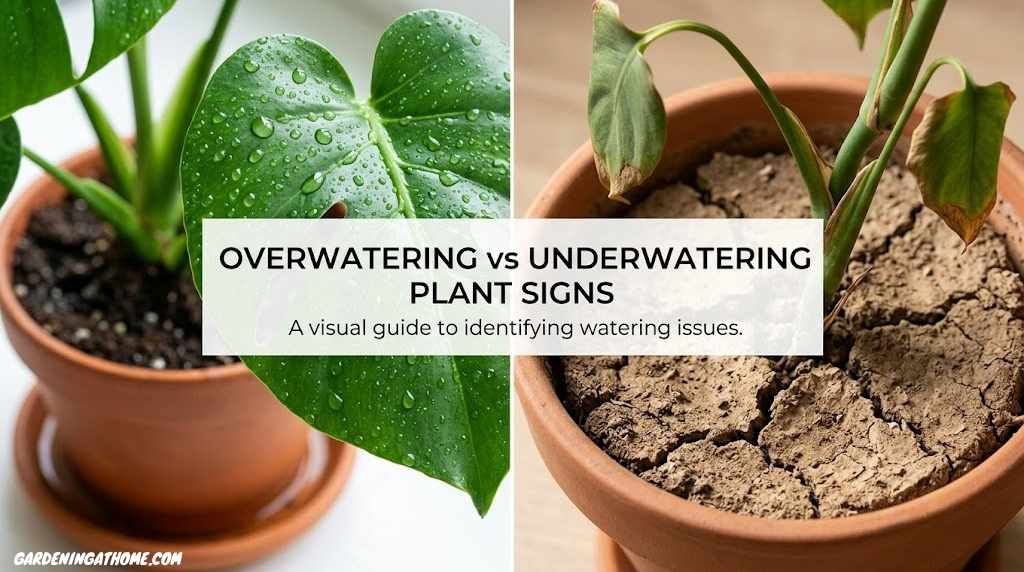
Every gardener, from seasoned growers to apartment plant parents just starting out, has stood over a struggling plant wondering the same thing: is it getting too much water, or not enough? The tricky part? Both problems can look frustratingly similar. This guide gives you the tools to tell them apart — and to fix whichever one you’re dealing with, fast.
The Root of the Problem: Why Watering Goes Wrong
Water is the lifeblood of every plant. It carries nutrients from the soil into the roots, keeps cells turgid, fuels photosynthesis, and regulates temperature. But water in the wrong quantity — too much or too little — becomes the very thing that kills the plant it’s meant to sustain.
What makes this so challenging is that overwatering and underwatering share many surface-level symptoms. Yellowing leaves, wilting, and slowed growth can all appear in both scenarios. The difference lies deeper: in the soil, the roots, and the texture of the affected tissues.
Overwatering is consistently cited as the number one cause of houseplant death. Yet underwatering — especially with busy schedules or forgetful plant parents — runs a close second. Getting the diagnosis right is the only way to apply the correct fix, because the remedy for one problem is the poison for the other.
Whether you’re learning how to start a garden from scratch or managing a whole collection of indoor pots, the principles of healthy watering apply universally. Before we dive into the signs, it helps to understand what’s actually happening to the plant in each scenario.
When a plant is overwatered, the roots sit in waterlogged soil with little to no oxygen. Plant roots need air to breathe. Saturated soil displaces oxygen from air pockets between soil particles, effectively suffocating the roots. Anaerobic conditions invite fungal pathogens, which attack the weakened root tissue. As roots die, they lose the ability to absorb water and nutrients — meaning an overwatered plant can simultaneously show signs of drought stress, even while drowning.
When a plant is underwatered, the soil dries out completely, and roots lose the medium they need to function. Cells in leaves and stems lose turgor pressure (their internal water pressure), causing the plant to wilt. Without water moving through the vascular system, nutrient transport halts, photosynthesis slows, and the plant enters survival mode — dropping leaves, browning at the edges, and eventually dying back.

Soil Moisture Meter — Know Before You Water
Eliminate all guesswork. A digital moisture meter gives you an instant, accurate reading of soil moisture at root level — the single most reliable tool for preventing both overwatering and underwatering.
View on Amazon →Signs of Overwatering: What to Look For
Overwatering doesn’t always look like a flooded pot. In many cases, the damage is slow and cumulative — the result of watering on a rigid schedule without checking whether the plant actually needs it. The signs below range from early and subtle to advanced and critical.
Leaves: The First Place to Look
The leaves of an overwatered plant tell a clear story if you know what to read. The most common leaf symptoms of overwatering include:
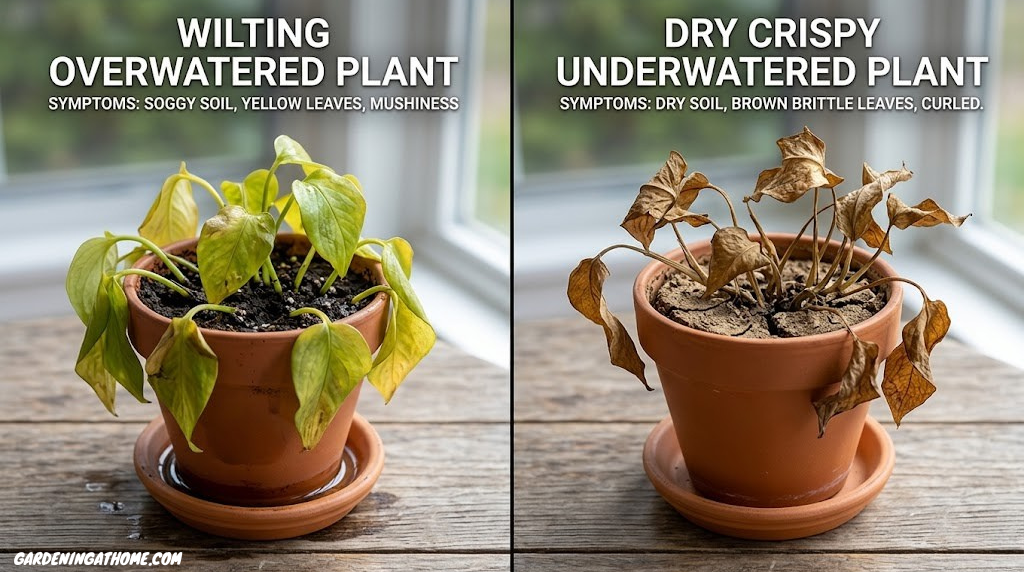
- Yellowing leaves — particularly lower leaves and ones close to the soil. The yellow is usually soft and even across the leaf surface, not patchy or crispy.
- Soft, mushy leaf texture — when you gently squeeze an affected leaf, it feels limp or water-logged rather than firm.
- Brown tips or edges that are soft — as opposed to the brittle, dry brown edges seen in underwatered plants.
- Leaves dropping while still green — a plant shedding leaves that aren’t yet yellowed or browned is a strong indicator of root stress from overwatering.
- Blisters or water-soaked patches — called oedema, these appear when root pressure forces excess water into leaf cells faster than the plant can transpire it, causing cells to burst.
- New growth wilting or dying — new leaves that should be growing vigorously but appear stunted, pale, or limp indicate that roots can no longer sustain the plant despite available soil moisture.
Soil and Pot Clues
Sometimes the plant itself isn’t the most obvious indicator — the soil and container give it away first. Push your finger 2 inches into the soil. If it comes out wet or coated in muddy soil, the plant has been watered too recently or too frequently. A well-structured potting soil mix should retain some moisture but never become waterlogged for more than a day or two after watering.
- Soil that remains wet 4–7 days after watering
- A musty, sour, or mildew-like smell coming from the soil
- Green algae or mold growing on the soil surface
- Fungus gnats hovering around the pot — these insects breed in consistently moist soil. If you’re battling them, visit our guide on how to get rid of fungus gnats naturally.
- The pot feels very heavy relative to its size
If you lift the plant from its pot and see black, brown, or mushy roots with a foul smell, root rot has already set in. This is the end-stage of chronic overwatering and requires immediate intervention — more on this in the root rot section below.

Self-Watering Planters — Never Overwater Again
These smart pots have a water reservoir at the base that lets plants draw up moisture as needed — dramatically reducing overwatering risk while keeping soil consistently moist without saturation.
View on Amazon →Signs of Underwatering: What Drought Stress Looks Like
Underwatered plants are in survival mode. Without adequate water moving through their vascular system, they begin sacrificing non-essential tissue — dropping leaves, curling foliage, and shutting down growth — to conserve whatever internal moisture they have left. The symptoms are often more visually dramatic than overwatering.
Visible Leaf and Growth Symptoms
- Wilting that doesn’t recover overnight — a mildly underwatered plant may perk up when temperatures drop in the evening, but a severely underwatered one remains wilted even after cooler hours.
- Dry, crispy brown tips or leaf edges — starting at the outer edges and tips, with a clearly defined boundary between the brown-dead tissue and the still-green inner portion.
- Leaves curling inward or downward — this is a self-protective mechanism. Curling reduces the leaf surface area exposed to air, limiting moisture loss through transpiration.
- Yellowing that starts at the tips — unlike overwatering yellowing which affects whole leaves evenly, underwatering yellowing tends to be concentrated at tips and edges.
- Leaf drop en masse — plants drop leaves quickly when stressed by drought to reduce the water demand of maintaining foliage.
- Stunted or halted growth — the plant slows all growth processes and focuses on survival rather than expansion.
- Dull, matte leaf surface — well-hydrated plants have a slight natural sheen. Dehydrated leaves appear flat and matte, sometimes even slightly grayish.
Soil and Container Clues
The soil doesn’t lie. When a plant is underwatered, the soil tells you immediately. Some key indicators:
- Soil pulls away from the sides of the pot, creating a visible gap
- The soil feels hard, compacted, or powdery dry
- Water runs straight through the pot during watering rather than absorbing — a sign the soil has become hydrophobic (water-repellent) from extended dryness
- The pot feels noticeably light when you lift it
- Roots may start growing out of drainage holes searching for moisture
If you’re growing vegetables in containers or managing an indoor herb garden, drought stress can be particularly damaging because many edible plants have no drought tolerance at all during active fruiting or flowering.
🔴 Overwatering — Key Signs
- Soft, yellow lower leaves
- Mushy stems at base
- Wet soil, foul smell
- Mold on soil surface
- Fungus gnat presence
- Green leaves dropping
- Oedema blisters on leaves
🔵 Underwatering — Key Signs
- Crispy, brown leaf tips/edges
- Leaves curling inward
- Bone-dry, cracked soil
- Soil pulling from pot edges
- Light pot weight
- Wilting despite no disease
- Water runs straight through

Precision Watering Can with Long Spout
Targeted watering at the soil line — not on the foliage — reduces fungal issues and makes it easier to control how much water each plant receives. A good tool for both beginners and experienced gardeners.
View on Amazon →Overwatering vs Underwatering: The Complete Comparison
Use this table as your at-a-glance diagnostic tool whenever a plant starts showing symptoms. Run through each row and check which column matches what you’re observing.
| Indicator | Overwatering | Underwatering |
|---|---|---|
| Leaf color | Yellow (uniform), pale green | Yellow-tipped, brown-edged |
| Leaf texture | Soft, mushy, limp | Crispy, dry, papery |
| Wilting | Soft, limp wilt despite wet soil | Firm wilt with dry, bone-dry soil |
| Leaf curl | Downward (less common) | Inward or upward (very common) |
| Brown tips/edges | Soft, dark, wet-looking | Dry, crispy, well-defined |
| Leaf drop | Green leaves falling | Yellow/dry leaves falling |
| Soil moisture | Wet 4–7+ days after watering | Bone dry, cracked, pulling from edges |
| Soil smell | Musty, sour, mildew-like | Neutral or dusty |
| Pot weight | Unusually heavy | Noticeably light |
| Root appearance | Brown/black, mushy, smelly | White/tan, very dry, brittle |
| Soil surface | Mold, algae, fungus gnats | Cracked, hydrophobic, powdery |
| Stem base | Soft, mushy, darkened | Dry, firm, may be shrunken |
| Water behavior | Pooling on surface, slow drain | Runs straight through without absorbing |
| Recovery speed | Slow (days to weeks) | Fast (hours to 24h if mild) |
| Severity risk | Higher — root rot, plant death | Moderate — reversible if caught |
When in doubt, always check the soil moisture at 2 inches depth before diagnosing. Wet soil + wilting = overwatering. Dry soil + wilting = underwatering. This single check resolves over 80% of ambiguous cases.
The Yellow Leaf Problem: Overwatering or Underwatering?
Yellow leaves are one of the most frustrating symptoms in plant care precisely because they appear in both conditions — and in several others too (nutrient deficiency, low light, natural aging). Here’s how to decode yellow leaves specifically in the context of watering problems.
Yellow Leaves from Overwatering
When overwatering causes yellowing, you’ll notice that the leaves feel soft and limp rather than firm. The yellowing usually begins on the lower, older leaves and spreads upward. The entire leaf surface turns yellow evenly — not just the tips or edges. If you press the yellowed leaf between your fingers, it offers little resistance and may feel slightly wet or swollen.
This type of yellowing is caused by chlorophyll breakdown due to root failure. When roots are suffocating in waterlogged soil, they can no longer absorb the nutrients — particularly nitrogen and magnesium — that maintain green leaf color. Ironically, even though water surrounds the roots, the damaged roots can no longer process it, creating a nutrient starvation effect.
Yellow Leaves from Underwatering
Underwatering-related yellowing looks different. The leaves feel dry and papery, and the yellowing starts at the tips and outer edges first. There’s often a clear color gradient — green center fading to yellow to brown at the tip. The leaf doesn’t go limp immediately; it may stay somewhat rigid or stiff even when yellowed.
This yellowing happens because water-stressed plants begin breaking down chlorophyll in older leaves and reabsorbing the nutrients to redirect them to newer growth — a process called nutrient remobilization. The plant is essentially cannibalizing its own older leaves to keep the youngest growth alive.
| Feature of Yellow Leaf | Overwatering | Underwatering |
|---|---|---|
| Leaf texture | Soft, limp, slightly mushy | Dry, stiff, papery |
| Where yellowing starts | Whole leaf uniformly | Tips and edges first |
| Which leaves affected | Lower, older leaves first | Any leaf, often newest growth last |
| Brown mixed in? | Soft, dark brown patches | Crispy, light brown tips |
| Soil condition | Wet or consistently moist | Dry, light, cracking |
For indoor plants in low-light situations, it’s also worth noting that insufficient light can cause yellowing independent of watering — worth checking our guide on the best indoor plants for low light to make sure you have appropriate species for your conditions.
Wilting: The Symptom That Fools Everyone
Wilting is the classic “my plant needs water” alarm bell. And most of the time, it is — but not always. Overwatered plants can wilt just as dramatically as underwatered ones, and giving a wilting plant more water without checking first can push an already struggling plant over the edge.
Why Overwatered Plants Wilt
This seems paradoxical at first: how can a plant surrounded by water lack water? The answer lies in the roots. When roots rot due to chronic waterlogging, they lose their ability to absorb and transport water. The leaves and stems receive no water from a destroyed root system — exactly as if the plant had no water at all. The result is wilting that looks identical to drought stress on the surface, but comes from a completely different and far more serious cause.
The key differentiator: an overwatered wilting plant will have wet or damp soil and potentially a musty smell. An underwatered wilting plant will have completely dry soil that’s light and possibly pulling from the pot edge.
Types of Wilt: A Diagnostic Guide
| Wilt Type | Likely Cause | Soil Check | Leaf Feel |
|---|---|---|---|
| Soft, limp, overall plant | Overwatering | Wet or damp | Mushy, dark |
| Firm wilt, curling inward | Underwatering | Bone dry | Dry, papery |
| Midday wilt, recover at night | Heat/Transpiration | Adequate moisture | Normal |
| Sudden collapse, full plant | Severe Root Rot | May appear fine on surface | Limp, discolored |
If a wilting plant has adequately moist soil, do NOT water it. Instead, move it out of direct sunlight, mist the leaves lightly, and check again in 24 hours. If roots are still functional, the plant will begin to recover. If it continues wilting despite moist soil, inspect the roots for rot.
Root Rot: The Silent Consequence of Overwatering
Root rot is the most feared consequence of chronic overwatering, and for good reason: by the time it’s visible above the soil, significant damage has already occurred. Understanding root rot — what causes it, how to spot it, and when it’s still treatable — can mean the difference between saving a plant and losing it entirely.
What Causes Root Rot?
Root rot is caused by a combination of oxygen deprivation and fungal attack. When soil is saturated with water for extended periods, the air pockets between soil particles fill with water, cutting off the oxygen supply that roots need to function. Weakened by oxygen starvation, root cells become vulnerable to opportunistic fungal pathogens — most commonly Pythium, Phytophthora, and Fusarium species — which spread through saturated soil and digest root tissue rapidly.
How to Diagnose Root Rot Without Repotting
You don’t always need to unpot a plant to check for root rot. These surface-level signals are strong enough indicators on their own:
- A persistently foul, musty, or sulfur-like smell from the soil
- The base of the stem feels soft and dark when gently squeezed
- Leaves continue to wilt or yellow despite adequate soil moisture
- The plant feels unstable or loose in its pot (destroyed root anchorage)
- Black liquid drainage from the pot’s drainage holes
If multiple signals line up, it’s time to unpot and examine the roots directly. Healthy roots are white, cream, or tan with a firm texture. Rotted roots are brown to black, have a soft or mushy consistency, and smell unpleasant.
Root rot can progress from treatable to fatal within 48–72 hours under the right conditions. If you suspect root rot, act immediately. Do not wait to see if the plant improves on its own — it will not without intervention.
For plants with poor drainage or very dense potting mixes, root rot risk is significantly higher. Always ensure your pot has adequate drainage holes, and consider choosing the right pot size to avoid excess soil volume that stays wet long after watering.

Neem Oil — Natural Fungal Protection for Roots
Diluted neem oil solution applied as a root drench helps suppress the fungal pathogens responsible for root rot. An effective natural treatment when root rot is caught in early to mid-stages.
View on Amazon →How to Check Soil Moisture Accurately
The most reliable way to avoid both overwatering and underwatering is to stop guessing and start checking. There are several methods — ranging from completely free to gadget-assisted — that give you an accurate picture of what’s happening at root level.
Method 1: The Finger-Dip Test
Insert your finger 1–2 inches into the soil
Push your index finger straight down into the soil up to the second knuckle. This gets you past the surface layer, which dries out faster than root-zone soil.
Assess the moisture level
Dry and dusty = underwatered. Cool and damp = adequate. Wet and muddy = overwatered or recently watered. For succulents and cacti, wait until the soil is fully dry (test at 3–4 inches depth).
Water only when appropriate
For most houseplants: water when the top 1–2 inches are dry. For drought-tolerant plants: water when the top 3–4 inches are dry. For water-loving plants (ferns, peace lilies): water when just the top ½ inch is dry.
Method 2: The Lift Test
This quick method works especially well once you know your plant. Lift the pot immediately after watering to feel how heavy it is when fully saturated. Then lift it before you water next time. A dramatically lighter pot means the soil has dried out significantly — time to water. With practice, this weight difference becomes an intuitive guide.
Method 3: The Wooden Skewer Test
Insert a wooden chopstick or barbecue skewer all the way to the bottom of the pot. Leave it for 60 seconds, then withdraw it. If the skewer comes out clean and dry, the soil is dry throughout. If it comes out with wet soil clinging to it, moisture is still present in the lower root zone.
Method 4: Digital Moisture Meter
A soil moisture meter takes a reading in seconds and eliminates all subjectivity. Insert the probe to mid-pot depth, and the meter gives a numerical reading on a scale of 1–10 (dry to wet). This is the most reliable method, particularly for beginners or for plants in large, deep containers where the finger-dip test can’t reach the root zone. If you’re following our advice on cheap gardening ideas for beginners, a basic moisture meter is one of the most cost-effective investments you can make.
Overwatering vs Underwatering by Plant Type
Not all plants respond to water the same way. Understanding your specific plant’s natural habitat and water needs is crucial for getting the diagnosis right. Here’s a breakdown by major plant category.
Succulents and Cacti
These desert natives are the most commonly overwatered plants in existence. Their leaves, stems, and pads store water, making them highly drought tolerant and extremely sensitive to excess moisture.
🔴 Overwatered Succulent
- Translucent, swollen leaves
- Mushy base and stem
- Leaves fall off with light touch
- Brown, watery leaf spots
- Root rot very likely
🔵 Underwatered Succulent
- Wrinkled, shriveled leaves
- Rubbery, pliable texture
- Leaves may thin or flatten
- Slow or no new growth
- Soil bone dry 2+ weeks
For succulents: allow soil to dry completely — including down to the bottom of the pot — between waterings. Most succulents grown indoors need watering once every 2–4 weeks depending on light levels and season.
Tropical Foliage Plants (Pothos, Monsteras, Peace Lilies)
These plants enjoy consistent moisture but not sogginess. They’re more forgiving than succulents but still vulnerable to root rot if kept wet too long.
- Overwatered tropicals: yellow lower leaves that are soft; stems becoming limp despite moist soil; brown leaf tips with a water-soaked, dark appearance
- Underwatered tropicals: peace lilies will dramatically wilt and droop as a clear signal (they actually recover very well after watering); monstera leaves curl; pothos leaves yellow and crisp at tips
Pothos and monsteras are commonly recommended as plants for low-light environments, but reduced light also means reduced water demand — a crucial consideration when you’re adjusting your watering schedule.
Herbs (Basil, Mint, Parsley, Thyme)
Different herbs have very different water needs, which makes growing mixed herb gardens tricky. Mediterranean herbs like thyme and rosemary come from dry, rocky climates and are very overwatering-prone. Moisture-loving herbs like basil, mint, and cilantro need more consistent water.
- Basil wilting dramatically = underwatering (it’s very expressive and recovers quickly)
- Thyme yellowing from base = overwatering (classic root rot pattern in Mediterranean herbs)
- Mint going pale and leggy = often underwatering combined with low light
Check our guide to starting an indoor herb garden for more species-specific watering advice.
Outdoor Vegetables and Tomatoes
Vegetables — especially fruiting crops like tomatoes, peppers, and zucchini — are among the most water-demanding plants in the garden, but they also suffer from both over- and underwatering in distinctive ways.
- Tomato overwatering: lower leaves yellow and drop; fruit develops blossom end rot (calcium uptake failure from inconsistent watering); soil stays wet and develops a sour smell
- Tomato underwatering: leaves curl tightly, fruit cracks as it alternately shrinks and expands, blossom drop in hot weather
For container-grown tomatoes — especially those growing on a balcony in smaller pots — both extremes are a constant challenge because containers dry out fast and have no ground buffer to draw from.
Air Plants (Tillandsia)
These unusual plants absorb moisture through their leaves, not roots. Signs are reversed from normal: overwatered tillandsia develop base rot and their inner leaves collapse inward. Underwatered tillandsia show rolled or excessively curled leaves with a grayish color and very little natural sheen.
If you’re growing microgreens at home, watering works differently — surface-only misting is the norm, and overwatering risk is primarily mold on the growing medium rather than root rot in traditional soil.
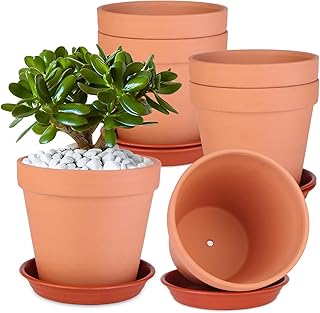
Terracotta Pots with Drainage Holes — Best for Moisture Management
Terracotta is the gold standard for plant moisture control. Its porous walls allow air exchange and prevent soil saturation, making overwatering significantly less likely. Perfect for succulents, herbs, and any plant prone to root rot.
View on Amazon →How to Fix an Overwatered Plant
Recovering an overwatered plant is entirely possible — but it requires prompt action and the right sequence of steps. The approach varies depending on whether you’re dealing with early-stage waterlogging or advanced root rot.
Stage 1: Mild to Moderate Overwatering (No Root Rot)
Stop watering immediately
This sounds obvious, but it’s critical. No more water until the soil has completely dried out through the root zone. This alone allows the root system to begin recovering if damage isn’t extensive.
Improve drainage and aeration
If the pot has no drainage hole, transfer the plant immediately to a pot with holes. If it does have drainage, check that holes aren’t blocked. Remove any standing water from saucers after 30 minutes.
Improve air circulation around the plant
Moving the plant to a warmer spot with better airflow helps the soil dry out faster. You can also carefully insert a chopstick around the edge of the soil to create air channels without disturbing the roots.
Wait and monitor
Give the plant 7–14 days to stabilize. Some yellowing may continue as the plant sheds damaged leaves — this is normal. New growth emerging green and healthy signals that recovery is underway.
Stage 2: Advanced Overwatering with Root Rot
Remove the plant from its pot
Gently tip the pot sideways and ease the root ball out. Work carefully to avoid breaking remaining healthy roots. Shake off as much of the old soil as possible.
Trim rotted roots with sterile scissors
Cut away all brown, black, or mushy root tissue until only white, firm, healthy roots remain. Sterilize your scissors with rubbing alcohol between cuts to prevent spreading fungal pathogens.
Allow roots to air dry
Set the plant in a dry, shaded spot for 2–4 hours to let the cut root ends callous over slightly. This reduces the risk of immediate reinfection.
Repot in fresh, well-draining mix
Use fresh, dry potting soil — never reuse the old mix, which harbors fungal pathogens. Choose a potting soil with good drainage properties. Add perlite (10–20% by volume) to improve aeration.
Water lightly and with care
Give the soil a small amount of water to settle it around the roots. Wait until the top inch is dry before watering again. Consider applying a diluted hydrogen peroxide solution (3% strength, 1:4 with water) to the soil to oxygenate root tissue and suppress remaining pathogens.
✓ What Helps Recovery
- Fresh, sterile potting mix
- Pot with excellent drainage
- Warm, bright indirect light
- Good air circulation
- Patience — no more watering rush
✗ What Sets Back Recovery
- Reusing contaminated old soil
- Watering before soil dries
- Pots without drainage holes
- Cold, dark, stagnant air location
- Fertilizing while plant is stressed
Do not fertilize a plant recovering from root rot for at least 4–6 weeks. Damaged roots cannot process concentrated nutrients and fertilizer salts will burn exposed root tissue. Once healthy new growth appears, you can introduce fertilizer at quarter strength. Learn more about how and when to fertilize houseplants for the best timing.
How to Fix an Underwatered Plant
The good news: underwatering is almost always easier and faster to fix than overwatering. Most plants can recover from mild to moderate drought stress within hours to a day after proper rehydration. The challenge comes when soil has become hydrophobic — so dry that water can no longer penetrate and simply runs off the surface.
For Mildly Underwatered Plants
Water thoroughly at the soil surface
Water slowly and deeply, allowing each pour to absorb before adding more. Continue until water runs freely from the drainage holes. This ensures the entire root zone receives moisture — not just the top inch.
Remove excess water from the saucer after 30 minutes
Once the soil has absorbed what it needs, empty the saucer. Leaving excess water sitting under the pot creates the conditions for root rot — the exact problem you’re trying to avoid.
Check in 2–6 hours
Most mildly stressed plants will show significant improvement — renewed leaf firmness, improved color, and reduced curling — within a few hours. If recovery is slow, assess whether the plant has additional stressors (low light, temperature extremes, root-bound conditions).
For Severely Underwatered Plants (Hydrophobic Soil)
When soil has gone completely dry for an extended period, it can become hydrophobic — repelling water rather than absorbing it. You’ll know this is happening when water pours through the pot instantly without seeming to wet the soil at all. Standard top-watering won’t work in this case. The solution is bottom watering.
Bottom watering method
Fill a basin, tray, or sink with 2–3 inches of water at room temperature. Set the pot in the water, making sure drainage holes are submerged. Leave it for 30–45 minutes, allowing the soil to draw water up through capillary action.
Check for moisture saturation
After 30–45 minutes, check the top inch of soil. When it feels damp to the touch, the soil has absorbed sufficient water. Remove the pot from the water and allow excess to drain freely.
Alternative: surfactant soak for very hydrophobic soil
Add a single drop of unscented dish soap to the watering can (acts as a surfactant to break water tension in hydrophobic soil). This helps water penetrate rather than run off. Use this method only occasionally, not as standard practice.
Perlite — The #1 Drainage Improvement Amendment
Adding 10–20% perlite to your potting mix dramatically improves drainage and aeration, reducing the risk of both waterlogging and hydrophobic soil. A fundamental soil amendment for any plant grower.
View on Amazon →Prevention and Smart Watering Habits That Eliminate Both Problems
The best watering strategy isn’t about watering on a schedule — it’s about responding to what the plant tells you. These habits and tools eliminate most cases of both overwatering and underwatering before they start.
The Fundamental Shift: Check Before You Water
Replace any fixed watering schedule (“every Tuesday and Friday”) with a check-first routine. Every time you think about watering, check the soil moisture first. Over time, this builds an intuitive feel for each plant’s individual needs — which vary by season, light level, pot type, and plant species.
Choose the Right Pot and Soil
- Always use pots with drainage holes. There are no exceptions. No decorative pot without drainage should hold soil directly — use it as a cachepot with an inner planted pot instead.
- Match pot size to root system. An oversized pot holds too much soil volume, which stays wet far longer than the roots can use it. Choosing the right pot size is one of the most effective overwatering prevention strategies.
- Use well-draining potting mix. Never use garden soil for container plants — it compacts and holds far too much moisture. A quality indoor potting soil blend with added perlite or bark is the foundation of healthy root systems.
- Consider terracotta pots for overwatering-prone species. The porous clay allows the soil to breathe and dry out more evenly than plastic or glazed ceramic alternatives.
Watering Technique Matters
- Water at the soil level, not on foliage — wet leaves invite fungal disease
- Water slowly and deeply until it runs from drainage holes — brief surface watering never hydrates the root zone
- Use room-temperature water — very cold water can shock tropical plant roots
- Empty saucers 30 minutes after watering — roots sitting in standing water recreate the problem you just fixed
Adjust for Season and Light
Plants need dramatically less water in winter — growth slows, light levels drop, and evaporation decreases. Many overwatering problems develop in winter when people continue their summer watering schedule. Similarly, plants in full sun vs partial shade conditions have very different water needs, even within the same species. A sun-drenched balcony plant may need daily watering in summer while the same species indoors needs weekly watering.
As a general rule: reduce watering frequency by 30–50% in winter compared to summer. Resume normal frequency only when you see new growth emerging in spring — the plant’s signal that its water demand is increasing.
Track Your Watering
For large plant collections or forgetful gardeners, a simple watering journal or even a sticky note on each pot tracking the last watering date can prevent accidental double-watering. Plant care apps that track schedules by species are another effective option.
Grouping Plants by Water Needs
If you’re managing multiple plants — especially in a balcony garden or home garden — grouping plants with similar water requirements makes maintenance much easier and reduces the risk of accidentally giving drought-tolerant plants the same treatment as moisture-loving ones.
| Prevention Strategy | Prevents Overwatering | Prevents Underwatering |
|---|---|---|
| Check soil before each watering | ✅ Yes | ✅ Yes |
| Use pots with drainage holes | ✅ Strongly | ⬜ No direct effect |
| Match pot size to plant | ✅ Yes | ✅ Somewhat |
| Use well-draining potting mix | ✅ Yes | ⬜ Slight increase in drying |
| Use moisture meter | ✅ Yes | ✅ Yes |
| Self-watering pot | ✅ Somewhat | ✅ Strongly |
| Reduce watering in winter | ✅ Yes | ⬜ Don’t reduce too much |
| Water deeply, not shallowly | ⬜ Moderate risk if overused | ✅ Yes |
| Group by water needs | ✅ Helps | ✅ Helps |
If you’re just getting started with gardening, the foundational principles covered here go hand-in-hand with learning the essential tools you’ll need. Whether you’re tending a windowsill herb pot or an entire outdoor plot, water management skills will make or break your results across the board.
Frequently Asked Questions
Conclusion: Trust the Soil, Not the Schedule
The distinction between overwatering and underwatering comes down to one fundamental principle: read your plant’s actual conditions, not a calendar. Leaves, soil texture, pot weight, and root appearance are all communicating clearly — once you know the language, the diagnosis becomes straightforward.
Overwatering is the more dangerous of the two, capable of destroying root systems silently before any visible warning appears on the leaves. Underwatering, while visually dramatic, is almost always reversible with prompt rehydration. Both are preventable with consistent soil checks and matching your watering practice to your plant’s actual needs.
Whether you’re managing a single houseplant or an entire home garden, these principles apply universally. Start with the soil. Check before you water. And when in doubt — wait and check again. Your plants will tell you everything you need to know.
Ready to Grow With Confidence?
Explore our full gardening library — from choosing the right soil to growing your first vegetables — all built around practical, proven advice for home gardeners at every level.
Explore Gardening at Home →