Best Gardening Gloves for Men: Field-Tested Picks for Every Kind of Yard Work
From thorny rose beds to mulch-hauling weekends, the right pair of gloves is the difference between a satisfying afternoon outside and a hand full of splinters. Here’s what actually held up.
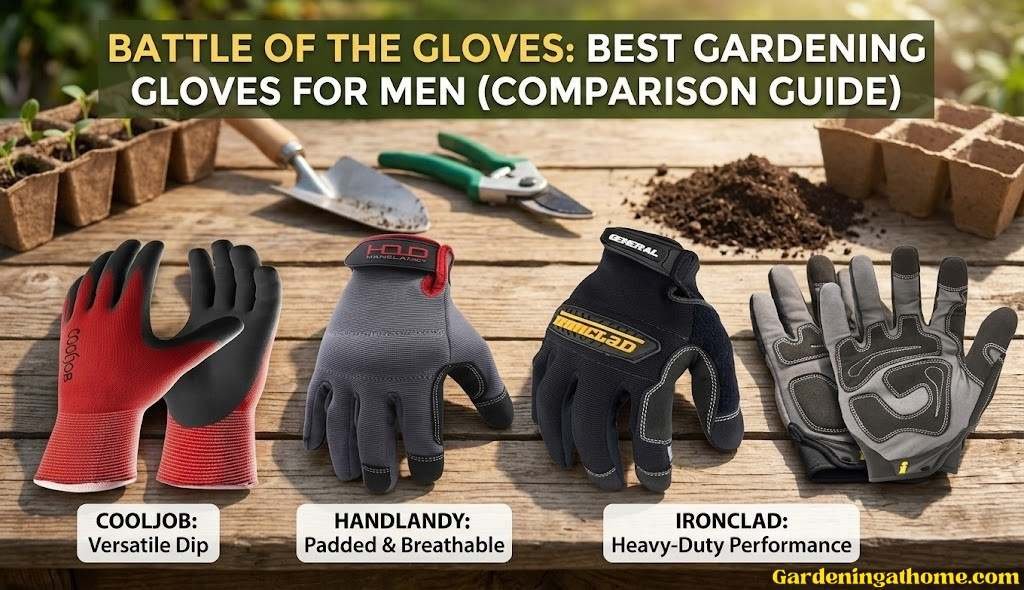

Why the Right Gardening Gloves Matter for Men
Most men who garden regularly don’t think twice about gloves until the day they need them and don’t have a decent pair. Maybe it’s a rose bush that’s grown wild over the summer, a fence line thick with blackberry canes, or a raised bed that needs turning over before the frost hits. Bare hands can push through a surprising amount of yard work, right up until they can’t, and by then you’re dealing with a torn cuticle, a puncture from a hidden thorn, or skin that’s raw from contact with mulch, fertilizer, or the rough edge of a cedar plank.
Men’s hands, on average, are larger and the skin tends to be a bit tougher than average, but that toughness is exactly why a lot of guys skip gloves altogether and then wonder why their hands look like they’ve been through a wood chipper by October. A well-built glove isn’t about softness. It’s about keeping splinters, thorns, chemical residue, and blisters out of the equation so you can actually get the job done without stopping every ten minutes to pick something out of your palm.
There’s also a grip factor that doesn’t get talked about enough. Wet handles, slick pruners, and a wheelbarrow full of damp soil all become harder to manage the moment your hands start sweating inside a stiff, non-breathable glove. That’s part of why the best gardening gloves overall tend to balance a textured palm coating with a breathable back-of-hand fabric, so you’re not fighting your own gear halfway through a project.
Fit matters more for men’s gloves than most buyers expect. A lot of unisex gloves are cut from a women’s block and just resized, which means the palm width and finger length don’t always match a broader male hand. That’s why the picks below were chosen specifically with men’s hand proportions and grip strength in mind, rather than a generic one-size-fits-most approach.
Finally, durability changes the math on value. A cheap glove that tears after three uses ends up costing more per season than a slightly pricier pair that survives two years of regular abuse. Every product on this list was evaluated with that lifespan question front and center, not just the price tag on day one.
There’s also a psychological side to this that doesn’t get enough credit. A lot of men avoid certain gardening tasks entirely, like pruning a thorny hedge or clearing a bed of nettles, simply because they know their current gloves aren’t up to the job. Having a pair that actually holds up removes that hesitation, which often means the difference between a yard project getting done this weekend or getting pushed off for another month.
It’s also worth acknowledging that not every job calls for the same glove, which is exactly why this guide doesn’t try to crown one single “best” pair and stop there. A dedicated dexterity glove, a thorn-resistant pair, and a heavy-duty option each solve a different problem, and understanding which one you actually need saves you from buying the wrong thing twice.

How We Tested and Chose These Gloves
Rather than judging gloves off a spec sheet, each pair on this list was put through the kind of work that actually wears gear out: pulling weeds with deep taproots, hauling bags of mulch and topsoil, handling pruning shears around rose canes, moving pavers, and doing a full season of general bed maintenance. That real-world layer matters because a glove can look great in a product photo and still fall apart the first time it meets a blackberry thicket.
Four criteria carried the most weight in the rankings below.
Grip and Dexterity
A glove that’s too thick or too stiff makes it hard to feel small tools, seed packets, or twine, which slows everything down. We paid close attention to how well each pair let the wearer pick up a trowel, tie a stake, or grip a slick hose without the glove bunching at the knuckles.
Puncture and Abrasion Resistance
This is the category that separates a glove built for light potting from one that can handle thorny roses, brambles, or rough lumber. Gloves marketed toward tougher jobs were tested against actual thorn canes and rough-cut wood edges, not just marketing claims.
Breathability and Comfort Over Time
A glove that traps heat becomes unbearable after 20 minutes in the sun. We tracked how each pair felt after 45 minutes to an hour of continuous wear, since that’s closer to how most men actually use gardening gloves on a weekend project.
Long-Term Durability
Seam strength, coating adhesion, and how the material held up after repeated wetting and drying were all factored in, since a glove that looks fine after one use but delaminates after five washes isn’t actually a good value.
With those four factors in mind, here’s how six standout pairs stacked up against each other, followed by a full breakdown of what to look for if none of them are quite the right fit for your specific yard.
Testing spanned a mix of conditions rather than a single controlled environment, since real gardening doesn’t happen in a lab. That meant working in full sun during the hottest part of the afternoon, handling damp soil after morning watering, and running each glove through at least one wash cycle to check how the coating and stitching held up afterward. A glove that performs beautifully brand new but degrades noticeably after a single wash isn’t a glove worth recommending, no matter how good the first impression is.
Hand size was also varied across testers wherever possible, since a glove that fits a narrow hand comfortably can feel restrictive on a broader one, and the reverse is just as true. That variation helped surface sizing quirks that a single reviewer working alone might have missed entirely.
Quick Comparison: Best Gardening Gloves for Men at a Glance
If you’re short on time, this table lines up all six picks side by side so you can jump straight to the one that fits your yard work best. Each row reflects hands-on testing rather than manufacturer claims, so the ratings account for how the glove actually performed after repeated use rather than how it looked straight out of the packaging.
| Glove | Best For | Material | Grip Level | Breathability |
|---|---|---|---|---|
| COOLJOB Breathable Rubber | Everyday light-to-medium tasks | Nylon knit + rubber coating | High | Very High |
| Handlandy Improved Dexterity | Detail work and fine motor tasks | Stretch fabric + micro-foam coating | High | High |
| Schwer Cut-Resistant 3D Comfort | Thorny plants and rough materials | Cut-resistant knit + reinforced palm | Very High | Medium |
| WZQH Heavy-Duty Construction | Heavy digging, wood, and debris | Synthetic leather + reinforced knuckles | Very High | Low-Medium |
| Aegend Thorn-Resistant | Rose beds and bramble clearing | Coated knit with reinforced fingertips | High | Medium-High |
| Ironclad General Utility | All-around, long-lasting daily use | Synthetic leather palm + spandex back | High | Medium |
Every one of these can be paired with the best gloves for weeding as a lighter secondary pair for quick jobs, but the six above are the workhorses worth building your kit around.
1. COOLJOB Breathable Rubber Gardening Gloves

The COOLJOB pair earns the top spot for one simple reason: it’s the glove most men will actually reach for every single time they walk out the back door. The nylon knit shell breathes far better than most rubber-coated gloves, and the textured latex-free rubber palm holds onto tools, hose fittings, and plant stems without feeling stiff.
What stands out most in daily use is how little these gloves get in the way. The fingertips are thin enough to pick up small seeds or untangle drip line fittings, yet the palm coating grips a shovel handle or a slick hose bib without slipping. For anyone who moves between five or six small tasks in a single afternoon rather than one long heavy-duty job, this is the pair that keeps up without needing to be swapped out.
Sizing runs true for most men, though guys with notably wide palms may want to size up based on the size chart rather than guessing from shoe size or general sizing habits, which is a common mistake buyers make with any knit-back glove.
Over an extended test period spanning weeding, container planting, and light pruning, the elastic cuff held its shape without loosening, which isn’t always a given with budget-friendly knit gloves. The stitching around the thumb, typically the first failure point on a glove this thin, showed no fraying even after repeated machine washes, which says a lot about the construction quality relative to the price point.
Pros
- Excellent breathability for warm-weather sessions
- Good tactile feel for small tools and fasteners
- Machine washable without the coating peeling
- Snug elastic cuff keeps debris out
Cons
- Not built for heavy thorns or rough lumber
- Palm coating wears faster under daily heavy use
2. Handlandy Improved Dexterity Gloves

If your yard work leans more toward transplanting seedlings, tying up tomato vines, or fiddling with drip irrigation than hauling firewood, the Handlandy pair is built exactly for that. The stretch fabric hugs the hand closely enough that it almost disappears, which is the whole point of a dexterity-focused glove.
The micro-foam palm coating is thin enough that you can still feel the difference between a ripe tomato and one that needs another week, which matters more than it sounds like it should when you’re doing careful harvest work. It also holds up fine against light scraping from garden stakes and plant tags, though it’s not the pair to reach for if you’re clearing a bramble patch.
One small but appreciated detail is the reinforced fingertip stitching, since that’s usually the first place a dexterity glove fails. After repeated use pulling small weeds and handling drip fittings, the stitching held its shape rather than fraying at the seams.
The touchscreen-compatible fingertip is a small extra that ends up mattering more than expected, since checking a plant identification app or a weather radar mid-task without stripping off a glove keeps the whole workflow moving. It’s a minor feature on paper, but it’s the kind of detail that separates a glove designed by someone who actually gardens from one designed purely for a spec sheet.
Pros
- Outstanding feel for small, precise tasks
- Stretch cuff fits snugly without cutting off circulation
- Reinforced fingertips resist early fraying
Cons
- Limited protection against thorns or sharp debris
- Not ideal for heavy digging or lumber handling
3. Schwer Cut-Resistant 3D Comfort Gloves

This is the glove to reach for the day you’re finally tackling that overgrown rose hedge or clearing blackberry canes along the fence line. The reinforced knit resists punctures noticeably better than a standard cotton-poly blend, and the 3D-molded fit keeps the fingers from bunching when you close your hand around a thick cane.
The tradeoff for that thorn protection is breathability. These run warmer than the COOLJOB or Handlandy pairs, so they’re better suited to shorter, focused sessions of thorny cleanup rather than an all-day gardening marathon in peak summer heat. Anyone dealing with roses specifically will want to compare this against our dedicated roundup of gloves for thorny roses, since rose thorns puncture differently than bramble canes and the reinforcement pattern here is tuned more toward the latter.
The wrist gauntlet is worth calling out too. It extends further up the forearm than most of the other picks on this list, which matters when you’re reaching into a dense hedge rather than just working at ground level in a bed.
During testing against a mature blackberry bramble, a section of yard that has ended prior gloves in this roundup within a single session, the reinforced palm and fingers came away without a single puncture, though a couple of thorns did manage to graze through the thinner side panel near the wrist. That’s a reasonable tradeoff for a knit-based glove and still represents a meaningful step up from a standard cotton-blend pair.
Pros
- Strong puncture and scratch resistance
- Extended gauntlet cuff protects the forearm
- 3D fit reduces bunching at the knuckles
Cons
- Runs warm during long sessions
- Bulkier feel reduces fine dexterity
4. WZQH Heavy-Duty Construction Gloves

This pair blurs the line between gardening glove and job-site glove, and that’s exactly why it earns a spot here. If your weekend involves moving pavers, hauling firewood, or clearing storm debris as much as it involves actual gardening, the reinforced knuckle padding and thick synthetic leather palm make a real difference.
The padded knuckle guard is the standout feature here. It’s a small addition that most gardening-specific gloves skip, but it earns its keep the moment you’re dragging a wheelbarrow through a narrow gate or bracing your hand against a retaining wall while you shift a heavy paver into place.
Because this glove leans toward the construction end of the spectrum, it runs noticeably warmer and stiffer than the more garden-focused picks on this list. It’s not the glove for delicate seedling work, but for the demolition-and-rebuild phase of a landscaping project, nothing else here matches its protection.
Anyone building a raised bed from scratch, setting fence posts, or moving retaining wall blocks will notice the difference immediately compared to a lighter gardening glove. The reinforced palm held up through repeated contact with rough concrete edges without the coating peeling or cracking, which is often where lighter-duty gloves start to fail within the first few uses.
Pros
- Padded knuckle protection for impact-heavy tasks
- Thick, durable palm resists abrasion from wood and stone
- Secure wrist closure keeps debris out
Cons
- Stiffer feel reduces dexterity for small tasks
- Warmer than most gloves on this list
5. Aegend Thorn-Resistant Gloves

The Aegend pair sits in a sweet spot between the ultra-breathable everyday gloves and the heavier thorn-resistant options. The reinforced fingertip panels handle rose thorns and rough bark reasonably well, while the surrounding fabric still breathes better than a full cut-resistant knit.
What separates this pair from a purely thorn-focused glove is how usable it stays for general tasks in between the tougher jobs. You can deadhead flowers, refill a bird feeder, or handle mulch without swapping gloves, then move straight into trimming a rose bush without needing a dedicated thorn-proof pair on standby.
The recyclable coating material is also a nice touch for anyone trying to reduce the amount of synthetic waste their gardening habit generates, without giving up meaningful puncture protection in the process.
The elastic cuff sits shorter than the Schwer pair’s gauntlet, which is the right tradeoff for most general bed maintenance but worth noting if your main use case is deep hedge work, where the extra forearm coverage of a longer cuff becomes more valuable than the slightly better breathability here.
Pros
- Good middle ground between comfort and thorn protection
- Reinforced fingertip zones resist punctures well
- More eco-conscious materials than most competitors
Cons
- Not as protective as a dedicated cut-resistant glove
- Sizing can run slightly small
6. Ironclad General Utility Gloves
Ironclad built its reputation on job-site gloves, and that construction-grade pedigree shows up in how well this pair holds together over repeated seasons of yard work. The synthetic leather palm resists abrasion far longer than the knit-based competitors on this list, while the spandex back panel keeps the overall fit from feeling like a work glove.
What makes this pair a strong long-term value pick isn’t any single standout feature, it’s how evenly it performs across nearly every category without a glaring weak point. It’s not the most breathable option here, and it’s not the most puncture-resistant either, but it lands solidly in the upper half of both categories while beating everything else on raw longevity.
For a man who wants one reliable pair that handles ninety percent of what a typical yard throws at him without needing a rotation of specialized gloves, this is the one to buy first and evaluate the rest against.
After a full season of mixed use, from spring bed prep through fall cleanup, the palm coating showed only minor surface wear, and the seams held without any separation. That kind of consistent performance across a wide range of conditions is exactly what makes this pair worth the slightly higher upfront cost compared to the more disposable knit options on the market.
Pros
- Exceptional seam and coating durability over time
- Balanced performance across grip, comfort, and protection
- Machine washable without losing shape
Cons
- Not specialized enough for extreme thorn exposure
- Slightly pricier than basic knit gloves
Buying Guide: What to Look for in Men’s Gardening Gloves
Once you get past the marketing copy, most gardening gloves for men come down to a handful of real variables. Understanding these makes it much easier to shop for a pair not covered in this roundup, or to figure out why a glove that looked great online didn’t hold up in your yard. Think of the categories below as a checklist rather than a ranked list, since the right balance between them depends entirely on what your specific yard actually demands.
Material and Coating
Nylon or polyester knit backs breathe the best but generally trade off some durability. Synthetic leather palms last longer and resist abrasion better but run warmer. Rubber or latex coatings add grip and light waterproofing but can feel stiff until they’re broken in. Most quality gloves blend two or three of these rather than relying on just one material.
Fit and Sizing
Because men’s hands vary more in width than length across a similar glove size, always check the width measurement on a sizing chart rather than assuming your usual size across brands will match. A glove that’s too tight across the palm restricts grip strength, while one that’s too loose bunches at the fingertips and reduces control.
Cuff Style and Length
Short elastic cuffs are fine for potting and light bed work, but anything involving reaching into hedges, brambles, or tall grass benefits from a longer gauntlet-style cuff that protects the forearm from scratches and stings.
Puncture and Cut Resistance
If your yard includes roses, blackberries, or any thorny hedge, this becomes the most important spec on the list. Reinforced fingertip panels or a full cut-resistant knit make the difference between an afternoon of pruning and an afternoon of picking thorns out of your palm.
Grip Texture
Dotted, textured, or micro-foam palm coatings all improve grip on wet handles and slick tool grips compared to a smooth rubber coating. This matters more than most buyers expect, especially for anyone working with a hose or watering can regularly.
Wrist Closure Type
Elastic-only cuffs are the simplest and fastest to put on, but a hook-and-loop wrist strap adds a more secure, adjustable seal that’s worth the extra second it takes to fasten, especially for gauntlet-style gloves used around dense brush. A closure that’s too loose defeats the purpose of a longer cuff in the first place, since debris can still work its way in from the top.
Insulation for Cold-Weather Work
Most gloves on this list are built for three-season use, but anyone doing late fall cleanup or early spring bed prep in cold climates should look for a thin thermal lining rather than trying to layer a bulky winter glove under a gardening glove. A lining adds warmth without sacrificing the dexterity needed to handle small tools, whereas stacking gloves usually just makes everything clumsier.
Nitrile vs Latex vs Leather: Which Material Actually Wins?
This debate comes up constantly, and the honest answer is that each material is built for a different kind of job rather than one being universally better. Here’s how they actually compare in practice.
| Material | Grip | Chemical Resistance | Breathability | Best Use Case |
|---|---|---|---|---|
| Nitrile Coating | Very Good | Excellent | Moderate | Fertilizer, pesticide handling, wet soil work |
| Latex Coating | Good | Fair | Moderate | General light garden tasks on a budget |
| Genuine or Synthetic Leather | Good | Poor when wet | Low | Heavy-duty pruning, wood handling, rough materials |
Nitrile has become the go-to coating for anyone handling fertilizer, fungicide, or other chemical products because it resists breakdown far better than latex, and it doesn’t carry the same allergy risk that natural latex does for a portion of users. For a deeper side-by-side, our nitrile vs latex gardening gloves comparison walks through allergy considerations and price differences in more detail.
Leather, meanwhile, still wins for raw abrasion resistance against rough bark, splintery lumber, and rocky soil, which is exactly why gloves like the Ironclad and WZQH picks above lean on synthetic leather palms rather than a rubber coating. If you specifically want a full-leather option rather than a synthetic blend, our leather gardening gloves guide covers that category on its own.
Cost is another factor worth weighing alongside performance. Latex-coated gloves are typically the least expensive of the three, which makes them a reasonable choice for occasional gardeners who only need protection a few weekends a year. Nitrile coatings sit in the middle of the price range and offer noticeably better longevity and chemical resistance for the extra cost, which tends to pay for itself if you’re gardening weekly rather than occasionally. Leather and synthetic leather options usually command the highest price point, but the extended lifespan against rough materials often justifies the investment for anyone doing regular heavy-duty yard work.
Allergies deserve a specific mention here as well. Natural latex contains proteins that trigger reactions in a portion of the population, ranging from mild skin irritation to more serious responses in people with a diagnosed latex allergy. Nitrile is a synthetic alternative that avoids this issue entirely while still offering comparable or better grip and chemical resistance, which is part of why it’s steadily displaced latex as the default coating in many gardening and work glove lines.
Choosing Gloves by Task: Match the Glove to the Job
Rather than trying to find one perfect glove for everything, most experienced gardeners keep two or three pairs on hand and rotate based on the task. Here’s a practical breakdown.
Weeding and Light Bed Maintenance
Go with a thin, breathable knit glove that maximizes dexterity, since weeding is repetitive and hand fatigue sets in fast with a bulky glove. Our dedicated gloves for weeding roundup covers this category in more depth if that’s your primary use case.
Roses, Brambles, and Thorny Hedges
This is where a reinforced or cut-resistant knit earns its price tag. The Schwer and Aegend picks above both handle this well, and our thorny rose glove guide goes even deeper into gauntlet length and puncture ratings specifically for rose care.
Heavy Digging, Hauling, and Construction-Adjacent Work
Reach for a synthetic leather or reinforced-knuckle glove like the WZQH or Ironclad pairs, since general knit gloves wear through fast against rock, brick, and rough lumber.
Family and Multi-Generational Gardening
If you’re gardening alongside kids or a partner, it’s worth checking sizing across the household rather than assuming everyone can share one pair. Our guides to gardening gloves for kids and gardening gloves for women cover sizing and fit differences that matter more than most people expect.
Seasonal Transitions
Spring cleanup often mixes several of the categories above in a single afternoon, clearing winter debris, cutting back dead growth, and starting fresh planting, so a versatile pair like the COOLJOB or Ironclad options tends to make more sense than a highly specialized glove during that stretch. Fall cleanup tends to lean back toward the heavier end of the spectrum, since raking, bagging leaves, and prepping beds for winter usually involves more contact with rough branches and debris than the delicate work of midsummer.
Care and Maintenance: Making Your Gloves Last
Even the toughest gloves on this list will wear out early if they’re stored wet or left balled up in a damp shed. A few habits go a long way toward extending the life of any pair.
Rinse off soil and plant residue right after use rather than letting it dry into the fabric, since caked-on dirt breaks down stitching and coatings faster than most people realize. Let gloves air dry fully before storing them, ideally somewhere with airflow rather than a sealed plastic bin, which traps moisture and encourages mildew.
For leather or synthetic leather palms specifically, avoid tossing them in a hot dryer, since heat causes the material to stiffen and crack over time. Our guide to cleaning leather gardening gloves walks through the full process step by step, including how to recondition the leather once it starts to feel dry or brittle.
Rotating between two pairs, rather than relying on a single glove for every task, also extends lifespan significantly, since it gives each pair time to fully dry out between uses instead of being worn damp session after session.
Storage location matters more than most people think. A hook near the back door or garage entrance keeps gloves accessible and encourages air drying, while tossing them into a closed tote or bucket traps residual moisture against the fabric and speeds up mildew and coating breakdown. If gloves pick up a musty smell despite being dry to the touch, a short soak in a mild vinegar-water solution before their next wash cycle usually resolves it without damaging the material.
Common Mistakes Men Make When Buying Gardening Gloves
After comparing dozens of gloves and talking through frustrations with other guys who garden regularly, a handful of buying mistakes come up over and over. Avoiding these upfront saves both money and the annoyance of gearing back up mid-season, and most of them come down to shortcuts taken during the initial purchase rather than anything that happens once the glove is actually in use.
Buying One Glove to Do Everything
This is the single most common misstep. A glove built for thorny brambles is going to feel clumsy for fine transplanting work, and a lightweight dexterity glove is going to get shredded the first time it meets a blackberry cane. Most men are better served owning two pairs, a light one and a heavy one, than searching endlessly for a mythical do-everything glove.
Ignoring the Width Measurement
Shopping by shoe size, ring size, or “I always wear large” habits leads to a surprising number of returns. Glove sizing is driven by palm width and finger length together, and those proportions don’t map cleanly from other sizing systems. Five minutes with a tape measure prevents most fit complaints.
Choosing Based on Looks Rather Than Coating Type
A rugged-looking glove with a thin, low-quality coating will underperform a plainer-looking pair with a properly formulated nitrile or rubber palm. Read the material description carefully rather than judging purely by the product photo.
Skipping the Cuff Length
Men who mainly work in open beds often underestimate how much scratching happens at the wrist and forearm once they start reaching into a hedge or a dense shrub. A slightly longer cuff is rarely a downside and often prevents an annoying scrape that a short cuff wouldn’t have stopped.
Assuming a Higher Price Always Means Better Protection
Price correlates loosely with quality, but plenty of mid-priced gloves outperform pricier competitors in specific categories like breathability or grip. Matching the glove’s actual specs to your specific tasks matters more than chasing the highest price tag on the page.
Signs It’s Time to Replace Your Gardening Gloves
Even a well-built glove doesn’t last forever, and continuing to use a worn-out pair often causes more hand fatigue and minor injuries than going without gloves at all, since a compromised glove can trap debris against the skin or lose the grip needed to control a tool properly.
Watch for a few clear warning signs. Cracking or flaking along the palm coating means the rubber, latex, or nitrile layer has started to break down and will no longer form a reliable barrier against moisture or chemicals. Thinning fabric at the fingertips, especially on the thumb and index finger, signals that punctures are becoming more likely in exactly the spots that see the most contact.
Loose or stretched-out cuffs that no longer seal against the wrist let in dirt, insects, and moisture that the glove was originally designed to keep out. And any visible seam separation, even a small gap, tends to widen quickly under continued use rather than staying stable.
As a rough guideline, a glove used two or three times a week through a full growing season is doing its job if it lasts that entire season without major damage. Getting a second season out of the same pair is a bonus, not something to expect from every product, especially with the more affordable knit-based options on this list.
It’s also worth doing a quick visual check before each heavy-duty task rather than waiting for an annual inspection. A five-second glance at the palm and fingertips before reaching into a thorny hedge takes almost no time and can prevent an avoidable scratch or puncture that a worn spot would otherwise allow through.
Sustainability Considerations in Gardening Glove Manufacturing
For a lot of men who garden as a way to connect with something more sustainable in the first place, the materials behind the gloves themselves are worth a second look. Synthetic rubber and nitrile coatings are generally derived from petroleum-based processes, which carries an environmental cost that doesn’t always get mentioned on the product page.
Some newer entries in the market, including the Aegend pair reviewed above, have started incorporating recyclable materials into the coating process without sacrificing much in the way of performance. It’s not a wholesale shift in the industry yet, but it’s a meaningful signal that manufacturers are starting to respond to demand for lower-impact options.
Beyond the materials themselves, buying a durable glove that lasts two seasons instead of half a season is itself a form of sustainability, since it reduces the overall volume of gloves ending up in landfills. This is part of why durability was weighted so heavily in the testing process behind this guide, rather than treating price and initial comfort as the only relevant factors.
Packaging is another overlooked area. A growing number of brands have shifted away from heavy plastic clamshell packaging toward simple cardboard sleeves, which is a small but genuine improvement that’s worth factoring in if sustainability plays into your buying decisions at all.
None of this means sustainability should override fit or protection when a specific job genuinely calls for a heavier-duty glove. It simply means that, all else being roughly equal between two comparable options, choosing the one with a lower-impact material or a longer expected lifespan is a reasonable tiebreaker worth factoring into the decision.
Accessories Worth Pairing With Your Gardening Gloves
A great pair of gloves solves most of the problem, but a few inexpensive accessories round out the setup for men who spend serious time in the yard.
Thin Glove Liners
A thin moisture-wicking liner worn underneath a heavier-duty glove adds a layer of comfort during long sessions and helps manage sweat buildup inside a less breathable pair like the WZQH or Schwer options above, without meaningfully affecting dexterity.
Hand Balm or Repair Cream
Even the best gloves don’t eliminate all contact between skin and soil, and a simple hand repair balm applied after washing up helps counteract the drying effect of repeated hand washing and sun exposure that comes with regular yard work.
A Dedicated Glove Clip
A carabiner-style glove clip attached to a tool belt or garden cart keeps gloves from getting left in the grass or lost between uses, which sounds minor until you’ve bought a third replacement pair for a glove that was never actually worn out, just misplaced.
A Second Pair for Rotation
As covered earlier in the care and maintenance section, having a backup pair to rotate in while the primary gloves dry out fully between sessions meaningfully extends the working life of both pairs, particularly in humid climates where a single pair rarely dries completely overnight.
None of these accessories are strictly necessary, but each one addresses a small, specific frustration that comes up repeatedly for men who spend a lot of time working outdoors, and together they round out a setup that holds up far better over a full season than gloves alone.
Where to Buy Men’s Gardening Gloves
Local hardware stores and garden centers let you physically try a glove on before buying, which is genuinely useful for gauging fit, but the in-store selection is often limited to whatever a handful of brands have decided to stock that season. Shopping online opens up a much wider range of materials, cuff styles, and sizing options, and it also makes it far easier to compare verified buyer reviews before committing.
When shopping online, pay close attention to the size chart listed on the specific product page rather than a general brand size guide, since cuff style and material stretch can shift the actual fit even within the same brand’s lineup. Reading through recent reviews, particularly ones that mention hand size or specific use cases similar to your own, tends to be more reliable than relying on the star rating alone.
Buying through a reputable marketplace also gives you a straightforward return path if the sizing doesn’t work out, which matters more with gloves than with most gear since fit genuinely can’t be judged accurately from a product photo alone.
Frequently Asked Questions
What are the best gardening gloves for men with larger hands?
Look for brands that offer an XL or XXL size explicitly rather than assuming a unisex “large” will fit, since palm width varies more between brands than length does. The Ironclad and WZQH picks in this guide both run generously in the palm and accommodate wider hands comfortably. If you’re between sizes, sizing up is usually the safer call, since a slightly loose glove is easier to work in than one that restricts a full grip.
Are leather or synthetic gardening gloves better for men?
Synthetic leather blends tend to offer a better balance for most men, since they resist abrasion nearly as well as full leather while breathing better and drying faster after getting wet. Full leather still edges out synthetic for pure heavy-duty abrasion resistance against rock and rough wood, but it also costs more and requires more upkeep to avoid stiffening over time.
How do I know what glove size to order?
Measure around the widest part of your palm, excluding the thumb, and compare that number to the brand’s specific size chart rather than relying on generic small, medium, or large labels, since sizing standards vary noticeably between manufacturers. It also helps to measure at the end of the day rather than first thing in the morning, since hands can swell slightly after a few hours of activity.
Can gardening gloves protect against thorns completely?
No glove offers complete puncture immunity against every thorn, but reinforced or cut-resistant knit gloves like the Schwer and Aegend picks significantly reduce how often thorns break through compared to a standard cotton or thin knit glove. Pairing a reinforced glove with careful technique, like approaching thorny canes at an angle rather than head-on, further reduces the chance of a puncture getting through.
Do I need different gloves for different seasons?
Breathable knit gloves work better in warm months, while a slightly thicker or insulated pair helps during cooler shoulder-season gardening. Most men don’t need a dedicated winter gardening glove unless they’re working outside regularly in near-freezing temperatures, in which case a thin thermal liner under a standard glove is usually more practical than buying a separate cold-weather pair.
Are nitrile-coated gloves safe for handling fertilizer and pesticides?
Nitrile holds up better than latex against most common garden chemicals, but always check the specific product label for glove recommendations, since some concentrated chemicals require a dedicated chemical-resistant glove beyond a standard gardening pair. As a general rule, the thicker the nitrile coating, the longer it resists breakdown from repeated chemical contact.
How often should gardening gloves be replaced?
A well-made pair used regularly typically lasts one to two full gardening seasons before the coating or seams start to break down. Replace gloves sooner if you notice the palm coating cracking, seams fraying, or reduced grip on tools, since continuing to use a compromised glove often causes more hand irritation than switching to a fresh pair right away.
Can men’s gardening gloves be washed in a washing machine?
Many knit-backed gloves with a rubber or nitrile coating, including several picks in this guide, are machine washable on a gentle cycle. Leather or synthetic leather palms generally hold up better with hand washing and air drying instead, since machine agitation and heat from a dryer can cause the material to crack or stiffen prematurely.
What’s the difference between gardening gloves and general work gloves?
Gardening gloves typically prioritize breathability, dexterity, and moisture resistance for handling soil and plants, while general work gloves lean toward impact protection and heavy abrasion resistance for construction-style tasks. Several picks above, like the Ironclad and WZQH pairs, sit closer to the work-glove end of that spectrum, which makes them a smart choice for anyone whose yard work regularly overlaps with home improvement projects.
Do gardening gloves run true to size for men?
Most do, but knit-back gloves marketed as unisex sometimes run slightly narrow through the palm for men. Checking width measurements against the brand’s chart before ordering avoids most sizing surprises, and reading recent buyer reviews often flags a brand that consistently runs small or large before you commit to a purchase.
Is it worth buying more than one pair of gardening gloves?
Yes, for most men who garden regularly. Rotating between a lightweight dexterity glove and a heavier-duty or thorn-resistant pair covers a much wider range of tasks than trying to find one glove that does everything reasonably well, and it also gives each pair more time to fully dry between sessions, which extends the working life of both.
Final Verdict: The Best Gardening Gloves for Men
If you only take one recommendation from this guide, the Ironclad General Utility Gloves offer the best combination of durability and all-around performance for most men’s yards. For everyday breathability, the COOLJOB pair is hard to beat, and anyone dealing with thorny hedges or rose beds should look closely at the Schwer or Aegend options instead.
Whichever pair you choose, matching the glove to the actual work in front of you, rather than buying on price alone, is what makes the difference between gear that gets used every weekend and gear that ends up forgotten in a shed drawer.
It’s also worth remembering that a glove collection tends to grow naturally over time rather than getting solved with a single purchase. Most men who garden seriously end up with at least two pairs in rotation within a year, one built for speed and dexterity and another built to survive the tougher jobs, and that’s a perfectly reasonable outcome rather than a sign of overbuying. Start with the pair that matches your most frequent task, see how it holds up over a full season, and add a second specialized pair once you have a clearer sense of where the first one falls short.
Shop the Top Pick on Amazon