How to Keep Deer Out of Your Garden: 8 Proven Steps That Actually Work
Deer can strip a vegetable patch or a row of prized hostas in a single night. Here is a practical, layered plan to protect your plants using fences, repellents, scare devices, smart plant choices and a few cheap tricks.
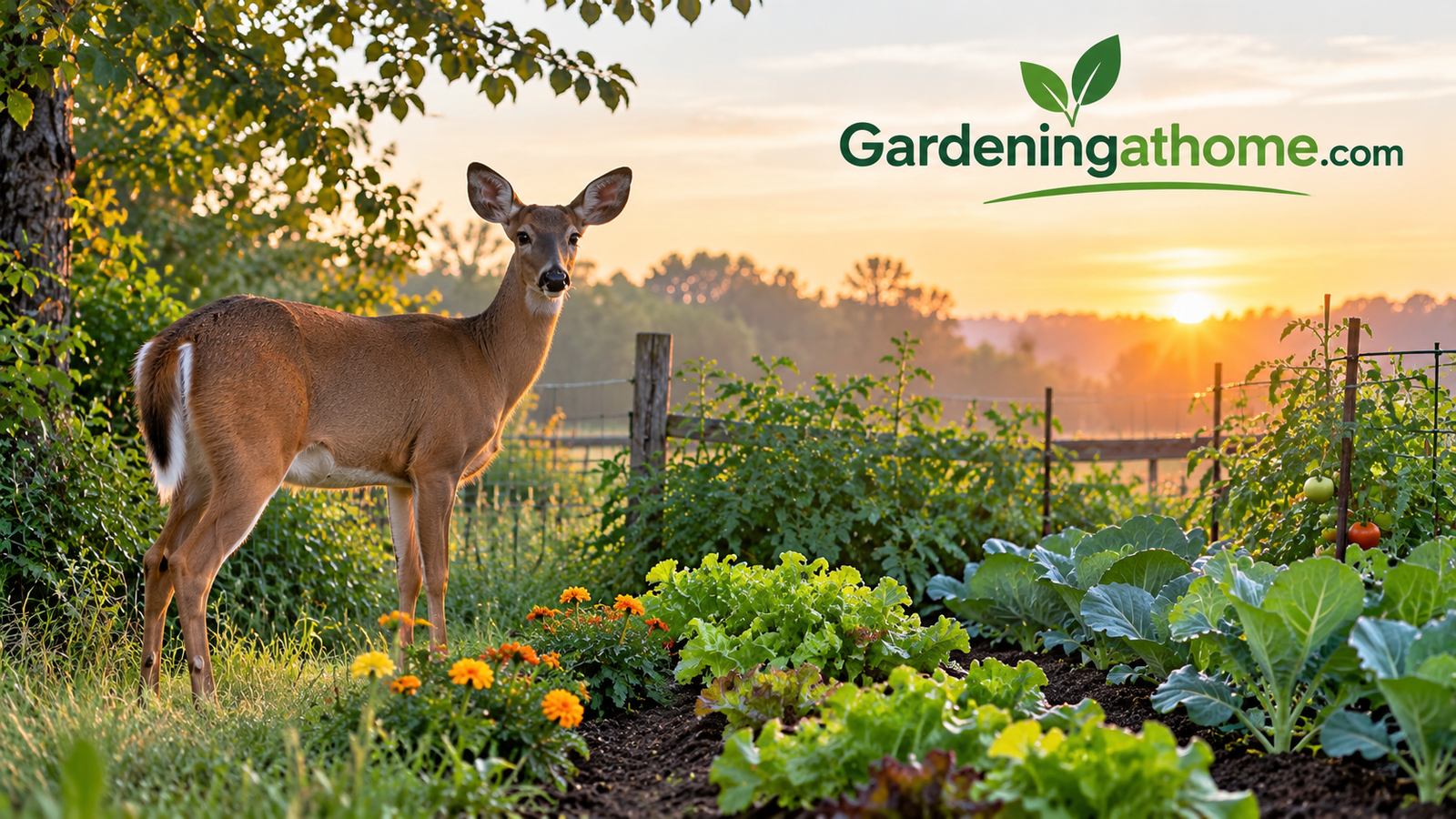
You plant tender lettuce on Sunday, admire it on Monday, and by Tuesday morning there is nothing left but a few ragged stems and a set of neat hoof prints in the soil. If that sounds painfully familiar, you are in very large company. Deer are graceful, beautiful animals, and they are also relentless, hungry browsers that treat a well-tended garden like an all-you-can-eat buffet.
The good news is that deer problems are solvable. There is no single magic trick, but there is a reliable approach: combine a few methods so that your garden becomes more trouble than it is worth. In this guide you will learn how to confirm deer are the culprit, figure out how they move through your yard, choose the right fence, apply repellents so they actually work, add motion-triggered surprises, plant a bed that deer dislike, and protect individual plants that need extra help.
Some links below are Amazon affiliate links. If you buy through them, we may earn a small commission at no extra cost to you.
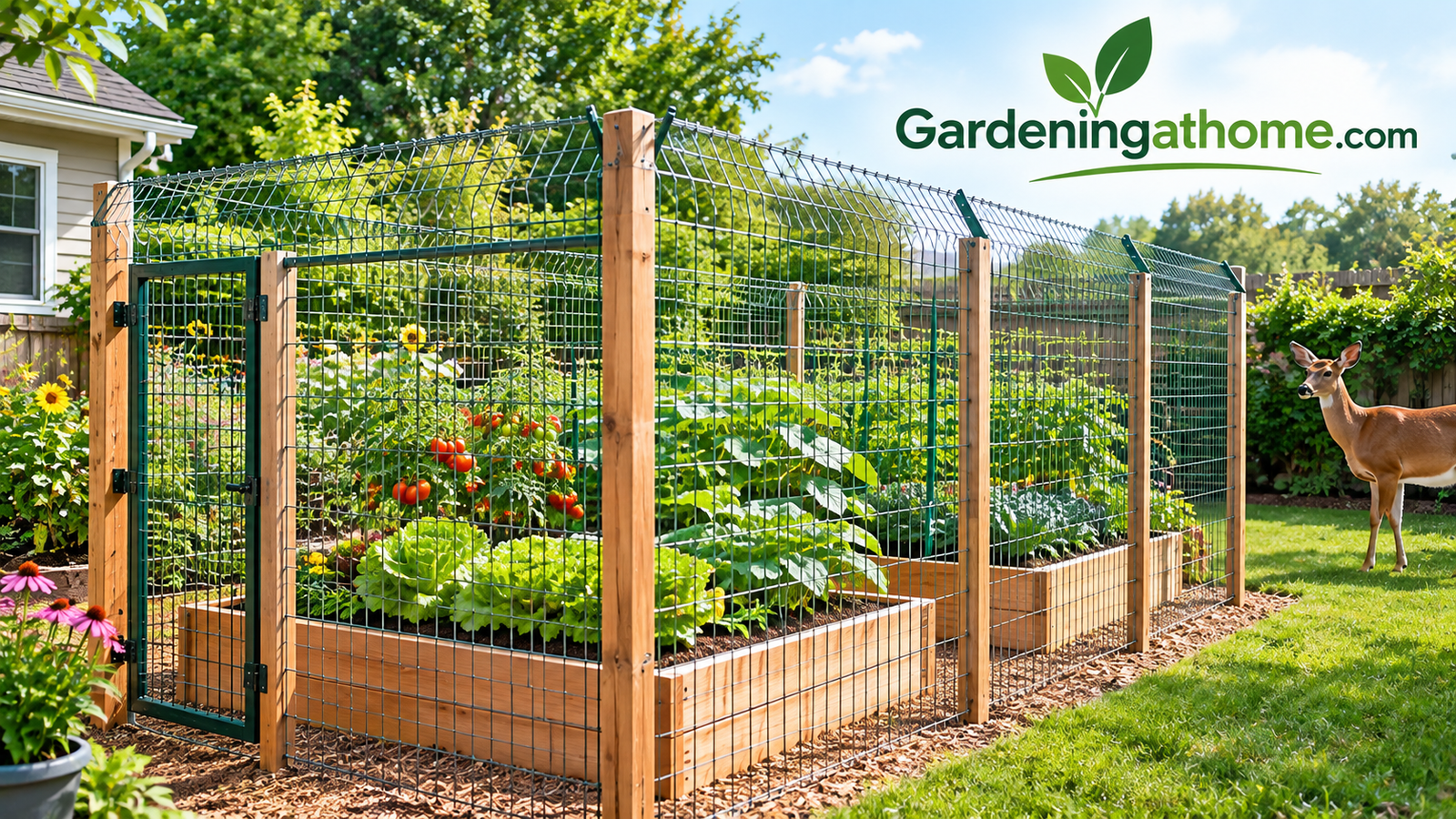
If you are still planning your plot, it is worth building deer protection into the design from day one. Our guides on how to start a garden from scratch and the wider gardening at home hub pair nicely with the plan below.
Why Deer Target Your Garden in the First Place
Before you can outsmart deer, it helps to understand what drives them. Deer are ruminants with a surprisingly picky palate. They are constantly looking for tender, high-moisture, nutrient-rich growth, and a vegetable garden is basically a concentrated pantry of exactly that. Where wild forage is thin, such as late winter, during a drought, or in neighborhoods where development has squeezed their habitat, your yard looks even better by comparison.
Population pressure matters too. In many suburbs and rural edges, deer have few natural predators and plenty of edge habitat, which is the mix of lawn, shrubs and woods they love. That means the same animals may pass through your property every single day, learning where food is easiest to find. Deer are creatures of habit. Once a doe teaches her fawns that your yard is a reliable snack bar, the whole family returns on schedule, usually around dusk and dawn.
What deer love and what they usually skip
No plant is truly deer-proof when animals are hungry enough, but preferences are strong and consistent. Deer go for soft, sweet, succulent foliage and flower buds. They tend to avoid plants with strong scents, fuzzy or prickly textures, bitter or toxic compounds, and tough, leathery leaves. Use the table below as a rough guide.
| Usually eaten first | Often left alone |
|---|---|
| Hostas, tulips, daylilies, pansies | Lavender, rosemary, sage, thyme |
| Roses, apple and pear trees, arborvitae | Daffodils, alliums, marigolds |
| Lettuce, beans, peas, strawberries | Mint, oregano, chives, garlic |
| Sweet corn, squash blossoms, young sunflowers | Lamb’s ear, yarrow, ornamental grasses |
Notice how many of the favorites are classic garden staples. If you grow vegetables, you are essentially running a deer restaurant unless you protect it. Even if you are only starting out with a small plot, our walkthrough on how to start a vegetable garden shows how to plan a layout that is easier to defend. Growing tall, cheerful flowers? Young plants in our sunflower growing guide are especially tempting to deer until stems toughen up.
Good to know: Deer behavior changes with the seasons. Spring brings a craving for fresh green shoots, summer brings fawns and heavy feeding, and fall means bucks rubbing antlers on trees. Winter hunger makes shrubs and bark fair game. Your defense plan should shift with them, and the calendar later in this guide shows how.
Browse top-rated deer repellents for gardens, shrubs and flower beds.
Step 1 Confirm That It Really Is Deer
It is easy to blame deer for every missing leaf, but rabbits, groundhogs, squirrels, voles and even insects can leave similar-looking damage. Treating the wrong culprit wastes money and time, so spend an evening playing detective. The three clues below are the quickest way to confirm deer.
Clue 1: Hoof prints and droppings
Look in soft soil near beds, along fence lines and at the edge of the lawn. Deer prints are cloven, meaning two pointed halves that form a rounded heart shape roughly two to three inches long. Fresh droppings look like small, dark, oval pellets, often in clusters. Rabbits leave tiny round pellets, and groundhogs leave rounder, more irregular prints, so size and shape are good tie-breakers.
Clue 2: Torn, ragged plant edges
Deer have no upper front teeth. Instead they grip foliage against a hard pad and yank, which leaves a jagged, shredded edge on leaves and stems. Rabbits and rodents, by contrast, bite cleanly at a sharp angle. If your tomato stems look as though they were snipped with scissors at ankle height, think rabbits. If the tips are shredded and missing at knee height or above, think deer.
Clue 3: The browse line
Look at shrubs and low tree branches. Deer can comfortably reach about six feet when standing on all fours, and they will strip everything within that zone, leaving a visible browse line where the foliage suddenly becomes dense above it. In fall, small trees may also show shredded bark where bucks have rubbed their antlers.
Pro move: A basic wildlife trail camera aimed at your garden for a few nights will give you answers about timing, group size and entry points, and it removes the guesswork. Squirrels and other critters leave a different trail of damage, so if digging and chewed bulbs are your main problem, see our guide on how to keep squirrels out of the garden instead.
A trail camera shows exactly when and where deer visit your garden.
Step 2 Map Their Routes and Find the Weak Points
Deer rarely wander randomly. They follow worn trails between bedding areas, water and food, and they favor routes that offer cover. A quick walk around your property with a notepad, or a rough sketch on paper, will show where your garden sits relative to those travel lanes. This step costs nothing and makes every later step more effective, because you will know where to put your strongest defenses.
Look for these telltale features
- Worn paths: Narrow, packed trails running through grass or leaf litter, often leading toward your property from a wood line.
- Bedding spots: Oval patches of flattened grass or leaves in thick cover, usually within a short distance of food.
- Water sources: Ponds, streams, birdbaths and even leaky outdoor taps that bring deer close.
- Pinch points: Gaps between buildings, driveway edges and open gates that funnel animals into the same spot every night.
- Food magnets: Fallen fruit, bird feeders and compost piles that attract deer even when your beds are empty.
Mark each of these on your sketch. Then sit down and think like a deer. Which route offers the most cover and the least human activity? Where do trails touch your garden? Those intersections are your priority zones. You may discover that blocking a single gap or relocating a feeder cuts visits dramatically before you spend a cent on fencing.
Light and layout play a part too. Gardens that sit in full sun, as explained in our article on full sun versus partial shade, are often placed in open areas that are easier to observe and fence. Deer prefer approaching from shaded cover, so keeping a clear buffer between woods and your beds forces them to cross open ground, which makes them nervous.
Please remember: Never feed deer, even with the best intentions. Corn and treats teach them to rely on your yard, concentrate the herd, and make the problem worse for you and your neighbors. Check your local wildlife regulations, too, since some areas have rules about deterrents and humane control.
Flagging stakes and marking paint make it easy to plan fence lines.
Step 3 Build a Tall, Properly Anchored Fence
If you want near-certain protection, nothing beats a physical barrier. Fencing is the only method that works around the clock, regardless of how hungry the deer are, how much it rained last night, or whether the batteries in your gadget died. The trade-off is cost and effort, but for a vegetable garden you rely on or a collection of high-value ornamentals, it is usually the most economical choice over the long run.
How tall should it be?
Deer can jump a surprising height, and a motivated animal can clear a six-foot fence from a standing start, particularly if there is a running approach. The common recommendation for reliable protection is a solid, visible fence around eight feet tall. Taller is better where deer pressure is intense. Visibility matters because deer are less likely to attempt a jump over something they cannot see through or judge clearly.
Choosing a material
- Woven wire: Strong, long-lasting and nearly invisible from a distance. A good fit for permanent installations.
- Plastic deer netting: Lightweight, inexpensive and quick to install on tall posts. It is less durable than metal but wonderful for seasonal or budget setups.
- Electric fencing: Effective as a psychological barrier when baited with a smear of peanut butter on foil, which teaches deer to avoid it. Always follow local rules and safety instructions.
- Solid or privacy-style fences: Block sight lines so deer do not know what is inside. Great for small urban yards.
Pros of fencing
- Works day and night, all year
- No reapplication or maintenance schedule
- Protects every plant inside at once
- Also blocks rabbits and groundhogs when sealed at the bottom
Cons of fencing
- Highest upfront cost and labor
- Needs careful anchoring and gates
- May not suit rented or HOA-governed yards
- Tall fences change how a yard looks
Install it so it lasts
- Use your Step 2 map to decide the fence line, leaving room to walk and mow around it.
- Set sturdy posts every eight to ten feet, with strong corner and gate posts braced or set in concrete.
- Hang the mesh tight, starting from a corner, and pin the bottom edge to the ground with stakes or bury a few inches.
- Build a gate that closes flush with no gap beneath it, and get in the habit of latching it every time.
Posts, wire and a long day of digging are hard on hands, so grab a pair of tough work gloves first. Our roundup of the best gardening gloves and our list of essential gardening tools for beginners cover the basics for a fencing weekend. If you grow produce to sell, the economics are even clearer: a good fence pays for itself quickly, as we explain in what is market gardening.
Heavy-duty deer netting and woven mesh in garden-friendly sizes.
Step 4 Use Budget-Friendly Barriers When an 8-Foot Fence Is Not Possible
Not every yard has the space, budget or permission for an eight-foot wall of wire. The good news is that deer have poor depth perception, and a handful of clever, low-cost designs take advantage of that weakness. These work best when pressure is moderate, so think of them as flexible tools you can combine with other steps.
The double-fence trick
Instead of one tall fence, build two shorter ones, each about four feet high, spaced three to four feet apart. A deer might clear either fence on its own, but it hesitates to leap into a gap it cannot judge, and it has little room to land safely before facing a second obstacle. This works because deer prefer to see a clear landing before they jump. It is cheaper than eight-foot fencing in many cases and looks more like a garden border.
Other budget-friendly barriers
- Chicken wire or hardware cloth cages: Ideal for individual raised beds or prized perennials. Build a simple frame and drape wire over the top.
- Fishing line fence: Run clear monofilament at knee height and again at chest height around posts. Deer bump into the unseen line and back off. It is subtle, but it needs regular checks.
- Angled outriggers: A slanted fence leaning outward at a thirty-degree angle makes deer misjudge the width they need to jump.
- Raised beds with hoops: Metal or PVC hoops with netting turn a bed into a quick, removable tunnel.
- Repurposed materials: Pallets, trellis panels and old garden stakes can all become part of a barrier on a tight budget.
If you are watching every dollar, see our collection of cheap gardening ideas for beginners for more ways to build smart protection without overspending. Remember that a barrier is only as good as its weakest corner. Check for gaps where wire meets the ground, near gates and along slopes, where deer will test the edges until they find an opening.
Wire plant cages and hardware cloth in handy sizes for beds and borders.
Step 5 Use Deer Repellents the Right Way
Repellents are the most popular quick fix, and they are also the most commonly misused. They can work very well, especially for ornamentals and borders, but only if you choose the right type, apply it correctly and keep it up. Think of a repellent as a message that says, “This garden tastes terrible or smells wrong,” and deer need to be reminded of that message on a schedule.
Two main types of repellent
Contact repellents taste bad. Ingredients such as putrescent egg solids, hot pepper, garlic or soap-like compounds make a bite of treated foliage unpleasant. Area repellents use strong odors, such as predator scents or aromatic oils, to make deer feel unsafe. Many gardeners alternate or combine both types for the best effect.
How to apply for real results
- Start before the damage begins. Deer form habits quickly, and it is far easier to prevent a pattern than to break one.
- Spray on a dry, calm day so droplets coat leaves evenly and do not wash off at once.
- Cover new growth, buds and the undersides of leaves, since that is where deer take their first bites.
- Reapply every two to four weeks and after heavy rain, irrigation or fast growth.
- Rotate between two or three different formulas now and then so deer do not grow accustomed to a single scent.
Pros of repellents
- Fast to start and flexible
- No construction needed
- Good for ornamentals and borders
- Pairs well with other layers
Cons of repellents
- Needs consistent reapplication
- Less reliable in winter hunger or heavy pressure
- Washes off in rain
- Read labels before using on edible plants
Always read the label before using any repellent on food crops, and be careful to follow waiting periods before harvest. If you plan to keep a vegetable patch protected this way, it helps to think through the whole plan from the start with our walkthrough on how to start a vegetable garden. A quick, inexpensive homemade option some gardeners try is a spray made from eggs, water and a little garlic, though store-bought formulas usually stay put longer and are easier to measure.
Ready-to-use sprays and concentrates for flowers, shrubs and trees.
Step 6 Add Motion, Sound and Light to Startle Deer
Deer are cautious animals that rely on their senses to spot danger. Anything sudden and unpredictable makes them uneasy, and that is the idea behind scare devices. The secret to using them well is unpredictability. A device that does the same thing every night soon becomes background noise, while one that only reacts when a deer steps close keeps its power for much longer.
Motion-activated sprinklers
These are among the most reliable scare devices for a reason. A sensor detects movement and fires a sudden burst of water at the intruder. It is harmless, surprising and works at night. Place the sprinkler near the entry points you found in Step 2, aim it at the approach path rather than at the plants, and test the range each week. Move it every couple of weeks so deer do not learn its blind spots.
Sound, light and visual deterrents
- Motion-activated lights: Sudden bright light at night can discourage cautious animals, especially when it triggers only when something approaches.
- Ultrasonic repellers: Results are mixed, so treat them as a bonus layer rather than a primary defense.
- Reflective tape, pinwheels and flashing objects: Cheap, simple and mildly effective for a short time. Rotate and replace them regularly.
- Wind chimes and radios: Human-made noise near a garden can help, but deer often adapt within days.
- A dog: A pet that patrols the yard, along with its scent, can be a strong deterrent, especially paired with a fence.
Keep it fresh: The most common reason scare devices fail is predictability. Change the location, angle or type of device every couple of weeks, and combine two or three at once so deer meet a different surprise each visit.
Motion-activated sprinklers cover wide garden edges with a harmless burst of water.
Step 7 Plant Deer-Resistant Layers Around What You Want to Protect
Plant choice may be the most beautiful way to fight deer. Instead of relying only on walls and sprays, you design a garden that deer simply do not enjoy. Think of it like a moat of unappealing plants around your most delicious ones. Deer often avoid walking through scratchy, smelly or fuzzy foliage to reach tastier food, and the aroma of strong herbs can even mask the scent of vegetables beyond them.
Reliable deer-resistant plants
| Plant type | Good choices | Why deer dislike them |
|---|---|---|
| Herbs | Lavender, rosemary, sage, thyme, mint, oregano, chives | Strong aromatic oils |
| Flowers | Daffodils, alliums, marigolds, catmint, bee balm, Russian sage | Bitter, toxic or scented foliage |
| Fuzzy foliage | Lamb’s ear, yarrow, dusty miller | Texture feels unpleasant |
| Grasses | Feather reed grass, fountain grass, switchgrass | Tough, sharp blades |
| Shrubs | Boxwood, barberry, spirea, juniper | Prickly or leathery leaves |
When choosing plants, match them to your light and soil. Most of the herbs and Mediterranean perennials above love sun and sharp drainage, so check our guide on understanding full sun versus partial shade before you plant. Many of these herbs also thrive indoors, so if you want a protected supply for the kitchen, see how to start an indoor herb garden.
Reality check: “Deer-resistant” does not mean “deer-proof.” A very hungry herd will sample almost anything, particularly in late winter. Use resistant plants as one layer of the plan, not the entire plan, and test new varieties on a small scale before committing.
Seeds and starter plants that deer tend to leave alone.
Step 8 Protect Individual Plants, Young Trees and Containers
Even with the best overall plan, a few special plants may need personal protection. Young fruit trees, newly planted shrubs, tulip beds and a pot of tomatoes near the edge of a patio all deserve extra attention. This step is about targeted, small-scale defense that you can add, adjust or remove as the plants mature.
Young trees and shrubs
Surround each young tree with a cylinder of sturdy wire mesh, set a foot or so away from the trunk so bark stays protected and branches have room to grow. Make it tall enough to keep deer from reaching the leaf buds, usually four to five feet, and secure it with a stake. In fall, a trunk wrap guards against buck rubs, which can strip and even girdle young bark. Remove or loosen guards as trunks thicken.
Raised beds, rows and perennials
Hoop tunnels covered with lightweight netting protect leafy greens, beans and berries with minimal fuss. Use stakes or garden staples along the edges so the netting cannot be nudged aside. For bulbs like tulips, many gardeners tuck wire mesh over the soil or plant daffodils nearby. If roses are your passion, deer relish new buds, and our guide to the best gardening gloves for thorny roses will help when you are pruning and installing cages.
Containers, patios and balconies
Pots close to the house are easy targets after dusk, especially on ground-level patios. Moving containers closer to the door, raising them on stands or grouping them behind a trellis can all help. Growing easy crops in containers is a smart way to protect them, as shown in our list of the easiest vegetables to grow in pots. Elevated spaces make deer problems almost disappear, so see our balcony gardening ideas for apartments and the step-by-step on how to grow tomatoes on a balcony for inspiration.
Remember that good drainage and a proper container keep plants healthy enough to bounce back from a nibble. Choose the right size using how to choose the right pot size for plants, and fill them with a quality blend such as those in our guide to the best potting soil mix for indoor plants, which works well for patio pots too. If you live in a city and want more ideas, read what is urban gardening.
Tree trunk guards, garden hoops and lightweight netting for targeted defense.
A Season-by-Season Deer Defense Calendar
Deer pressure is not constant, and neither should your response be. A small adjustment in each season keeps your garden protected without turning deer management into a full-time job. Use this calendar as a flexible starting point and adapt it to your climate and local herd.
| Season | What deer are doing | What you should do |
|---|---|---|
| Early spring | Hungry after winter, seeking fresh green shoots | Repair fences, spray repellent on emerging growth, cover new seedlings |
| Late spring | Does feeding heavily before fawning | Add scare devices, reinforce weak spots, rotate repellents |
| Summer | Fawns follow mothers into gardens at dawn and dusk | Keep gates closed, maintain schedules, protect ripening fruit and vegetables |
| Fall | Bucks rubbing antlers, herds fattening for winter | Wrap tree trunks, cage young trees, clear fallen fruit |
| Winter | Food is scarce; shrubs and bark become targets | Net or wrap evergreens, use area repellents and plan next year’s layout |
Build habits that stick
The most successful deer-proof gardeners are not the ones with the fanciest gear. They are the ones with routines. A short weekly walk around your fence line, a reminder on your phone to respray after rain and a seasonal checklist go further than any single product. Keeping notes about when and where deer visit makes next year’s plan even smarter.
- Walk the perimeter once a week and look for sagging wire, new trails or fresh prints.
- Reapply repellents on schedule and note the date on a calendar or garden journal.
- Move scare devices every two weeks so they stay unpredictable.
- Harvest ripe produce promptly and clear fallen fruit, which can lure deer in.
- Reassess the whole plan at the start of every growing season.
A fresh start is the perfect time to rethink layout. If you are creating new beds this year, our guides to starting a garden from scratch and the cozy gardening at home collection give you a foundation that works hand in hand with the defenses above.
A comfortable pump sprayer makes regular repellent applications quick and even.
Deer Control Methods Compared Side by Side
With so many options, it helps to see the trade-offs in one place. The table below compares the main methods on cost, effort, reliability and best use. Use it to decide where to start and which combinations make sense for your yard.
| Method | Upfront cost | Ongoing effort | Reliability | Best for |
|---|---|---|---|---|
| 8 ft fence | High | Low | Very high | Vegetable gardens, permanent plantings |
| Double fence | Medium | Low | High | Moderate deer pressure, wide spaces |
| Repellent sprays | Low | High | Medium | Ornamentals and borders |
| Motion sprinkler | Medium | Low | Medium to high | Open garden edges and approach paths |
| Resistant plants | Low to medium | Low | Medium | Borders, flower beds, landscaping |
| Cages and netting | Low | Medium | High for small areas | Young trees, raised beds, bulbs |
| Lights, tape, noise | Low | Medium | Low to medium | Short-term or added layers |
Smart combinations that work
Most gardeners find that two or three layers beat any single tactic. Here are a few pairings worth considering.
- Small vegetable garden: A double fence or tall netting plus a motion sprinkler near the main approach.
- Flower borders: Resistant plants on the outer edge, with a rotating repellent schedule for the favorites inside.
- Fruit trees: Wire cages in the early years, trunk wraps in fall and tidy fallen fruit cleanup.
- Patio or balcony pots: Raised stands, hoops with netting and a scented herb border.
- Large property: Fence the most valuable zones completely and use repellents plus resistant plants elsewhere.
Go with physical barriers when
- You grow food you depend on
- Deer pressure is high or constant
- You want a once-and-done solution
Lean on repellents and plants when
- You rent or have fence restrictions
- Your beds are ornamental
- You want something flexible and low-cost
Stake-style repellents are a simple add-on along borders and beds.
Common Mistakes and How to Troubleshoot Deer Problems
Even a careful plan hits snags. When deer keep getting through, the cause is usually one of a handful of fixable mistakes. Walk through the list below before you decide a method does not work.
Mistake 1: Relying on a single method
One tool, whether it is a repellent, a light or a short fence, rarely holds up on its own. Deer are adaptable, and a hungry herd will find the weakest link. Layering two or three methods covers each one’s gaps.
Mistake 2: Starting too late
Once deer learn that your garden is a reliable food source, breaking the habit takes much more effort. Begin protection when you plant, not after the first round of damage. If it is already happening, be patient and consistent for several weeks so the herd learns the new reality.
Mistake 3: Skipping maintenance
Repellents wash off, netting sags, a gate is left open and a fence post leans after a storm. Short, regular checks keep small problems from turning into open invitations.
Mistake 4: Ignoring other food sources
Bird feeders, fallen fruit and unprotected shrubs can keep deer lingering near your yard even when beds are covered. Clean up around feeders and harvest fruit promptly so your property is less of a magnet.
Mistake 5: Misdiagnosing the damage
Not every wilted plant is a deer problem. Yellow leaves, drooping stems and stunted growth can also come from watering errors or pests. Before you spend money on deer defenses, compare your plants against our guide to the signs of overwatering versus underwatering to be sure.
Quick troubleshooting checklist
| Problem | Likely cause | Try this |
|---|---|---|
| Deer jump the fence | Fence too low or too easy to see over | Raise height, add a second parallel fence or angled top |
| Deer crawl underneath | Gap at the bottom | Pin or bury the lower edge, add ground stakes |
| Repellent seems useless | Not reapplied, washed off or unsuitable for the season | Respray on schedule and rotate formulas |
| Sprinkler no longer works | Deer have learned its blind spot | Move it and add a second unit at a different angle |
| Only one plant is eaten | It is a favorite food | Cage it or relocate it inside a protected zone |
Finally, remember your own comfort and safety while you work. Deer can carry ticks, so wear long sleeves and check yourself after working near wood lines, and use sturdy gloves when handling wire or thorny plants. Persistence pays off. Most gardeners find that after a few weeks of consistent protection, deer lose interest in a yard that gives them nothing easy.
Durable garden gloves protect your hands during fencing, pruning and cleanup.
Frequently Asked Questions About Keeping Deer Out of the Garden
What is the most effective way to keep deer out of a garden?
A tall, properly anchored fence about eight feet high is the most dependable method. For best results, pair it with a second layer such as a motion-activated sprinkler or repellent so a determined deer has even less reason to test your defenses.
How high can deer actually jump?
A healthy deer can clear roughly six to eight feet when motivated, especially with room for a running start. That is why shorter fences often fail, and why a double fence or an eight-foot barrier performs better.
What smells do deer hate?
Deer tend to dislike strong scents such as garlic, rotten egg, hot pepper, lavender, rosemary, sage and mint. Many commercial repellents combine these odors. Results vary by herd and by season, so rotating scents helps.
Do homemade deer repellents work?
Some do, at least for a while. Egg-and-water sprays, garlic mixtures and soap-based remedies can discourage browsing, but they wash off quickly and need frequent reapplication. Store-bought products usually last longer and are easier to apply consistently.
Does human hair or soap keep deer away?
Some gardeners hang bars of strongly scented soap or small bags of hair around beds as a low-cost deterrent. The effect is mild and short-lived, so treat these as a bonus layer rather than a main defense.
What vegetables do deer not eat?
Deer are less keen on strongly flavored or textured crops such as onions, garlic, chives, rhubarb leaves, peppers and many herbs. They go after lettuce, beans, peas and sweet corn much more eagerly, so those may need extra protection.
Are deer-resistant plants completely safe from deer?
No plant is guaranteed. Hungry deer will eat nearly anything when food is scarce, particularly in late winter. Deer-resistant plants lower the odds and work best as part of a layered plan.
How often should I reapply deer repellent?
Most products need reapplying every two to four weeks and again after heavy rain or fast new growth. Always follow the directions on the label, especially for edible plants and harvest waiting periods.
Do motion-activated sprinklers really work on deer?
Yes, many gardeners find they work well, because the sudden spray startles deer without hurting them. Place the unit near their approach path and move it every couple of weeks so deer do not learn its pattern.
Will a dog keep deer out of the garden?
A dog that regularly patrols the yard can deter deer, both by presence and scent. For the best result, combine a dog with a fence so the animal is not the only line of defense.
When are deer most active in gardens?
Deer are most active at dawn and dusk, and many feed overnight. Activity peaks in spring when fresh growth appears and in late summer or fall when herds fatten up for winter.
Can I protect a garden if I rent or have fence restrictions?
Yes. Removable options such as netting on stakes, hoop tunnels, containers on raised stands, motion sprinklers, repellents and deer-resistant plants do not require permanent structures. Check your lease or HOA rules before installing anything tall.
Conclusion: Make Your Garden More Trouble Than It Is Worth
Keeping deer out of a garden is not about winning a single dramatic battle. It is about quietly shifting the odds until your yard becomes the least attractive stop on a deer’s nightly route. Start by confirming deer are the culprit and mapping how they move. Then build layers: a fence or barrier where it matters most, repellents applied on a schedule, motion-triggered surprises, plant choices that deer dislike and personal protection for your most precious specimens.
Pay attention to the seasons, keep up with regular maintenance and be patient. In a few weeks, most herds learn that your property is not worth the effort, and you can finally enjoy the harvests and blooms you planted. Pick one step from this guide, take it this weekend, and add the next layer as you go. Your future salads, roses and tomato plants will thank you.
Browse deer fencing, repellents and protective gear in one place.
You May Also Like
Keep exploring with more practical guides, reviews and how-tos from Gardening at Home.