How to Grow Sunflowers in a Garden: A Complete, Beginner-Friendly Guide
From picking the right seed to harvesting a head heavy with seeds, here is everything you need to raise tall, cheerful sunflowers that actually thrive.
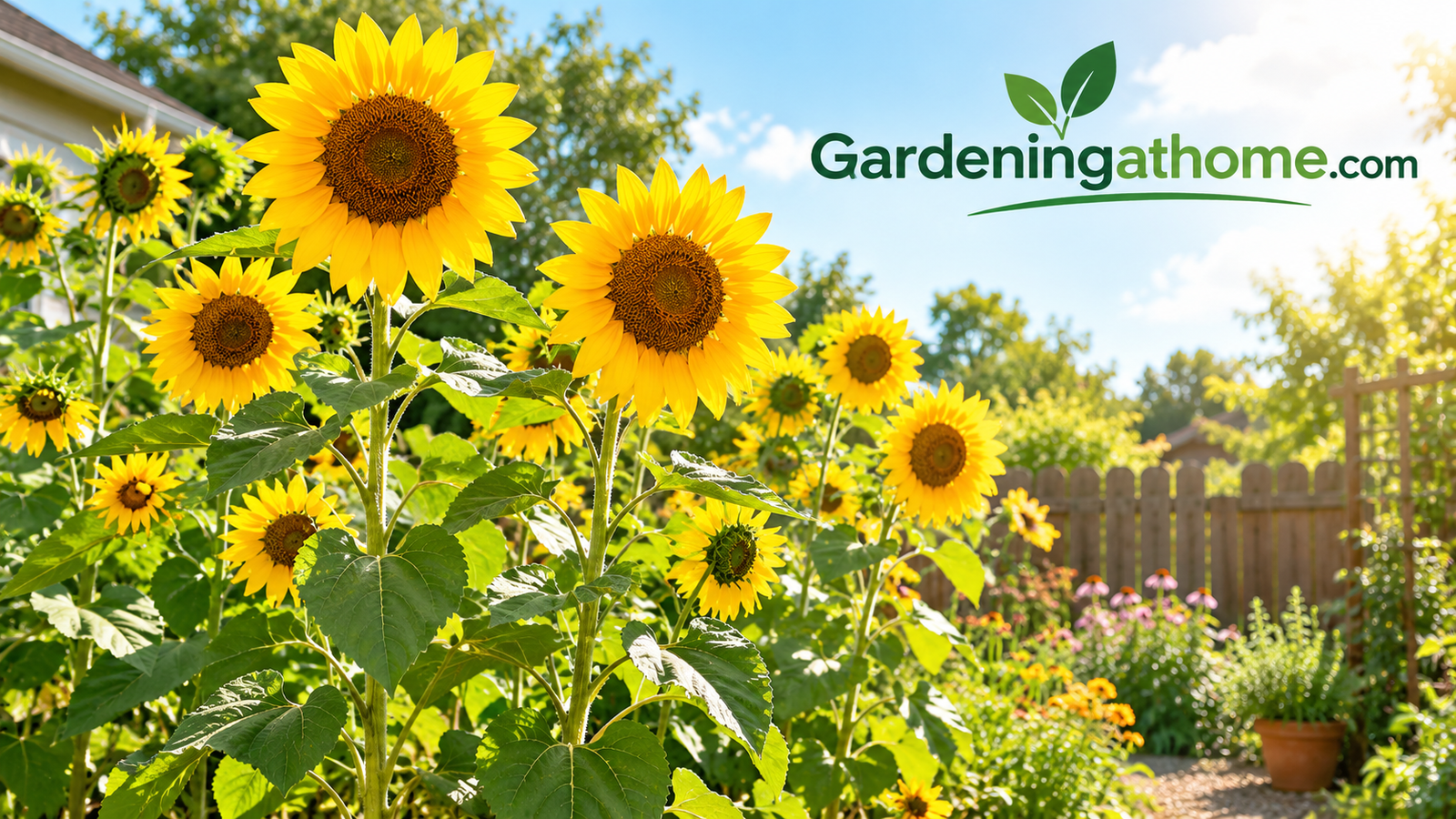
Few plants give you more reward for less effort than sunflowers. A seed the size of your fingernail can become a plant taller than a door in a single season, and the bees will thank you for it. This guide walks you through every stage, with simple diagrams for each step, so you can grow them with confidence even if this is your first garden.
1. Why Sunflowers Deserve a Spot in Your Garden
Sunflowers (Helianthus annuus) are native to North America, which explains how forgiving they are. They tolerate heat, poor soil and the occasional missed watering. They also feed pollinators, birds and people, and their deep taproots help break up compacted ground.
If you are still planning your plot, our guide on how to start a garden from scratch covers the basics, and sunflowers make a perfect first crop. They also fit a tight budget, as you will see in these cheap gardening ideas for beginners.
Pros
- Easy from seed
- Fast growth
- Great for bees and birds
- Edible seeds and petals
Cons
- Tall types may topple in wind
- Squirrels and birds love the seed
- Need full sun
Start with quality, fresh seed packs.
Shop Sunflower Seeds on Amazon2. Choosing the Right Sunflower Variety
Before you buy, decide what you want from your plants: cut flowers, seeds to eat, a living privacy screen, or a pop of color in a small bed. Varieties differ hugely in height and branching.
| Variety Type | Height | Best For | Notes |
|---|---|---|---|
| Mammoth / Giant | 8–12 ft | Edible seeds, drama | Needs staking |
| Branching (multi-bloom) | 4–6 ft | Cut flowers | Blooms for weeks |
| Pollenless | 3–5 ft | Vases | No messy pollen |
| Dwarf | 1–3 ft | Pots, borders | Compact, tidy |
Compare giant, branching and dwarf varieties.
Browse Variety Packs3. When and Where to Plant
Sunflowers are warm-season annuals. Sow outdoors once the last frost has passed and the soil feels warm, roughly 55–60°F (13–16°C). For a longer show, sow a fresh batch every two weeks until midsummer.
Light is the non-negotiable. Choose a spot with at least six to eight hours of direct sun. If you are unsure how to judge your yard, read understanding full sun vs partial shade. Plant along a north edge so tall stems do not shade smaller crops, and shelter them from strong wind where possible.
Know your soil temperature before sowing.
Find a Soil Thermometer4. Step 1: Prepare the Soil
Sunflowers prefer well-drained, loose soil with a pH between 6.0 and 7.5. Dig down about 12 inches, remove stones and roots, and mix in a few inches of compost. The taproot needs room to dive, so loosen deeper than you think necessary.
Good gloves make this job far more comfortable; see our roundup of the best gardening gloves and the essential gardening tools for beginners. If your bed is brand new, how to start a vegetable garden shares helpful bed-building tips.
Enrich tired soil before you plant.
Shop Garden Compost5. Step 2: Sow the Seeds
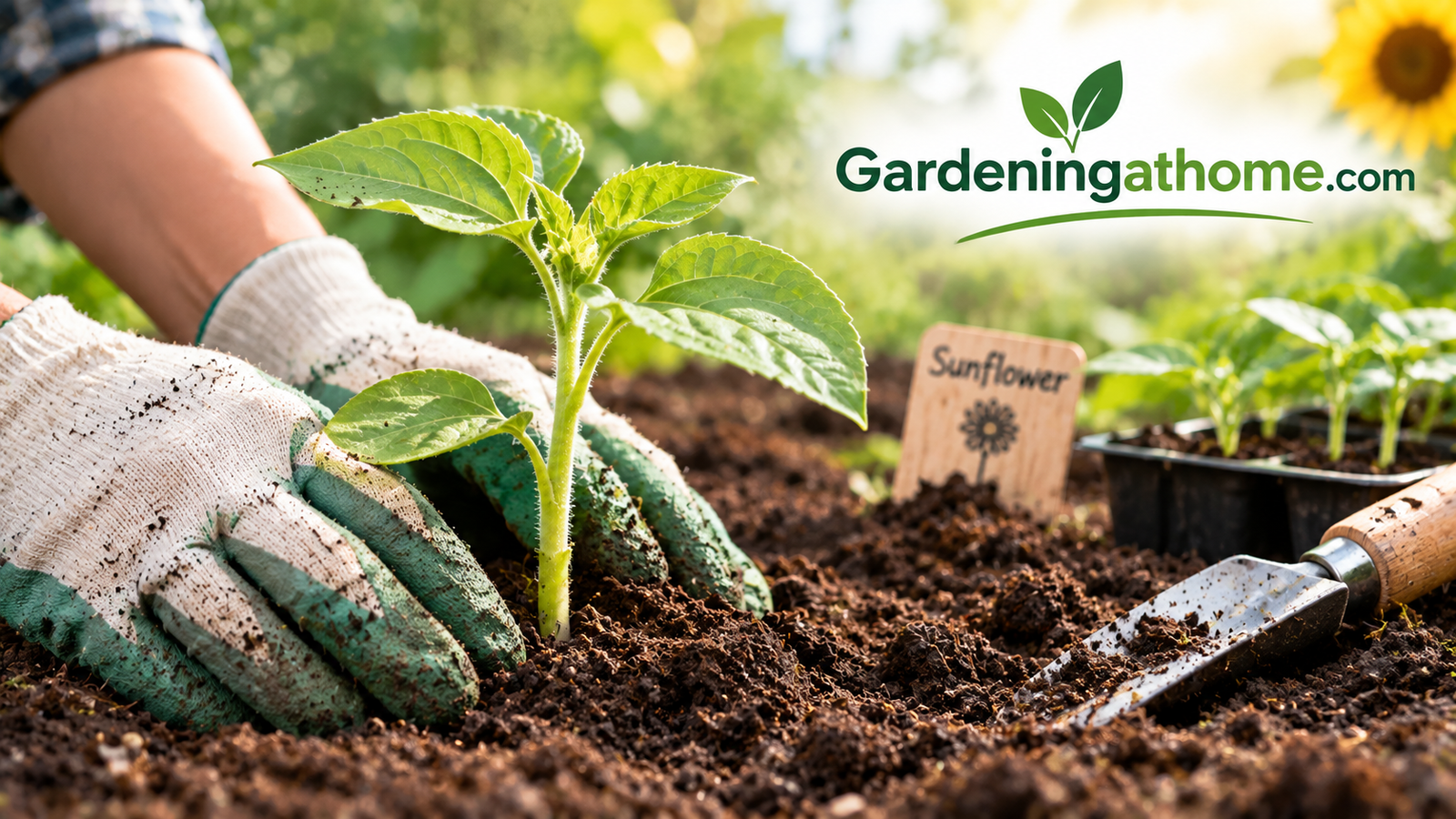
Plant seeds about 1 to 1.5 inches deep and 6 inches apart for medium types; give giants 18 to 24 inches. Sunflowers hate root disturbance, so direct sowing beats transplanting. Drop two seeds per hole as insurance and cover gently.
A dibber makes uniform holes in seconds.
See Planting Tools6. Step 3: Water Deeply and Wisely
Keep soil lightly moist until seedlings emerge, usually in 7 to 10 days. After that, water deeply once or twice a week rather than sprinkling daily. Deep watering sends the taproot down, which makes plants sturdier and more drought tolerant.
Wondering whether yours are thirsty or drowning? Check signs of overwatering vs underwatering.
Gentle soaking beats a harsh jet.
Shop Soaker Hoses7. Step 4: Thin the Seedlings
When seedlings reach 4 to 6 inches and show two true leaf pairs, thin them. It feels harsh, but crowded plants produce spindly stems and tiny flowers. Snip the weaker seedling at soil level with scissors instead of pulling, which protects the neighbor’s roots.
Precision snips keep roots undisturbed.
Shop Garden Snips8. Step 5: Feed, Mulch and Support
Sunflowers are hungry but not fussy. A balanced, slow-release fertilizer at planting is plenty; too much nitrogen gives leafy plants with few flowers. Add a 2-inch layer of mulch to hold moisture and suppress weeds. For anything over five feet, drive a stake in beside the stem and tie loosely in a figure-eight. For feeding rhythm, see how and when to fertilize plants; the same principles apply.
Feed gently for strong stems and big heads.
Shop Fertilizer9. Step 6: Protect from Pests and Critters
Young seedlings are tasty to slugs, cutworms and birds, and ripening seed heads attract squirrels. Cover rows with netting until plants are 12 inches tall, and bag the heads in mesh as seeds fill. If wildlife is a bigger problem, our guides on keeping squirrels out of the garden and keeping deer out of the garden offer practical fixes.
Netting saves your crop from hungry visitors.
Shop Garden Netting10. Step 7: Harvest Flowers and Seeds
For cut flowers, snip stems early in the morning when the petals begin to open, and plunge them straight into water. For seeds, wait until the back of the head turns yellow-brown and the petals drop, usually 30 to 45 days after blooming. Cut the head with about a foot of stem, hang it upside down in a dry, airy place, and rub out the seeds once fully dry.
Turn blooms into bouquets with sturdy vases.
Shop Flower Vases11. Growing Sunflowers in Containers and Small Spaces
No yard? No problem. Dwarf varieties thrive in pots at least 12 inches wide and deep, and one plant per pot is best. Learn more in how to choose the right pot size, use a quality mix like those in best potting soil mix, and see balcony gardening ideas for apartments for layout inspiration. Sunflowers pair beautifully with tomatoes too, as in how to grow tomatoes on a balcony, and they suit urban gardening setups well.
Give container plants room to root.
Shop Large Planters12. Troubleshooting Common Sunflower Problems
| Problem | Likely Cause | Fix |
|---|---|---|
| Leaning or fallen stems | Wind, shallow roots | Stake, water deeply |
| Yellow lower leaves | Overwatering or age | Reduce watering |
| White powdery film | Powdery mildew | Improve airflow, remove leaves |
| Small blooms | Crowding, low sun | Thin earlier, move site |
| Chewed seedlings | Slugs, birds | Netting, traps |
Most issues come down to light, spacing and water. Get those right and your sunflowers will largely look after themselves.
Keep your tools and hands protected.
Shop Gardening GlovesFrequently Asked Questions
How long do sunflowers take to grow?
Most varieties bloom 70 to 100 days after sowing, and giants may need a little longer.
How much sun do sunflowers need?
At least six to eight hours of direct sunlight each day.
How deep should I plant sunflower seeds?
About 1 to 1.5 inches deep.
How far apart should I space them?
Six inches for small types and up to 24 inches for giants.
Can I grow sunflowers in pots?
Yes. Choose dwarf varieties and a pot at least 12 inches wide and deep.
When is the best time to plant?
After the last frost, once soil reaches about 55–60°F.
Do sunflowers need fertilizer?
A light feeding is enough. Too much nitrogen reduces blooms.
How often should I water?
Water deeply once or twice a week; more often only in extreme heat or for pots.
Why are my sunflowers drooping?
Usually thirst, heat stress or too much water. Check soil moisture a few inches down.
How do I know when seeds are ready?
The back of the head turns yellow-brown and the petals dry and fall.
Do sunflowers come back every year?
Common garden sunflowers are annuals, but they often self-seed if you leave some heads.
How do I stop squirrels from eating the seeds?
Cover heads with mesh bags once petals fall and harvest promptly.
Conclusion: Your Sunniest Season Yet
Growing sunflowers comes down to sun, space and steady water. Prepare the soil, sow at the right depth, thin boldly, support tall stems and protect the heads, and you will be rewarded with towering blooms and a harvest to share with friends or the birds. Grab your seeds and start this week.
Ready to plant? Pick your seeds and supplies today.
Get Your Sunflower Starter Kit