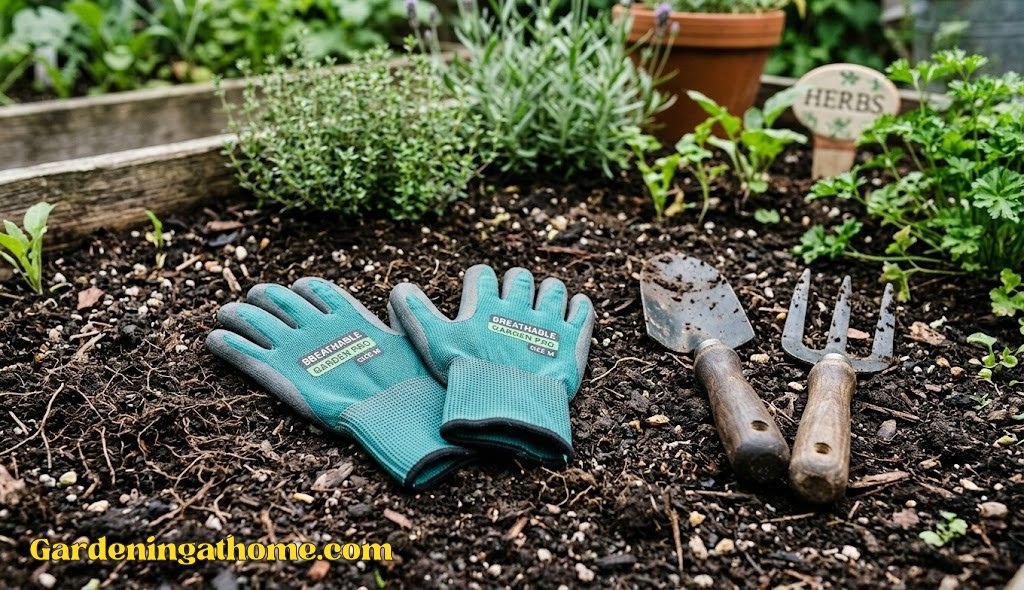
Best Gardening Gloves: Field-Tested Picks for Thorns, Weeding, and Everything in Between
Twenty-one pairs, one gardening season, and a lot of scratched-up forearms later — here’s what actually held up in the beds, the compost pile, and the rose bushes.
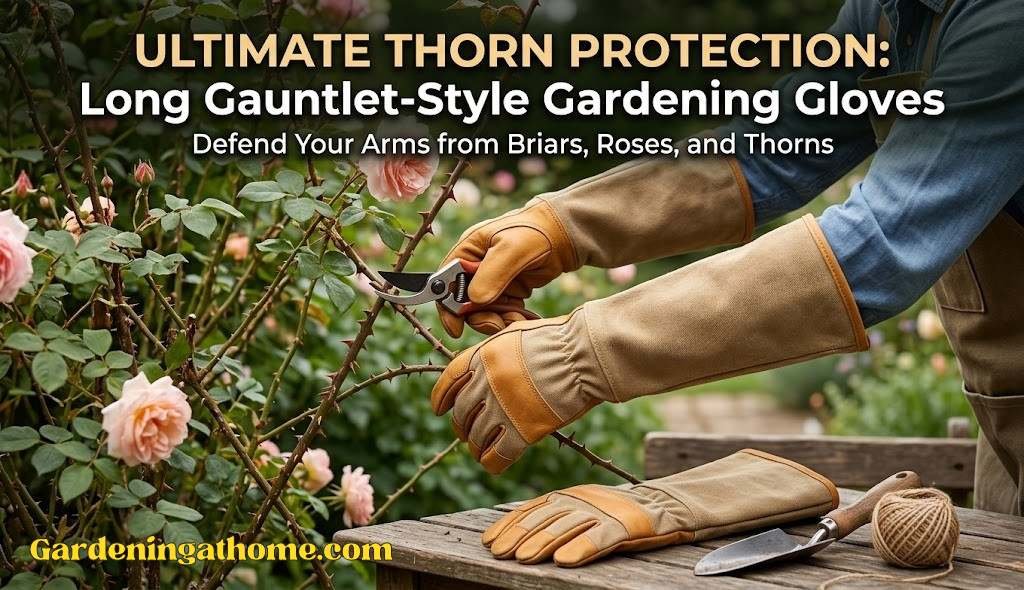
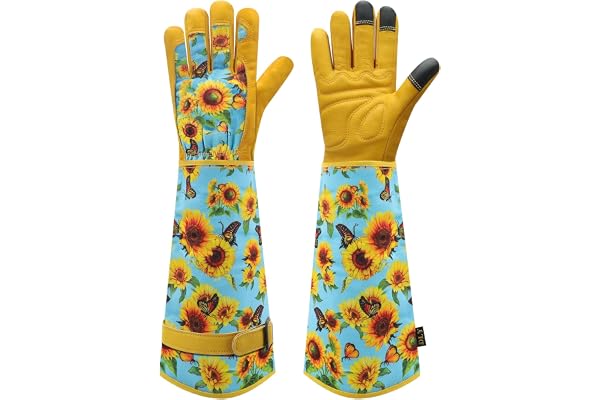
Gauntlet-style gloves like this one are the first thing to reach for once roses and blackberry canes enter the picture.
Why the Right Gardening Gloves Matter More Than You Think
Most people don’t think much about gardening gloves until the moment they really need them: mid-transplant, wrist-deep in a thorny rose bush, or halfway through turning a compost pile that’s clearly been colonized by something with pincers. That’s usually the worst possible time to discover that the pair in the shed is stiff, too big, soaked through, or missing a finger. A good pair of gloves is one of the cheapest pieces of garden equipment you’ll ever own, and it’s also one of the few that directly protects your skin, your joints, and your ability to keep gardening pain-free for years.
Bare-handed gardening feels natural for the first ten minutes. Then the thorns show up, or the soil turns out to be laced with broken glass or old root fragments, or the “quick weeding session” turns into three hours of repetitive gripping that leaves your hands aching the next morning. Gloves aren’t about babying your hands; they’re about letting you work longer, grip tools more securely, and avoid the small punctures and abrasions that make gardening genuinely unpleasant.
There’s also a real practical case for wearing them. Soil harbors bacteria and fungi that can enter the body through even a tiny scratch, and thorns, splinters, and sharp mulch can open exactly that kind of entry point. Once soil gets into a wound, it can take noticeably longer to heal than a typical household cut. None of that requires alarmism, just a decent pair of gloves and a bit of common sense.
The tricky part is that “gardening gloves” isn’t really one category. A pair built to survive rose pruning is nearly useless for delicate seedling work, and a glove designed for all-day breathability in July won’t do much against blackberry canes in a hedgerow. That’s the reason this guide is organized by task and by user rather than as a single ranked list — the “best” glove genuinely depends on what you’re doing with your hands, how big your hands are, and how much dexterity you’re willing to trade for protection.
The right glove disappears on your hand. The wrong one is all you can think about by the second bed.
Throughout this guide we’ll flag which gloves are worth buying for thorny plants like roses and blackberries, which ones hold up for long weeding sessions, which are cut for women’s and men’s hand shapes, which leather options are worth the higher price, and which are sturdy enough for kids just getting started in the garden. If you already know your priority, the quick comparison table below will get you to the right pick fastest; if you want the full reasoning, keep reading.
How We Tested and Chose These Gloves
Rather than judging gloves off a spec sheet, every pair in this guide was put through the same basic scenarios a home gardener actually encounters over a season: bed prep and digging, hand-weeding in damp soil, pruning through cane fruit and rose bushes, handling mulch and gravel, and a few honestly unglamorous jobs like clearing out a clogged gutter and moving firewood, since garden gloves rarely stay confined to the garden.
Five criteria mattered most, and they show up again and again in the reviews below:
| Criterion | What we looked for |
|---|---|
| Puncture & thorn resistance | Whether the palm and fingers stopped rose thorns, blackberry canes, and small splinters from reaching skin |
| Breathability | Whether hands stayed reasonably dry and cool during 30+ minutes of continuous wear |
| Grip & dexterity | How well the gloves handled small objects — seeds, twine, plant labels — without feeling clumsy |
| Fit & sizing accuracy | Whether the labeled size matched real hand measurements, and how the cuff and wrist closure performed |
| Durability | How the seams, coating, and fingertips held up after repeated washing and rough use |
We also paid close attention to materials, since that single choice predicts almost everything else about how a glove will behave. Rubber-coated and nitrile-dipped gloves tend to win on grip and water resistance; leather wins on raw puncture protection and long-term durability; breathable spandex-and-mesh builds win on comfort during long sessions but give up some thorn protection. There’s more on this trade-off in the materials section further down, including how nitrile stacks up against latex for anyone with a latex sensitivity.
Finally, price was weighed against expected lifespan rather than against the sticker price alone. A low-cost pair that shreds after three uses is not actually cheaper than a slightly pricier pair that lasts two seasons, so the “best budget” and “best value” calls below account for that math rather than ranking by lowest price alone.
Quick-Look Comparison Table
If you’d rather skim than read, this table lines up the standout pairs from our full testing pool by category, material, and what they’re genuinely best suited for. Every pick links down to its full write-up further in the guide.
A word on how to read it: “Best For” reflects the single task each pair excelled at during testing, not the only thing it can do. Several gloves here perform reasonably well outside their labeled category — the breathable picks handle light digging just fine, and the leather options can absolutely be used for general yard work — but the label points to where each pair genuinely stood out from the rest of the field rather than where it merely got the job done.
| Glove | Best For | Material | Cuff Style | Notable Trait |
|---|---|---|---|---|
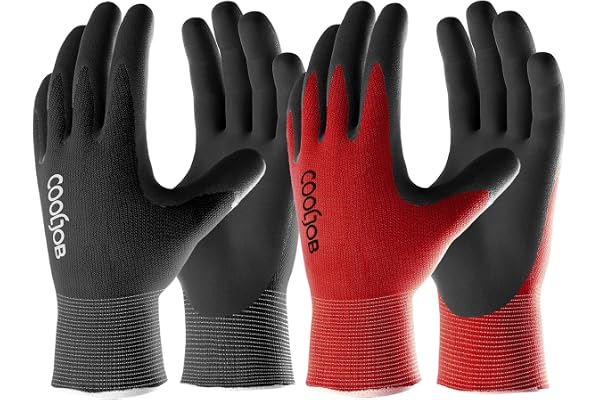
| COOLJOB Rubber-Coated Gloves | Best overall / all-purpose | Cotton knit + rubber palm coating | Elastic knit wrist | Balances grip, breathability, and price |
| Rose Pruning Gauntlet Gloves | Thorns, roses, brambles | Breathable fabric + reinforced palm | Extended forearm gauntlet | Long cuff shields forearms from canes |
| Long Gauntlet Gloves (Blackberry) | Bramble & hedge clearing | Cowhide-reinforced palm | Extra-long gauntlet | Goes past the elbow for dense thorn work |
| COOLJOB Breathable Rubber Gloves | Hot-weather weeding | Nylon knit + micro-foam rubber | Snug knit wrist | Noticeably cooler on long sessions |
| Thornproof Women’s Gloves | Women’s fit, thorn tasks | Goatskin leather palm + fabric back | Adjustable wrist strap | Narrower cut through the palm and fingers |
| Leather Gloves for Women (Planting) | Planting & potting | Full leather | Elastic wrist | Soft leather broken-in feel out of the box |
| HANDLANDY Breathable Gardener Gloves | Men’s fit, general yard work | Synthetic leather palm + mesh back | Velcro wrist strap | Reinforced fingertips for tool work |
| WANCHI Leather Gloves | Durable all-leather option | Full leather | Elastic wrist | Thick hide holds up to repeated snagging |
| OIZEN Cowhide Leather Gloves | Heavy pruning, brush clearing | Cowhide leather | Reinforced elastic cuff | Among the thickest hides we tested |
| MSUPSAV Touchscreen Gloves | Phone use mid-task | Spandex + synthetic leather palm | Elastic wrist | Touchscreen-compatible fingertip |
| DIGZ Performance Gloves | Precision & fine motor tasks | Synthetic suede palm | Knit wrist | Snug, close-to-skin fit for detail work |
| Deerskin Toddler Gardening Gloves | Kids & family gardening | Deerskin leather | Elastic wrist | Scaled-down sizing for small hands |
| HydraHyde Water-Resistant Gloves | Wet-weather, heavy chores | Water-resistant leather | Safety cuff | Shrugs off morning dew and hose spray |
| Forearm Protection Pruning Gloves | Dense thorny brush | Reinforced fabric + leather palm | Extended forearm sleeve | Longest forearm coverage in the lineup |
COOLJOB Rubber-Coated Gardening Gloves
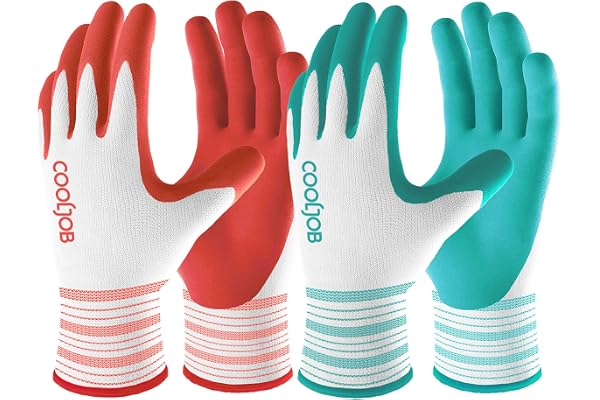
These were the pair that kept coming back out of the drawer for absolutely everything — weeding, potting, moving mulch, even a quick oil change on the mower. The cotton-poly knit shell breathes reasonably well, and the textured rubber coating on the palm and fingers grips wet tool handles and slick weed roots without feeling clammy the way a full rubber glove does.
Sizing runs true, the knit wrist cuff keeps soil out without needing a strap, and the coating held up through more than a dozen machine washes without cracking or peeling at the fingertips, which is where cheaper coated gloves usually fail first.
Pros
- Excellent grip on wet and dry tool handles
- Breathes better than fully rubberized gloves
- Machine washable without the coating cracking
- Budget-friendly enough to buy multiple pairs
Cons
- Not rated for serious thorn or bramble work
- Knit cuff lets fine dust in during dry digging
- Runs slightly small in the fingers for wide hands
Worth noting: this pair also turned out to be the one most likely to survive an accidental trip through the wash on a normal cycle rather than a delicates setting, which matters more than it sounds for anyone who tosses gloves in with regular laundry rather than treating them as a separate chore. Over several months of rotation with two other test pairs, this was consistently the one reached for first, mostly because it never demanded a decision about which task it was suited for — it handled almost everything reasonably well without excelling narrowly at one thing the way more specialized gloves do.
If your gardening is mostly digging, weeding, transplanting, and general puttering rather than fighting through a rose hedge, this is the pair to buy first. For anything with real thorns, jump down to the gauntlet gloves below.
COOLJOB Rubber-Coated Gardening Gloves
Our pick for best all-around, everyday gardening glove
Check Price on Amazon →Rose Pruning Gauntlet Gloves & Long Blackberry Gauntlets

Rose canes, blackberry brambles, and anything in the hawthorn family do not care how careful you are — thorns find gaps at the wrist every single time. That’s the entire reason gauntlet-style gloves exist, and this pair earned its spot by extending well past the forearm with a breathable but genuinely puncture-resistant weave over the back of the hand and cuff.
The reinforced palm shrugs off thorns that would go straight through a lighter cotton glove, while the fabric gauntlet section stays flexible enough that you’re not fighting the material every time you bend your wrist.
One detail that separated the better gauntlet gloves from the mediocre ones during testing was how the seam between the palm reinforcement and the gauntlet fabric was constructed. Cheaper designs stitch this seam directly at the wrist crease, which is exactly where a thorn is most likely to catch and eventually work through. The better-built pairs here shift that seam slightly up the forearm, away from the point of most repeated flexing, which noticeably extended how long the reinforcement held up under regular bramble contact.
For denser thorn work — clearing an overgrown blackberry patch rather than just deadheading roses — the extra-long gauntlet gloves built around a cowhide-reinforced palm go a step further, extending nearly to the elbow. They trade some breathability for that added coverage, which is a fair swap once canes get thick enough to snag past the wrist.
Pros
- Gauntlet length actually protects the forearm, not just the wrist
- Reinforced palm stops most rose and bramble thorns
- Breathable enough for extended pruning sessions
Cons
- Bulkier fit reduces fine dexterity
- Not the best choice for delicate seedling work
- Longer gauntlet can feel warm in peak summer heat
If roses and thorny hedges are a recurring fight in your yard, see our dedicated breakdown of the best gardening gloves for thorny roses for a deeper comparison of gauntlet lengths and reinforcement styles.
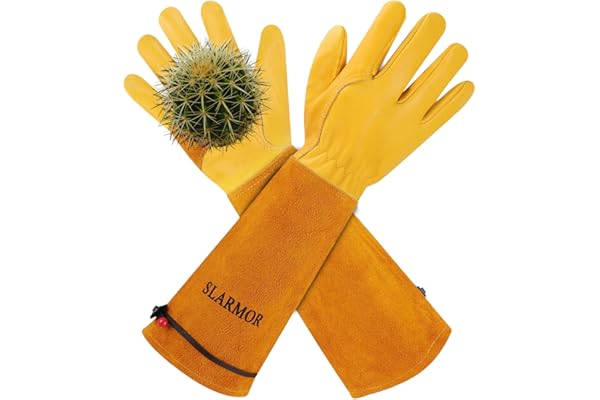
Long Gauntlet Gloves for Thick Bramble Work
Goes past the elbow for the densest thorn patches
Check Price on Amazon →COOLJOB Breathable Rubber Gardening Gloves & JUMPHIGH Non-Slip Gloves
Weeding in July is where most gloves fall apart, not physically but comfort-wise — hands get hot, sweaty, and eventually you just take the gloves off, which defeats the purpose. This breathable version of the classic rubber-coated glove swaps a chunk of the palm coating for a lighter micro-foam layer and adds a more open knit on the back of the hand, and the difference during an hour of continuous kneeling and weeding was noticeable.
Grip is nearly as good as the standard rubber-coated design, and the lighter build makes it easier to feel small weeds and roots rather than working blind through thick padding.
The JUMPHIGH non-slip working gloves take a similar approach from a different angle — a stretchy, elastic-backed knit paired with a grippy palm coating designed to move with the hand rather than restrict it. They’re a good secondary pair to keep around for tasks that need more finger flexibility, like tying up tomato vines or handling plant labels and twine.
Pros
- Noticeably cooler and drier during long weeding sessions
- Grip holds up on both wet and dry surfaces
- Elastic-backed knit moves naturally with the hand
Cons
- Less puncture resistance than a full rubber coating
- Not a substitute for gauntlet gloves around thorns
- Mesh panels can let fine grit through in very dusty soil
It’s worth being honest about the trade-off here rather than pretending breathable gloves do everything well. The lighter micro-foam palm that keeps hands cool is also the first thing to wear thin if it’s used regularly for heavier tasks like handling gravel or edging stones, so treating this pair as the dedicated “weeding and light tasks” glove rather than the do-everything option is what actually gets the most life out of it. Keeping a second, tougher pair on hand for the rougher jobs meant this breathable pair lasted considerably longer in testing than it would have as a sole all-purpose glove.
For a deeper look at breathable builds specifically for long hand-weeding sessions, see the dedicated best gloves for weeding comparison, which covers a wider range of mesh and knit constructions.
COOLJOB Breathable Rubber Gardening Gloves
Our pick for staying cool during long weeding sessions
Check Price on Amazon →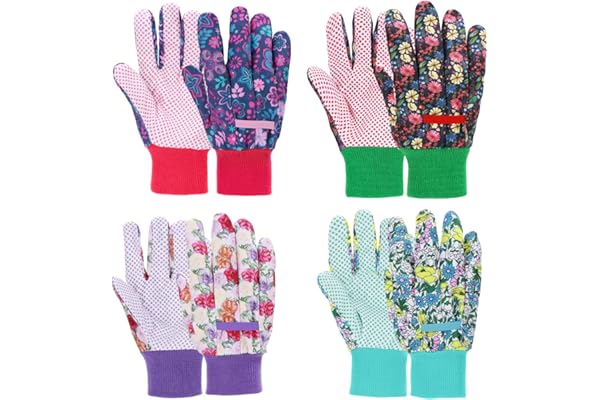
JUMPHIGH Non-Slip Breathable Working Gloves
Great secondary pair for detail tasks like tying and staking
Check Price on Amazon →Thornproof Women’s Gardening Gloves & Leather Planting Gloves
A lot of “unisex” gardening gloves are really cut for a men’s average hand, which means excess fabric bunching at the fingertips and a palm that never quite grips the way it should. This thornproof pair is cut noticeably narrower through the palm and fingers, with a goatskin leather panel across the high-wear areas and a fabric back that keeps the overall glove lighter than a full-leather design.
The adjustable wrist strap makes a real difference here too, cinching down enough to keep soil and small thorns from working their way in during pruning.
For gardeners who want a softer, more supple feel from the first wear, the all-leather planting gloves are worth a look — the leather is thinner and more pliable than typical work-glove hide, so there’s very little break-in period, which matters most for detail work like transplanting seedlings or handling delicate root balls.
Pros
- Narrower cut actually matches smaller hand sizes
- Goatskin panel holds up to real thorn contact
- Adjustable strap keeps debris out at the wrist
Cons
- Sizing still runs a touch large for very small hands
- Leather panel needs occasional conditioning
- Strap buckle can dig in if over-tightened
It’s also worth mentioning what “women’s fit” actually changes on a glove like this, since the term gets used loosely across the industry. The meaningful differences are a narrower palm width, shorter finger length relative to palm size, and often a shallower thumb crotch, all of which reduce the bunching and slipping that happens when a hand simply doesn’t match the pattern a glove was drafted around. None of that is about strength or capability — it’s purely about the pattern matching real hand proportions, which is exactly why the fit made such a noticeable difference during testing compared to sizing down in a standard men’s-pattern glove.
For the full rundown of fits, cuff styles, and sizing specifically built around women’s hands, see best gardening gloves for women.
Thornproof Women’s Gardening Gloves
Our pick for a true-to-size women’s fit with thorn protection
Check Price on Amazon →
Leather Gardening Gloves for Women (Planting)
Soft, supple leather with almost no break-in period
Check Price on Amazon →HANDLANDY Breathable Gardener Gloves & WANCHI Leather Gloves
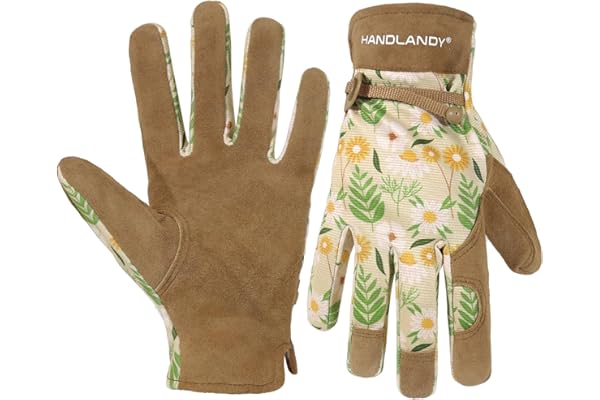
Built with a wider palm and a synthetic leather panel across the fingers and palm, this pair is aimed squarely at bigger hands and heavier tool use. The mesh back panel keeps things reasonably breathable, and the reinforced fingertips held up well to repeated contact with rough-cut lumber and stone edging during a raised-bed build.
The velcro wrist strap is a genuinely useful detail here — it’s easy to cinch one-handed, which matters more than it sounds when you’re already holding a shovel or a bag of mulch.
The WANCHI leather gloves take a more traditional approach: full leather construction, elastic wrist, and a noticeably thicker hide than most of the synthetic-leather options in this guide. They take a few wears to soften up, but once broken in, they’re among the most durable gloves in the lineup for repeated snagging on rough bark and stone.
Pros
- Wider palm and finger cut suits larger hands
- One-handed velcro strap is genuinely convenient
- WANCHI leather resists snagging on rough surfaces
Cons
- Synthetic leather panel is less breathable than fabric alone
- WANCHI leather needs a short break-in period
- Velcro strap can collect burrs and plant debris
Something worth flagging for anyone shopping by size chart alone: “large” and “extra-large” labels vary more between brands here than almost anywhere else in this category, largely because a men’s-marketed glove sometimes assumes a wider palm-to-finger ratio that doesn’t actually match every large hand. Measuring the palm directly, as covered in the sizing guide further down, avoided more than one mis-sized return during testing and is worth the extra thirty seconds before ordering.
For more options built around larger hand sizing and heavier-duty yard work, see best gardening gloves for men.
HANDLANDY Breathable Gardener Gloves
Our pick for larger hands and general heavy-duty yard work
Check Price on Amazon →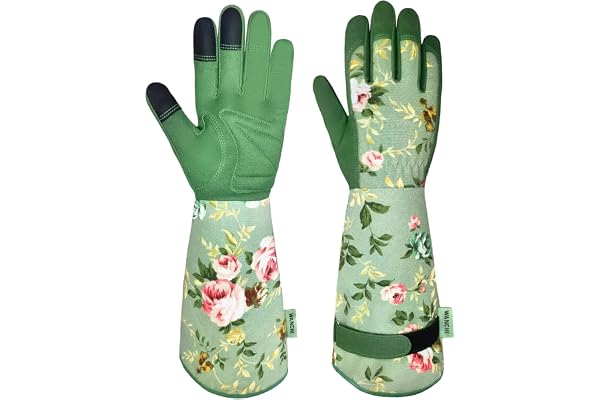
WANCHI Durable Leather Gardening Gloves
A traditional full-leather build that resists snagging
Check Price on Amazon →OIZEN Cowhide Gloves, Flexible Leather Gloves & Deerskin Options

Leather remains the gold standard for anyone doing serious pruning, brush clearing, or handling rough lumber and stone, and this roundup covers the three leather builds that stood out most across testing. The OIZEN cowhide gloves use a genuinely thick hide, thick enough that it took the longest to break in of anything tested, but the payoff is real: after that initial stiffness works out, almost nothing short of a utility knife gets through the palm.
A lighter, more flexible leather option splits the difference for gardeners who want leather’s toughness without the stiffness — the leather is thinner and pre-softened, which shows up immediately in how natural it feels gripping small tools and tying twine, at some cost to raw puncture resistance versus the thicker cowhide pair.
Pros
- Cowhide options offer the best puncture resistance of any material tested
- Leather holds up for years with basic conditioning
- Flexible leather variants close most of the dexterity gap with fabric gloves
Cons
- Thicker hides need a break-in period before they feel comfortable
- Leather requires occasional cleaning and conditioning to avoid drying out
- Generally pricier than fabric or rubber-coated alternatives
Break-in deserves a bit more explanation, since it’s the single biggest complaint leather gloves get and most of it is avoidable. New leather is stiff because the fibers haven’t yet been worked loose, and the fastest, safest way through that stage is simply wearing the gloves for short, low-intensity sessions rather than immediately putting them through a full afternoon of heavy pruning. A light coat of leather conditioner worked in by hand before the first wear also speeds this along considerably and helps prevent the fibers from cracking rather than softening as they flex for the first time.
For a full breakdown of hide types, thickness, and which leather cut suits which job, see best leather gardening gloves. And once you’ve picked a pair, our guide on how to clean leather gardening gloves covers the conditioning routine that keeps hide from cracking.
OIZEN Cowhide Leather Gardening Gloves
Our pick for maximum puncture resistance in heavy pruning
Check Price on Amazon →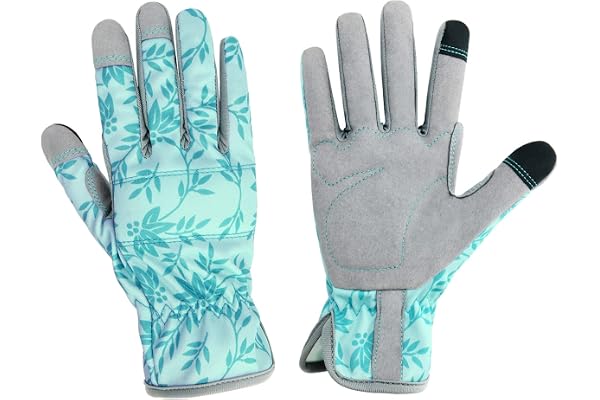
Flexible Breathable Leather Gardening Gloves
Softer, more pliable leather with less break-in time
Check Price on Amazon →
Leather Gardener Gloves, Flexible & Breathable Cut
A middle-ground option between stiff cowhide and soft planting leather
Check Price on Amazon →MSUPSAV Touchscreen Gloves & DIGZ Performance Gloves
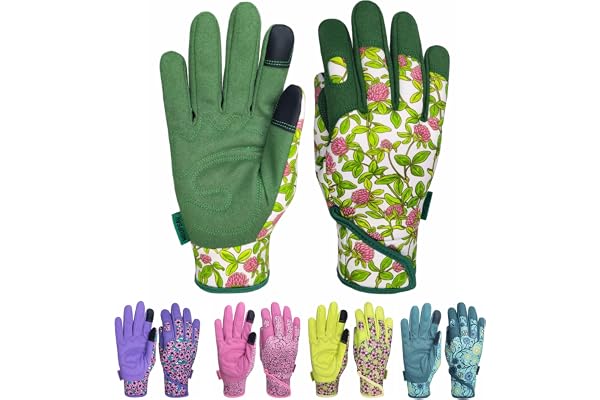
Anyone who’s ever peeled off a muddy glove just to check a plant-identification app or answer a call mid-project will get the appeal here. The MSUPSAV pair pairs a stretchy spandex back with a synthetic leather palm and a conductive fingertip patch that actually works reliably through a phone screen, not just in theory.
The stretch fit also makes this one of the more dexterous gloves in the lineup, which pairs well with detail tasks like handling seed packets, plant tags, and small hand tools.
The DIGZ performance gloves lean further into fine motor work, with a snug synthetic suede palm designed to sit close to the skin for tasks like precision pruning, grafting, and handling delicate seedlings where feel matters more than raw protection.
Pros
- Touchscreen fingertip actually registers reliably
- Stretch fit supports fine motor tasks well
- Snug construction avoids the bulk of thicker gloves
Cons
- Limited thorn and puncture protection
- Not intended for heavy-duty digging or pruning
- Synthetic materials show wear faster than leather
The other underrated use case for this category is anywhere precision actually matters more than protection — grafting, seed starting, handling delicate cuttings, or working with small hand tools where a thick palm makes it hard to feel exactly how much pressure is being applied. Neither of these gloves is meant to replace a thorn-rated pair for heavier jobs, but for the tasks they’re built around, the closer-to-skin fit is a genuine advantage rather than just a compromise.
Weeding-focused gloves and this touchscreen-friendly category actually overlap quite a bit in construction, since both prioritize feel over raw protection.
MSUPSAV Touchscreen-Compatible Gardening Gloves
Our pick for staying connected without stopping to de-glove
Check Price on Amazon →
DIGZ Performance Gardening Gloves
Best for precision tasks like grafting and seedling handling
Check Price on Amazon →Deerskin Toddler & Kids Gardening Gloves

Getting kids involved in the garden usually means finding gloves that actually fit — most “kids'” gloves on the market are really just smaller adult gloves with the same stiff cuffs and clumsy fingertips. This deerskin pair is genuinely scaled down, with a soft, supple hide that flexes easily for smaller hand strength and a snug elastic wrist that stays put without needing to be cinched.
Deerskin in particular is worth calling out here: it’s naturally softer and more pliable than cowhide even at a thin gauge, which matters a lot for a child’s grip strength and patience for “stiff glove” complaints.
Pros
- Genuinely scaled sizing rather than a shrunken adult glove
- Deerskin flexes easily for smaller hand strength
- Snug elastic wrist stays on during active play and work
Cons
- Limited size range — check measurements before buying
- Not rated for serious thorn work; supervise around roses and brambles
- Leather still needs occasional cleaning like any hide glove
It’s also worth setting expectations with kids themselves before handing over a new pair: even a well-fitted glove takes a session or two to feel completely natural, and a child who’s frustrated by a “weird” feeling glove on day one is usually just adjusting rather than experiencing an actual fit problem. A short supervised session doing something rewarding, like planting a few seeds or watering, tends to build the positive association that gets a kid reaching for gloves on their own going forward.
For a wider comparison of sizing and fit across different kids’ age ranges, see best gardening gloves for kids.
Deerskin Toddler & Kids Gardening Gloves
Our pick for genuinely kid-scaled fit and comfort
Check Price on Amazon →HydraHyde Water-Resistant Gloves, Forearm Protection Gauntlets & More
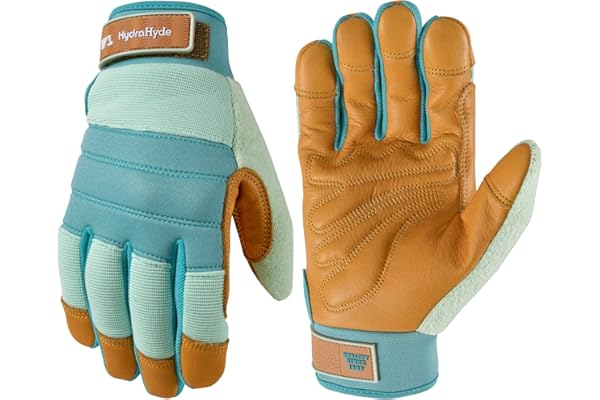
Some yard work isn’t really “gardening” so much as manual labor with plants nearby — hauling wet mulch, handling firewood, working through morning dew that soaks lighter gloves within minutes. The HydraHyde gloves use a water-resistant leather treatment that noticeably outlasted every other leather pair in the lineup when it came to wet-morning chores, without needing a separate rubber overlayer.
For the densest thorny brush — think overgrown hedgerows or reclaiming a neglected garden bed — the forearm-protection gauntlet gloves offer the longest coverage of anything tested, extending well past the elbow with a reinforced fabric sleeve over a leather-paneled palm. Rounding out this category, the puncture-resistant gloves built for women’s hands and the WORKPRO all-purpose work gloves both proved sturdy enough for mixed yard-and-garden days that don’t fit neatly into one category.
Pros
- Water-resistant treatment holds up through wet morning chores
- Forearm gauntlets provide the longest coverage in this guide
- Durable enough for mixed gardening-and-yard-work days
Cons
- Bulkier builds reduce dexterity for detail tasks
- Longest gauntlets can feel warm in summer heat
- Water-resistant coating needs occasional reapplication over time
A quick note on that water-resistant treatment specifically, since it’s easy to assume any leather described as “water-resistant” behaves the same way: the good versions apply a wax or silicone-based treatment directly into the hide during tanning, so the resistance survives repeated flexing and doesn’t just wear off the surface after a few uses the way a sprayed-on coating tends to. That distinction is exactly why this pair kept performing well through wet-morning testing weeks after gloves with a surface-level treatment had started soaking through.
HydraHyde Water-Resistant Leather Work Gloves
Best for wet-weather chores and morning dew
Check Price on Amazon →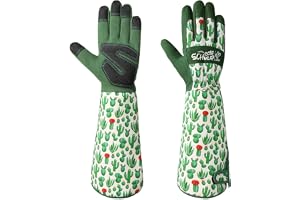
Forearm Protection Pruning Gauntlet Gloves
Longest coverage in this guide, built for dense thorny brush
Check Price on Amazon →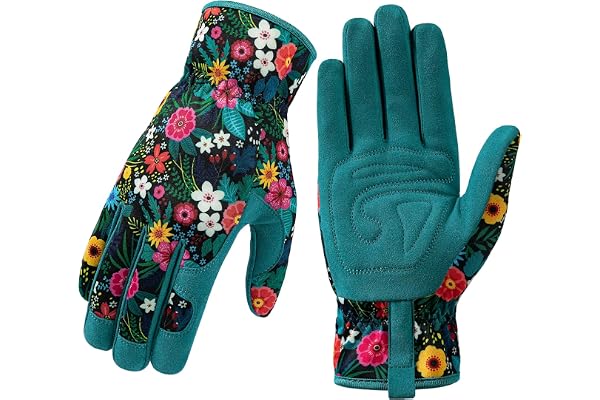
Trifabricy Puncture-Resistant Garden Gloves
A sturdy, women’s-fit option for mixed heavy-duty days
Check Price on Amazon →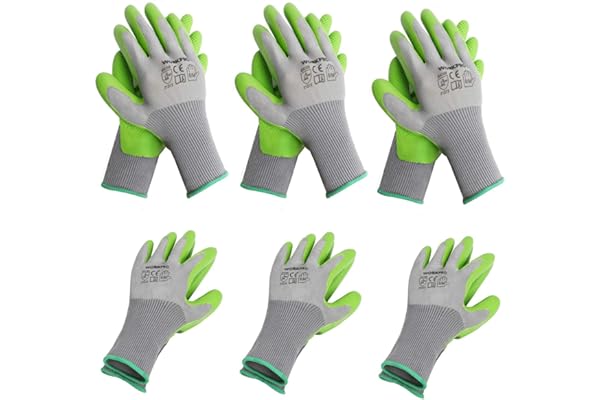
WORKPRO All-Purpose Working Gloves
A dependable generalist for weeding, digging, and pruning
Check Price on Amazon →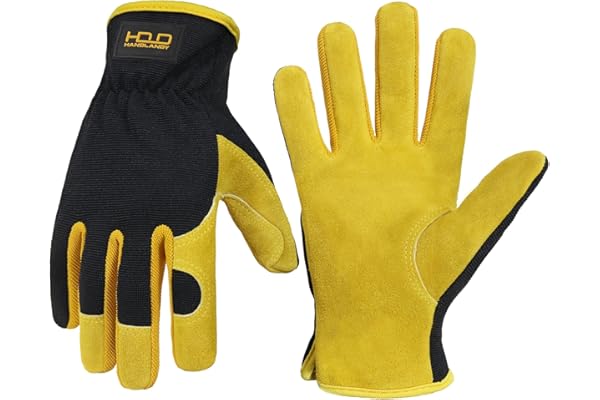
Mechanics-Style Dexterity Work Gloves
Useful crossover pick for garden builds involving tools and lumber
Check Price on Amazon →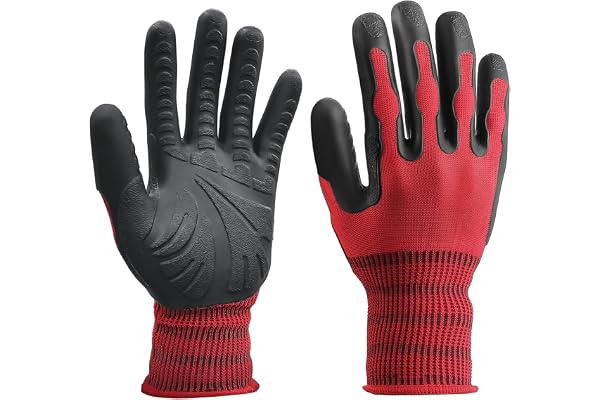
Aegend Thorn-Resistant Coated Gloves
A solid backup pair with recyclable coating and reinforced fingertips
Check Price on Amazon →Materials Explained: Leather, Rubber-Coated, Nitrile & Latex
Almost every gardening glove on the market is built from some combination of four base materials, and understanding what each one actually does changes how you shop far more than any brand name does.
| Material | Strengths | Weaknesses | Best Suited For |
|---|---|---|---|
| Leather (cowhide, goatskin, deerskin) | Best puncture resistance, ages well, very durable | Needs break-in and conditioning, less breathable | Pruning, brush clearing, thorny plants |
| Rubber-coated fabric | Great grip, decent water resistance, washable | Moderate thorn protection, can feel warm | Weeding, digging, general all-purpose use |
| Nitrile-dipped fabric | Chemical and water resistant, no latex allergy risk | Less flexible than rubber in cold weather | Wet soil, fertilizer or pesticide handling |
| Latex-dipped fabric | Very flexible, tactile, inexpensive | Common allergen, degrades faster in sunlight | Light, short-duration tasks |
The nitrile-versus-latex question comes up constantly, mostly because the two look similar at a glance but behave very differently on skin. Nitrile is a synthetic rubber that carries essentially no risk of triggering the latex allergies that affect a meaningful share of the population, while offering comparable flexibility and slightly better resistance to oils, fertilizers, and mild chemicals. Latex remains cheaper and slightly more elastic, but it breaks down faster under UV exposure and simply isn’t an option for anyone with a known sensitivity. For a full side-by-side, see nitrile vs. latex gardening gloves.
A quick rule of thumb that held up throughout testing: if the job involves thorns or rough bark, reach for leather. If it involves wet soil, mulch, or general digging, rubber-coated or nitrile-dipped gloves are the more comfortable and washable choice. If it’s a quick, light task, breathable knit or latex-dipped gloves are usually enough.
It’s also worth knowing that many gloves blend more than one of these materials rather than committing fully to one, and that’s not a compromise so much as a deliberate design choice. A fabric-backed glove with a leather palm, for instance, gets most of leather’s puncture resistance exactly where the hand contacts thorns and tools while keeping the breathable back panel for comfort. When a product description lists multiple materials, it’s worth thinking about which part of the hand each one covers rather than assuming the whole glove behaves like whichever material is mentioned first.
Care & Cleaning: Getting More Seasons Out of Your Gloves
Most gardening gloves fail long before the material actually wears out — they get left balled up damp in a shed, or a rubber coating cracks because it dried out too fast in direct sun. A little routine care adds real seasons to a pair’s working life.
Fabric and rubber-coated gloves generally hold up fine in a washing machine on a gentle cycle, turned inside out, and air-dried rather than tumble-dried, since high heat is what tends to crack rubber coatings prematurely. Leather gloves need a different approach entirely: brushing off dried soil after use, letting them air-dry away from direct heat if they get wet, and periodically working in a leather conditioner to keep the hide from drying out and cracking at the flex points around the knuckles.
For leather specifically, our step-by-step routine in how to clean leather gardening gloves covers the conditioning schedule that kept the leather pairs in this guide supple through repeated testing, rather than stiffening up the way untreated leather typically does after a few wash cycles.
One habit worth building regardless of material: store gloves somewhere they can fully dry out between uses rather than sealed in a tote or bag. Trapped moisture is the single fastest way to shorten a glove’s lifespan, whether that shows up as mildew in fabric gloves or as stiff, cracked leather.
A hook near the garden shed or back door, rather than a drawer or bin, does more for glove longevity than almost any product choice. Gloves that hang and air out between uses simply dry faster and develop far less odor and mildew than gloves left balled up in a bag, and that small habit change extends the useful life of nearly every material covered in this guide.
Sizing & Fit Guide
More gardening gloves get returned for poor fit than for any actual quality defect, and it’s almost always avoidable. To find your size, measure around the palm at its widest point, just below the knuckles, and compare that measurement against the brand’s specific size chart rather than assuming sizes are standardized — they genuinely aren’t across brands.
| Size | Typical Palm Width | Common Fit Notes |
|---|---|---|
| Small | ~7–7.5 cm (2.75–3 in) | Fits most women’s and some teen hand sizes |
| Medium | ~8–8.5 cm (3.1–3.3 in) | Most common size for average adult hands |
| Large | ~9–9.5 cm (3.5–3.7 in) | Fits broader palms and longer fingers |
| X-Large | ~10 cm+ (3.9 in+) | Best for larger hands or gloves worn over liners |
A glove that’s slightly snug in the palm but a touch loose at the fingertips is generally a better fit than the reverse — excess fabric at the fingertips is what causes fumbling with small tools and seed packets, while a snug palm actually improves grip and control. If you’re shopping specifically for kids, don’t just size down from adult small; look for gloves genuinely built on a smaller pattern, since a shrunken adult cut still tends to be stiff and clumsy on a child’s hand, which is exactly the gap the dedicated kids’ gardening gloves guide addresses.
Cuff style matters almost as much as palm size. Elastic knit cuffs are the easiest to get on and off but let in the most debris; velcro straps add a genuine seal at the wrist at the cost of one extra step; and full gauntlet cuffs trade convenience entirely for forearm coverage, which is worth it the moment thorns are involved.
Common Mistakes People Make When Buying Gardening Gloves
After going through this many pairs in one season, a few recurring mistakes stood out — the kind that don’t show up until the gloves are already three weeks into use and starting to fail in exactly the way a little more research would have predicted.
The most common one is buying based purely on how a glove looks in a product photo rather than what it’s actually built to do. A slim, stylish-looking glove with a thin fabric back might photograph well, but if the palm coating is a thin latex dip rather than a reinforced rubber or leather panel, it won’t hold up to more than light weeding. Read the actual material description, not just the marketing copy, before assuming a glove can handle pruning or brush clearing.
A second mistake is ignoring cuff length until it’s too late. It’s tempting to buy the shorter, more breathable-looking pair, but if roses, brambles, or anything with thorns are a regular part of the yard, a short cuff means thorns will eventually find the gap at the wrist. It’s a lot cheaper to buy the right cuff length up front than to buy a second pair after the first one fails at exactly the moment it mattered most.
A third, subtler issue is buying one “do everything” pair instead of accepting that different tasks genuinely need different gloves. Trying to prune roses in a breathable weeding glove, or trying to do fine seedling work in a bulky leather gauntlet, leads to frustration that has nothing to do with the quality of the glove itself and everything to do with mismatched expectations. Most serious gardeners end up with at least two pairs — a lightweight all-purpose pair and a heavier-duty pair for thorns or brush — and that’s a completely normal outcome rather than a sign anything went wrong with the first purchase.
Finally, people frequently skip checking seam construction, especially around the fingertips and the base of the thumb, which is where gloves fail first under repeated flexing. A few extra rows of stitching or a reinforced patch at those stress points is a small detail that makes a real difference in how many seasons a pair actually survives.
Matching Your Gloves to the Season
Gardening tasks shift noticeably through the year, and the glove that felt perfect in spring can feel completely wrong by mid-summer or late fall. It’s worth thinking about the season alongside the task when deciding what to buy.
Spring planting and bed prep tend to involve a lot of digging in cool, damp soil, which is exactly the environment where a water-resistant or rubber-coated glove earns its keep — cold, wet hands are miserable to work with, and a glove that keeps moisture out makes those longer prep sessions far more tolerable. Summer shifts the priority toward breathability, since hours of weeding in real heat is when a heavier glove starts to feel genuinely uncomfortable rather than just slightly warm; this is where the breathable rubber and knit options reviewed above make the biggest difference.
Fall cleanup tends to bring back the case for tougher, more puncture-resistant gloves, since raking through fallen leaves and clearing spent perennials often turns up hidden thorns, brambles, and the occasional sharp bit of garden debris that built up over the growing season. Winter, for gardeners who prune dormant fruit trees or roses during the cold months, is really a leather-glove season — thicker hide holds up to cane and branch contact while also providing a bit of welcome insulation that fabric gloves don’t offer.
None of this means buying four separate pairs is mandatory, but for anyone gardening actively across most of the year, having one breathable pair and one heavier-duty pair on hand covers the vast majority of what each season actually demands.
Frequently Asked Questions
What material is best for gardening gloves?
It depends on the task. Leather offers the best puncture resistance for thorns and rough bark, rubber-coated fabric gives the best grip for weeding and digging, and nitrile-dipped fabric handles wet soil and mild chemicals well without the allergy risk that comes with latex.
Are rubber-coated gloves or leather gloves better for gardening?
Rubber-coated gloves are generally better for everyday digging, weeding, and potting because they’re lighter, washable, and grippier. Leather is the better choice once thorns, brambles, or rough lumber enter the picture, since it offers noticeably more puncture resistance at the cost of some breathability.
How do I know what size gardening gloves to buy?
Measure around your palm at its widest point, just below the knuckles, and check that measurement against the specific brand’s size chart rather than assuming sizes match across brands. A snug palm with slightly loose fingertips generally fits better than the reverse.
Can gardening gloves protect against rose thorns?
Yes, but not all of them. Standard cotton or light rubber-coated gloves won’t stop most rose thorns. Look for gauntlet-style gloves with a reinforced leather or heavy-duty fabric palm and an extended cuff that covers the wrist and forearm, since thorns tend to find any gap left at the wrist.
Is nitrile or latex better for gardening gloves?
Nitrile is generally the better choice for most gardeners since it resists oils, fertilizers, and mild chemicals well and carries no risk of triggering a latex allergy. Latex is more flexible and cheaper but degrades faster in sunlight and isn’t suitable for anyone with a latex sensitivity.
How often should I replace my gardening gloves?
It depends on material and use, but a good rule is to replace fabric or rubber-coated gloves once the coating starts cracking or peeling, and to replace leather gloves once the hide develops permanent cracks even after conditioning. Frequent gardeners often go through a fabric pair every season and a leather pair every few seasons.
Can I machine wash gardening gloves?
Most fabric and rubber-coated gardening gloves can be machine washed on a gentle cycle and air-dried, which helps the coating last longer than tumble drying would. Leather gloves should not go in a washing machine; instead, brush off dried soil and periodically apply a leather conditioner.
What’s the difference between gardening gloves and general work gloves?
Gardening gloves are generally built with more emphasis on dexterity, breathability, and thorn or soil-specific protection, while general work gloves prioritize impact and abrasion resistance for construction or mechanical tasks. Several gloves in this guide cross over well between both uses.
Do gardening gloves work with touchscreens?
Some do. Gloves designed with a conductive patch on the thumb or index fingertip, usually made from a special conductive thread woven into the fabric, allow the screen to register touch. Standard leather or rubber-coated gloves generally do not work with touchscreens.
What should I look for in gardening gloves for kids?
Look for gloves genuinely sized for smaller hands rather than a scaled-down adult cut, along with a soft, flexible material like thin deerskin or fabric that doesn’t require much grip strength to close around a tool handle, and a snug elastic wrist that stays on during active play.
Are gardening gloves necessary, or can I garden bare-handed?
You certainly can garden without gloves for light tasks, but gloves meaningfully reduce the risk of cuts, splinters, blisters, and soil-borne infections entering through small breaks in the skin, and they let most people work longer before their hands get sore or fatigued.
Best Budget & Value Gardening Gloves Under $10
One of the most common questions that comes up when shopping for gardening gloves isn’t “which pair is best” but “which pair is best for the money.” It’s a fair question, and the answer is more nuanced than simply grabbing the cheapest option on the shelf. A $3 pair of thin latex-dipped gloves might seem like a steal until it splits at the thumb seam during the second afternoon of weeding, at which point you’ve spent $3 on twenty minutes of mediocre hand protection. Meanwhile, a $7 rubber-coated pair that survives an entire season of regular use is genuinely the cheaper option by any honest accounting.
What “Budget” Actually Means in This Category
Gardening gloves occupy a strange price tier in the world of outdoor gear. At the very bottom, you’ll find disposable-style latex or nitrile-dipped gloves sold in bulk packs of fifty or more — the kind you might see in a box at a garden center checkout. These are fine for a single quick task but aren’t designed to be washed, reused, or relied on for anything involving thorns or heavy abrasion. They’re disposable by design, and treating them as a permanent glove solution leads to frustration.
In the sweet spot between roughly $5 and $12 per pair — or $10 to $20 for a multi-pack — you’ll find the rubber-coated cotton and nitrile-dipped knit gloves that genuinely offer the best value in the category. These are the pairs that balance enough durability for a full season of regular weekend gardening with a low enough price point that buying a second or third pair for different tasks doesn’t feel like a major purchase. The COOLJOB rubber-coated gloves reviewed in the best overall section sit squarely in this tier, and they earned that top recommendation partly because they deliver performance that competes with gloves costing twice as much.
How to Evaluate Cheap Gloves Without Getting Burned
The main risk with budget gloves isn’t that they’ll fall apart immediately — most will hold together for at least a few uses. The risk is in the failure mode. Cheap latex-dipped gloves tend to split along the seams between the palm and fingers, which is where the most flexing happens and where the thinnest material tends to be. If that split happens while you’re handling thorny material or rough mulch, the glove has failed at exactly the moment you needed it most.
A few quick checks before buying can help separate genuinely good budget options from the ones that are cheap for the wrong reasons:
Check the palm coating thickness. Hold the glove up to a light source — if you can see light through the coating, it’s too thin for anything beyond light weeding. Thicker coatings at the fingertips and the base of the thumb indicate a glove that was reinforced at the stress points rather than dipped uniformly.
Flex the fingertip seams. Bend the glove’s finger tips back and forth a few times. If the coating immediately starts to separate from the fabric at the seam, that’s where it will fail during use. Good budget gloves bond the coating directly into the knit rather than layering it on top.
Check the knit density on the back of the hand. A tighter knit on the back panel means less grit and dust will work through the fabric during digging, which is the single most common comfort complaint with budget gloves during dry-weather gardening.
Multi-Packs vs. Single Pairs
Most budget gardening gloves are sold in multi-packs of two to six pairs, and this is actually where the value story gets interesting. Buying a three-pack of rubber-coated gloves for $12 means you can dedicate one pair to dirty tasks like compost turning and mulching, keep a second cleaner pair for potting and seedling work, and still have a backup when one pair ends up forgotten in a coat pocket or left out in the rain. Rotating between pairs like this also means each individual pair lasts longer, since it gets more time to dry out fully between uses rather than being pulled on damp every morning.
For gardeners on a genuinely tight budget, this multi-pack rotation strategy is probably the single best return on investment in the entire category. You don’t need one expensive pair that does everything; you need two or three cheap pairs that each do specific things well and get adequate drying time between uses.
When Budget Gloves Are the Wrong Choice
There are a few scenarios where reaching for the cheapest option is genuinely a mistake rather than a smart saving. Any task involving real thorns — roses, blackberries, hawthorn, bougainvillea — requires a glove with a reinforced palm and ideally a gauntlet cuff, and budget rubber-coated gloves simply don’t have the puncture resistance to stop a determined rose thorn. Similarly, anyone handling caustic fertilizers, herbicides, or wet lime should be using nitrile or chemical-resistant gloves rather than standard rubber-coated knit, since the cheaper coatings don’t provide a reliable chemical barrier.
The honest summary: budget gloves are the right call for at least 80 percent of typical home-garden tasks, but knowing which 20 percent demands something more specialized is what keeps your hands intact. For those specialized tasks, the thorn-protection gauntlets and heavy-duty leather picks covered earlier in this guide are worth the higher price.
Matching Gloves to Specific Garden Tasks
The word “gardening” covers an enormous range of physical activities, and the glove that’s perfect for one task can be genuinely wrong for another. Most of the frustration people have with gardening gloves comes from expecting a single pair to handle every job equally well, which is a bit like expecting one pair of shoes to work for running, hiking, and a formal dinner. The following task-by-task breakdown covers what each common garden job actually demands from a glove, so you can pick — or rotate — with purpose rather than grabbing whatever’s closest.
Weeding and Hand-Pulling
Weeding is one of the most glove-intensive tasks in any garden, mostly because of the sheer hours involved. The ideal weeding glove prioritizes three things: grip (to hold onto slick weed stems and roots), breathability (because you’ll be wearing them for an hour or more), and enough fingertip sensitivity to distinguish a weed seedling from the lettuce transplant six inches away. Rubber-coated or nitrile-dipped knit gloves are the clear winners here — they grip well in both dry and damp soil, they breathe far better than leather, and the thin coating lets you feel what your fingers are doing. The breathable rubber-coated gloves covered in the best breathable section are specifically built for this kind of prolonged, repetitive hand work.
A mistake people commonly make with weeding gloves is wearing a pair that’s too thick. Heavy leather gauntlets protect against thorns beautifully, but trying to hand-pull small chickweed or clover while wearing them is genuinely difficult — you can’t feel the stem, you can’t get a precise grip on the root, and you end up snapping the weed off at the soil line rather than pulling the whole root, which means it grows right back within a week.
Digging, Bed Preparation & Soil Work
Turning over soil, breaking up clumps, and mixing in amendments is rough on gloves in a different way than weeding — the main threats are abrasion from grit and small stones, moisture from damp or freshly watered soil, and the repetitive stress of gripping a trowel or spade handle for extended periods. For this kind of work, a rubber-coated glove with a slightly thicker palm coating holds up better than the ultra-thin weeding varieties, since the coating has to resist abrasion from soil grit without wearing through at the palm. Water resistance also matters more here than during weeding, since hands are constantly in contact with damp soil rather than just brushing against plant stems.
If your digging tends to happen in raised beds or well-amended garden soil that’s relatively loose, a standard rubber-coated pair will do fine. If you’re breaking new ground in clay-heavy or rocky soil, the case for leather or at least a heavy-duty nitrile-dipped glove gets stronger, since clay soil in particular packs into the knit of lighter gloves and creates a stiff, uncomfortable layer that’s hard to wash out.
Composting & Mulching
Composting is one of the few garden tasks where both moisture resistance and puncture resistance matter at the same time. A well-established compost pile is wet, heavy, and often contains hidden sharp bits — sticks, broken eggshells, the occasional shard of glass or metal that ended up in the kitchen scraps. Turning a compost pile with bare hands or in thin gloves is genuinely unpleasant for several reasons, not least the biological reality that a mature compost pile is a thriving microbial ecosystem that you probably don’t want in contact with a fresh scratch.
A durable rubber-coated or nitrile-dipped glove handles this task well, since the coating provides both a moisture barrier and enough abrasion resistance to deal with rough sticks and sharp-edged organic matter. Leather works too but tends to absorb moisture from the compost, which accelerates wear and creates an odor that’s difficult to get out of the hide. The practical recommendation: keep a dedicated pair of coated gloves specifically for compost duty, since the material and smell from a compost pile tend to linger on any glove that’s used for it regularly.
Mulching is similar but slightly less demanding — the main threat is abrasion from bark chips and the occasional sharp stick rather than the sustained moisture of a compost pile. Any rubber-coated or heavy-duty knit glove handles mulching well. The main thing to watch for is that dyed mulch (particularly the red varieties) can permanently stain lighter-colored fabric gloves, which is a cosmetic issue rather than a functional one but worth knowing about before you grab your best white-knit pair.
Pruning & Hedge Trimming
Pruning demands a fundamentally different glove than weeding or digging, because the primary threat shifts from abrasion and moisture to puncture. Even when you’re pruning something without obvious thorns — fruit trees, ornamental grasses, boxwood hedges — the cut ends of woody stems are sharp enough to puncture a standard rubber-coated glove, and the repetitive squeezing motion of using hand pruners or loppers concentrates force at exactly the point where the tool meets the palm.
For light pruning of non-thorny plants, a leather palm glove with a fabric back provides enough puncture resistance without the bulk of a full gauntlet. For anything with real thorns — roses, blackberries, citrus, holly, bougainvillea — the gauntlet-style gloves reviewed in the thorns and roses section are the only responsible choice, because thorns don’t just attack the palm; they rake along the forearm with every reach into the bush. Hedge trimming with powered trimmers adds the vibration factor, which means a glove with a bit of padding in the palm helps reduce hand fatigue over a long session, similar to the consideration you’d make when choosing gloves for power tool use.
Potting, Transplanting & Seed Starting
Potting and transplanting are the tasks where dexterity matters most and protection matters least. You’re handling small root balls, delicate seedlings, and precise quantities of potting mix, often in a controlled environment like a potting bench or greenhouse rather than out in the beds. A thin, snug-fitting glove — the kind that feels more like a second skin than a protective barrier — is the right tool here, because the alternative is constantly pulling gloves on and off to handle small items, which defeats the purpose entirely.
The touchscreen-compatible and performance-fit gloves covered in the touchscreen section are well suited to this kind of precision work, as are the lightweight leather planting gloves mentioned in the women’s section, since their thinner, pre-softened hide provides enough feel for delicate work while still offering some protection against the occasional sharp edge in a potting mix bag. Seed starting in particular benefits from a glove thin enough to handle individual seeds, which is essentially no glove or the thinnest nitrile-dipped option available.
Handling Fertilizer, Herbicide & Wet Amendments
Any time you’re handling chemical inputs — granular or liquid fertilizer, herbicide, wettable powder fungicides, or soil amendments like sulfur and lime — the glove’s role shifts from mechanical protection to chemical barrier. Standard rubber-coated knit gloves provide some resistance to incidental contact with diluted garden chemicals, but for prolonged handling of concentrated products, nitrile-dipped or purpose-built chemical-resistant gloves are the safer choice, since nitrile offers measurably better resistance to the oils and solvents found in many commercial garden chemicals than standard rubber coatings do.
This is also the one scenario where disposable nitrile gloves genuinely make sense as the primary option rather than a backup. If you’re mixing a concentrated herbicide or applying a wettable powder, a disposable nitrile glove gives you a reliable chemical barrier for the duration of the task and then goes in the trash, which eliminates the risk of residual chemical on a reusable glove accidentally contacting skin during a later, unprotected use.
Quick-reference task-to-glove pairing:
Weeding & hand-pulling: Breathable rubber-coated or nitrile-dipped knit — grip, feel, and breathability matter most.
Digging & bed prep: Standard rubber-coated with thicker palm coating — abrasion resistance for gritty soil.
Composting & mulching: Durable coated gloves, ideally a dedicated pair — moisture and abrasion combined.
Pruning & hedge work: Leather palm or full gauntlet depending on thorn severity — puncture resistance is the priority.
Potting & transplanting: Thin, snug-fit performance or lightweight leather — dexterity over protection.
Chemical handling: Nitrile-dipped or disposable nitrile — chemical barrier over mechanical protection.
Gardening with Arthritis, Joint Pain & Limited Hand Mobility
Gardening is one of the most commonly recommended activities for people managing arthritis or chronic joint pain, and for good reason — the combination of gentle, repetitive motion, time spent outdoors, and the tangible satisfaction of growing something real provides benefits that are well documented across both physical and mental health research. But the same hand and grip demands that make gardening therapeutic also make it genuinely difficult when joints are stiff, swollen, or painful, and the wrong pair of gloves can turn a recommended activity into an exercise in frustration.
How Gloves Can Help — or Hurt — Arthritic Hands
A good pair of gardening gloves does three things for an arthritic hand that bare-handed gardening doesn’t. First, it adds a thin layer of padding between the hand and a tool handle, which distributes the gripping force over a wider area and reduces the pressure on any single joint. Second, it provides a grippier surface that lets you hold a tool with less squeezing force, which matters enormously when your grip strength is already compromised. Third, it protects the skin from the small cuts and abrasions that heal more slowly in people taking certain arthritis medications, particularly corticosteroids and some biologics that affect wound healing.
A bad pair of gloves, on the other hand, can make every one of those problems worse. A glove that’s too tight compresses the joints and restricts the small range of motion that’s already reduced. A glove that’s too loose requires extra gripping force to hold onto tools through the excess material, which fatigues the hand faster. And a glove with stiff, unbroken-in leather or a rigid cuff can physically prevent the fingers from closing fully, which is exactly the wrong experience for someone whose joints already resist closing.
What to Look For
The ideal glove for arthritic or mobility-limited hands prioritizes four specific characteristics:
| Feature | Why It Matters | What to Look For |
|---|---|---|
| Pre-softened or thin material | Reduces the force needed to close the hand around a tool | Thin leather, soft nitrile coating, or stretchy spandex blends — avoid stiff, unbroken-in cowhide |
| Snug but not tight fit | Excess material bunches and requires extra grip; too-tight compresses joints | Measure carefully and err on the side of snug; look for stretchy materials that conform |
| Easy on/off closure | Pulling tight cuffs over swollen joints is painful | Wide elastic cuffs, velcro straps that adjust with one hand, or open-knit wrists |
| Padded or textured palm | Distributes grip force and reduces the squeezing needed to hold tools | Rubber or nitrile palm coating with a raised texture pattern |
Specific Recommendations from This Guide
Of the gloves reviewed throughout this guide, the lightweight leather planting gloves covered in the women’s section are a strong option for arthritic hands regardless of gender, specifically because the leather is pre-softened and requires essentially no break-in period — the glove flexes from the first wear, which is exactly the quality that matters most when joints don’t want to fight stiff material. The COOLJOB rubber-coated best overall pick also works well here, since the rubber coating provides the textured grip that reduces squeezing force, and the elastic knit cuff is easy to pull on without a strap or buckle that needs fine motor manipulation.
For anyone who finds that even well-fitted gloves feel constricting on swollen knuckles, sizing up one size and choosing a glove with a stretchy spandex or knit back rather than a rigid fabric panel can make a meaningful difference. The key is that the palm and fingers should still fit reasonably close to the skin — a glove that’s sized up primarily adds room across the back of the hand and around the knuckles, which is where arthritis swelling tends to concentrate, without turning the palm into a baggy, unworkable mess.
Adapting the Garden to the Hands
Glove choice is one piece of a larger picture. Ergonomic tool handles — the thicker, cushioned kind rather than thin wooden dowels — reduce the grip force needed for every task, which means gloves can stay lighter and thinner. Raised beds and container gardens reduce the amount of bending, kneeling, and reaching that puts strain on wrists and shoulders. And breaking gardening sessions into shorter blocks with rest periods between them consistently outperforms pushing through a single long session, both in terms of joint comfort and in terms of how many total hours of gardening a person can sustain over a week.
Several of the container and raised-bed gardening approaches covered in guides like easiest vegetables to grow in pots are particularly well suited to gardeners managing joint limitations, since they bring the work up to a comfortable height and reduce the scope of the task to something that can be completed in a short, satisfying session.
Gloves for Handling Hazardous Plants: Cacti, Nettles, Holly & Beyond
Not all garden hazards come from the soil or the weather — some are growing right there in the beds, armed with spines, stinging hairs, irritating sap, or some creative combination of all three. Gardening around hazardous plants is a genuine category of its own when it comes to glove selection, because the standard advice (“wear leather for thorns, rubber-coated for everything else”) doesn’t account for the specific ways different plants attack hands.
Cacti & Succulents with Spines
Cacti present a unique glove challenge because their spines are typically thinner, sharper, and more closely spaced than the thorns on a rose bush, and many species also have tiny, hair-like glochids that break off in the skin and are agonizingly difficult to remove. A standard leather gardening glove will stop the larger spines but often can’t prevent glochids from embedding in the softer leather surface itself, which means you end up transferring them to your hand the next time you slide the glove on.
The best approach for cactus handling is a tightly woven leather glove — goatskin or cowhide with a tight grain and no loose nap on the surface — rather than a suede or split-leather finish, which provides too many crevices for glochids to lodge in. Some cactus growers also use a layer of folded newspaper or a piece of foam as a secondary grip pad between the glove and the cactus, which provides a disposable barrier that catches the glochids and can be thrown away afterward. For potting and repotting smaller cacti, a thick nitrile-dipped glove can also work, since the smooth nitrile surface doesn’t trap glochids the way a textured leather surface does, and the dipped coating is thick enough to stop most small and medium spines.
Stinging Nettles & Irritating Plant Hairs
Stinging nettles (Urtica dioica) defend themselves with tiny, hollow hairs on the stems and leaves that function essentially like hypodermic needles — they break off on contact and inject a cocktail of histamine, formic acid, and other irritating compounds directly into the skin. The resulting sting is immediately painful and can persist for hours. Unlike a thorn puncture, which requires enough force to push through a glove, nettle hairs are triggered by even light brushing contact, which means the glove needs to prevent the hairs from reaching the skin at all rather than just resisting puncture.
A tightly woven fabric glove — even a basic cotton or polyester knit — is surprisingly effective against nettles, because the weave is dense enough that the tiny hairs can’t penetrate to the skin. Rubber-coated gloves work well too, since the coating provides an impenetrable barrier. What doesn’t work is bare hands (obviously) or any glove with a mesh or open-knit back panel, since the hairs will find the openings. For anyone regularly working around nettles, a lightweight gauntlet-style glove that also covers the forearm is worth considering, since the most common nettle sting isn’t on the palm — it’s on the inner forearm where bare skin brushes against the tops of the plants while reaching in to pull or cut.
Plants with Irritating or Toxic Sap
Several common garden plants produce sap that causes skin irritation, photosensitivity, or chemical burns on contact, and this is a category where the wrong glove can actually make things worse by trapping the sap against the skin rather than keeping it away. Giant hogweed (Heracleum mantegazzianum) is the most dangerous example — its sap causes severe phototoxic burns that can result in permanent scarring and photosensitivity — but the more commonly encountered culprits include euphorbias (spurge), wild parsnip, and certain members of the carrot family.
For handling plants with irritating sap, nitrile or latex-dipped gloves are the better choice over leather, because leather absorbs the sap into the hide and can then transfer it to the skin during later uses, even after the glove has been worn for unrelated tasks. A nitrile-dipped glove can be rinsed or washed after exposure and will release the sap from the surface, whereas leather that’s absorbed phototoxic sap may retain it through multiple cleaning cycles. This is one of the rare scenarios where a disposable glove — or at least a dedicated pair that isn’t used for anything else — is the genuinely responsible choice.
Holly, Hawthorn & Ornamental Thorny Shrubs
Holly and hawthorn share something with roses that makes gauntlet gloves the right choice: their thorns are concentrated at exactly the reach-in point where your forearm brushes the plant while you’re working. Holly leaves also have sharp, spiny edges along the entire leaf margin, which means the backs of the hands are vulnerable in a way that rose thorns don’t typically target. For holly pruning specifically, a gauntlet glove with a reinforced back-of-hand panel — not just palm reinforcement — protects against the leaf-edge scraping that leaves the backs of your hands looking like you lost a fight with a cheese grater.
For a comprehensive comparison of gauntlet lengths and reinforcement styles suited to these kinds of thorny shrubs, the dedicated guide to gloves for thorny roses applies equally to holly, hawthorn, pyracantha, and bougainvillea, since the fundamental challenge — protecting the forearm from thorns that attack during reach-in — is the same regardless of species.
Eco-Friendly & Sustainable Gardening Gloves
There’s a growing and entirely reasonable interest in whether the gloves gardeners wear to tend their organic beds and pollinator gardens are themselves produced and disposed of in a way that aligns with those values. It’s a fair question, and the honest answer is that the gardening glove industry hasn’t fully caught up with the sustainability expectations of many of its customers — but there are meaningful choices you can make, and some of them don’t cost more or perform worse than the conventional alternatives.
The Environmental Problem with Disposable Coated Gloves
The vast majority of budget gardening gloves — the rubber-coated, nitrile-dipped, and latex-dipped knit gloves that dominate the category — are made from a blend of synthetic materials that are difficult or impossible to recycle through standard municipal programs. The rubber or nitrile coating is bonded to a polyester or nylon knit, and that combination of materials means the glove can’t be separated into its component parts for recycling the way a single-material item can. When these gloves wear out, they go to landfill, and a frequent gardener may go through several pairs per season.
That said, the environmental footprint of a glove needs to be weighed against the realistic alternative, which for most gardeners isn’t “no gloves” but “more gloves, replaced more often.” A durable pair that lasts two seasons produces less waste over time than four cheap pairs that each last half a season, which means the most sustainable glove choice is often the most durable one rather than the one marketed with green language.
Leather as a Longevity Choice
Leather gloves occupy an interesting position in the sustainability conversation. On one hand, leather is an animal product with all the associated environmental costs of livestock farming and tanning. On the other hand, a well-maintained leather glove lasts three to five times longer than a fabric or rubber-coated alternative, which means significantly less waste over the same period of use. If the alternative is going through four to six synthetic pairs over the same timeframe, a single leather pair may actually represent a lower total environmental impact even accounting for the tanning process — especially if the leather is sourced as a byproduct of the meat industry rather than raised specifically for hide production.
The key to making leather a genuinely sustainable choice is maintenance. A conditioned, properly stored leather glove lasts years; an untreated, sun-baked leather glove cracks and fails in months, negating the longevity advantage entirely. The basic conditioning routine covered in the advanced care section below is what turns leather from an expensive, short-lived material into a long-term, lower-waste option.
Emerging Sustainable Materials
A small but growing number of manufacturers are exploring gloves made from plant-based or recycled materials — bamboo fiber knits, recycled polyester back panels, natural rubber coatings derived from sustainably tapped latex rather than petroleum-based synthetics. These are still relatively niche and tend to be more expensive than their conventional counterparts, but the performance gap has narrowed considerably in recent years. Bamboo-fiber knit backs, in particular, offer breathability and softness comparable to synthetic mesh, with the advantage that bamboo is a rapidly renewable resource that biodegrades at end of life.
Recycled-content rubber coatings are another area where the market is moving, though slowly. Some manufacturers now offer gloves with palm coatings made partly from recycled rubber, which reduces the petroleum input without noticeably affecting grip or durability. The labeling on these products isn’t always clear, so looking for specific claims — “palm coating made from 40% recycled rubber” — is more reliable than vague terms like “eco-friendly” or “green.”
Practical Steps for a Lower-Impact Glove Practice
Beyond the specific glove you buy, a few habits meaningfully reduce the waste footprint of garden glove use:
- Buy durable over disposable. A slightly more expensive pair that lasts two seasons is cheaper and less wasteful than four bargain pairs over the same period.
- Rotate multiple pairs. Giving each pair a full day to dry between uses dramatically extends its lifespan, which means fewer pairs in the landfill over time.
- Repair before replacing. A small seam separation in a leather glove can be restitched with a heavy needle and waxed thread in five minutes. A rubber coating that’s peeling at one fingertip can sometimes be re-bonded with a flexible adhesive. These small repairs extend life by months.
- Choose washable over spot-clean-only. Gloves that can go through the washing machine stay in service longer because they don’t accumulate the embedded dirt and odor that eventually makes a glove unwearable regardless of its structural condition.
- Store properly. The most common reason gloves get replaced prematurely is that they were left damp in a shed or bag and developed mildew, which weakens both fabric and leather. A simple hook for hanging to dry prevents the majority of this avoidable waste.
Cold-Weather Gardening: Glove Liners, Layering & Winter Strategies
For gardeners in temperate and northern climates, the growing season doesn’t end cleanly in October and pick back up in April. There are dormant-season pruning sessions, cold-frame maintenance, winter-sowing projects, garlic planting in late fall, and the general reality that a gardener’s hands are in the dirt at least some of the time when the temperature is well below comfortable. Cold-weather gardening introduces a glove challenge that warm-weather gardening doesn’t: the need to keep hands warm enough to maintain dexterity without adding so much bulk that you can’t grip tools or feel what your fingers are doing.
Why Standard Gloves Fail in the Cold
Most of the rubber-coated and nitrile-dipped knit gloves reviewed in this guide are designed for warm-weather use, and their performance drops noticeably once temperatures dip below about 45°F (7°C). The rubber and nitrile coatings stiffen slightly in cold temperatures, reducing both grip and flexibility. The knit back panels that provide excellent breathability in July become a liability in January — they let cold air flow directly to the skin, which accelerates heat loss and leaves hands genuinely unable to grip a tool handle within fifteen to twenty minutes. Leather performs somewhat better in cold weather since it blocks wind more effectively than knit, but untreated leather absorbs moisture from cold, damp soil and can actually freeze stiff if it gets wet enough.
The Layering Approach
The most effective cold-weather strategy for garden gloves is the same layering principle used in cold-weather clothing: a thin, close-fitting liner glove underneath a heavier outer glove. The liner provides the base insulation and wicks moisture away from the skin, while the outer glove provides the primary protection against thorns, abrasion, and moisture.
A good liner glove for gardening is thin enough to preserve most of your dexterity — typically a stretchy knit, merino wool, or silk blend — and snug enough that it doesn’t bunch inside the outer glove. Running glove liners work well for this purpose, as do the thin merino wool glove liners sold for use under ski gloves. The key is that the liner should be thin enough that you can still zip a zipper or turn a small nut with it on, because if you have to remove both the liner and the outer glove every time you need fine motor control, you’ll end up pulling everything off and working bare-handed in the cold, which is exactly what you’re trying to avoid.
The outer glove in a cold-weather layered setup can be any of the heavier-duty options from this guide — the leather gloves, the water-resistant HydraHyde pair, or even a basic leather work glove. The outer glove in this arrangement is primarily providing mechanical protection and wind-blocking, while the liner handles warmth. This means the outer glove can be sized up by one size to accommodate the liner underneath without feeling tight or restrictive.
Insulated Gardening Gloves
A few manufacturers now make gardening-specific gloves with built-in insulation — typically a Thinsulate or fleece lining bonded to a water-resistant outer shell with a reinforced palm. These are genuinely useful for anyone doing regular cold-weather garden maintenance, though they sacrifice some of the dexterity that a liner-plus-outer system preserves. The built-in insulation approach works best for heavy-duty winter tasks like pruning dormant fruit trees, clearing brush, or working with cold, wet mulch, where dexterity matters less than warmth and protection. For finer winter tasks — seed starting indoors, working in a cold frame, or handling winter-sown containers — the liner-plus-outer system gives you the option to remove the outer glove and keep working in the liner when you need more fingertip control.
Keeping Hands Dry Is Half the Battle
In cold weather, moisture management matters more than insulation weight. A wet glove in 40°F weather pulls heat from the hand far faster than a dry glove in 30°F weather, which means water resistance — not thickness — is the primary cold-weather performance feature. The water-resistant leather options reviewed in the heavy-duty section outperform thicker, non-water-resistant leather in cold, damp conditions precisely because they keep the moisture out and the insulation dry.
For very wet cold-weather work — handling slushy mulch, working through rain, or gardening in the kind of persistent damp drizzle that characterizes winter in the Pacific Northwest and parts of the UK — a waterproof outer shell combined with a moisture-wicking liner is the most effective approach. Some gardeners repurpose waterproof fishing or kayaking gloves for this purpose, which works well for heavy-duty tasks but sacrifices the thorn protection that a leather palm provides for pruning work.
Best Gloves for Container, Balcony & Small-Space Gardening
Container gardening on a balcony, patio, or windowsill is a different physical experience from working in a traditional in-ground garden, and the glove needs reflect that difference. On a balcony, you’re typically handling smaller pots, lighter quantities of potting mix, and more delicate plants — often in a confined space where bulky gauntlet gloves are impractical and unnecessary. The primary threats to hands in container gardening are less about thorns and heavy abrasion and more about the repeated handling of damp potting mix, the sharp edges of broken terra cotta, and the general grime of working in a small space with limited washing access.
Why Container Gardeners Need Different Gloves
In a traditional garden bed, you’re reaching into bushes, handling rough mulch, and dealing with whatever wildlife has taken up residence in the soil. On a balcony with pots, the threats are gentler but more constant: every repotting involves scooping and packing damp potting mix by hand, every watering session involves moving wet containers, and the terra cotta and ceramic pots that look beautiful on a shelf develop sharp edges when they chip. A heavy leather gauntlet designed for rose pruning is wildly over-engineered for this environment — it’s too bulky to handle small pots and seedlings comfortably, and it’s too warm for the kind of quick, frequent sessions that characterize balcony gardening.
The better choice for container and balcony gardening is a thin, dexterous glove with enough grip to handle wet pots and enough washability to deal with the potting mix that will inevitably work its way into every seam. The lightweight rubber-coated or nitrile-dipped knit gloves that serve as the “all-purpose” picks in this guide are actually the ideal container-gardening glove, precisely because they’re designed for the same mix of grip, dexterity, and easy cleaning that container work demands.
Indoor Potting & Windowsill Gardening
A subset of container gardening happens entirely indoors — repotting houseplants on the kitchen counter, starting herbs on a windowsill, or managing a collection of succulents on a sunny shelf. For this kind of work, the glove priorities shift again: protection from outdoor hazards is essentially zero, and the main concerns are keeping potting mix off your skin (which can be drying and irritating with repeated contact), preventing staining from wet soil and fertilizer, and maintaining enough dexterity to handle small pots and delicate root systems.
A thin nitrile or latex-dipped glove works well for indoor potting, as does a basic cotton glove for quick tasks. Some indoor gardeners prefer to work with bare hands for the fine-motor tasks and simply wash thoroughly afterward, which is a completely reasonable approach for the low-hazard environment of indoor repotting. If you do prefer gloves indoors, the same breathable, snug-fit options used for outdoor container work translate directly. For guidance on pot sizes and repotting technique that pairs well with these glove choices, see how to choose the right pot size for plants.
Herb Garden Gloves
Growing herbs — whether in outdoor containers or an indoor herb garden — involves frequent harvesting, which means frequent hand contact with aromatic oils that can irritate some people’s skin. Basil, rosemary, and mint in particular produce oils that can cause mild contact dermatitis or photosensitivity in sensitive individuals, and repeated handling without gloves can leave hands dried out and irritated. For regular herb harvesting, a thin cotton or nitrile glove provides enough of a barrier to protect the skin without sacrificing the tactile feedback you need when pinching off leaves. For those starting an indoor herb garden, how to start an indoor herb garden covers the setup that pairs well with a low-maintenance glove approach.
Gardening Glove Allergies & Skin Sensitivities
Skin reactions to gardening gloves are more common than most people realize, and they’re frequently misidentified. A gardener who develops itchy, red, blistered hands after a long weeding session might blame the weeds, the soil, or the sun, when the actual culprit is the glove itself — specifically, the material it’s made from, the chemicals used in its manufacture, or the way it traps moisture and heat against the skin. Understanding what causes these reactions and how to avoid them is a genuine quality-of-life issue for anyone who gardens regularly and has noticed unexplained hand irritation.
Latex Allergy: The Most Common Culprit
Latex allergy is the best-known and most straightforward glove-related sensitivity, affecting an estimated 1 to 6 percent of the general population with a much higher prevalence among people with frequent occupational latex exposure. In gardening gloves, latex appears in two forms: natural rubber latex coatings on knit gloves (the yellow, slightly stretchy coating you see on many budget gardening gloves) and natural rubber latex in the elastic used for wrist cuffs. Both can trigger reactions ranging from mild contact dermatitis (redness, itching, dry, cracked skin) to more severe allergic responses in sensitized individuals.
The solution is straightforward: switch to nitrile-coated gloves, which offer essentially the same flexibility and grip as latex coatings with none of the allergenic protein. Nitrile is a fully synthetic material that does not contain the proteins responsible for latex allergy, and the performance difference between nitrile and latex coatings has narrowed to the point where most gardeners won’t notice a practical difference. The materials guide in the materials section above covers the nitrile-versus-latex comparison in more detail, and the dedicated nitrile vs. latex gardening gloves guide goes deeper still.
Contact Dermatitis from Rubber Accelerators
A less well-known but increasingly recognized cause of glove-related skin irritation is contact allergy to rubber accelerators — chemicals used in the manufacturing process of both natural rubber and synthetic rubber gloves. These include thiurams, carbamates, and mercaptobenzothiazole (MBT), all of which are added during vulcanization to speed the curing process and can remain as residues in the finished glove. The resulting dermatitis looks and feels like a latex allergy — itchy, red, sometimes blistered skin under the area the glove covered — but it doesn’t show up on a standard latex allergy test, which means it’s frequently misdiagnosed.
If you’ve switched from latex to nitrile gloves and are still experiencing skin irritation, rubber accelerator allergy is the next most likely cause. The options are to look for gloves specifically labeled as “accelerator-free” (a small but growing segment of the market), to switch to leather gloves which don’t contain rubber accelerators at all, or to wear a thin cotton or bamboo liner glove underneath the coated glove as a barrier between the accelerator residues and the skin.
Heat and Moisture Trapping
Not all glove-related skin irritation is a true allergy — some of it is simply the result of prolonged heat and moisture trapped against the skin by a non-breathable glove. Rubber-coated and nitrile-dipped gloves are inherently less breathable than bare hands or open-knit fabric gloves, and wearing them continuously for hours in warm weather creates a warm, moist environment that promotes maceration (the softening and whitening of skin from prolonged moisture exposure), fungal growth, and general irritation.
The practical fix is to take the gloves off periodically to let hands air out, especially during long sessions in warm weather. A five-minute glove break every thirty to forty-five minutes lets the skin dry and cool enough to prevent the cascade of moisture-related irritation. Choosing the breathable glove options reviewed in the best breathable section also helps, since their more open knit construction allows more air circulation than a fully rubberized glove.
Sensitivity to Plant Compounds Transmitted Through Gloves
An ironic twist in the glove-sensitivity story: some gardeners develop skin irritation not from the glove itself but from plant compounds that penetrate a glove material that wasn’t designed to block them. Certain plant saps, particularly from euphorbias, wild parsnip, and giant hogweed, contain phototoxic compounds (furanocoumarins) that can pass through thin fabric gloves and reach the skin beneath. The gardener assumes they were protected because they were wearing gloves, but the glove material was permeable to the specific chemical involved.
For handling any plant known to produce irritating or phototoxic sap, nitrile-dipped or rubber-coated gloves provide a better chemical barrier than fabric-only gloves. If you’re unsure whether a specific plant’s sap can penetrate your gloves, err on the side of a thicker nitrile coating or use disposable nitrile gloves as a first layer under your regular gardening gloves for the duration of that specific task.
Advanced Glove Care: Conditioning, Repair & Maximizing Lifespan
The basic care advice covered earlier in this guide — air-drying, machine-washing fabric gloves on gentle, keeping leather conditioned — will get most gardeners through the majority of situations. But for anyone who’s invested in a quality leather pair, who wants to get a third or fourth season out of a favorite coated glove, or who simply hates throwing away something that’s only partially worn, there are more advanced techniques that meaningfully extend glove life beyond what basic care achieves.
Leather Conditioning: A Deeper Dive
Conditioning leather gardening gloves isn’t just about slapping on some leather balm once a year — the timing, the product, and the technique all matter. The best time to condition is immediately after cleaning, while the leather is still very slightly damp (not wet — just no longer bone-dry), because the conditioner penetrates deeper into slightly open leather fibers than it does into completely dry hide. A small amount of a quality leather conditioner — products based on lanolin, beeswax, or neatsfoot oil are all suitable — worked into the leather with your hands in a circular motion covers the surface more evenly than a cloth and also lets you feel where the leather has gone stiff and needs more attention.
Focus especially on the areas that flex most: the knuckle creases on the back of the fingers, the base of the thumb where it meets the palm, and the wrist area where the glove bends every time you put it on or take it off. These are the zones where leather cracks first when it dries out, and they’re also the zones that benefit most from regular conditioning. A conditioned leather glove not only lasts longer but feels noticeably more comfortable from the first minute of wear, since the supple leather moves with the hand rather than fighting it.
Repairing Small Tears and Seam Separations
A small tear or separated seam doesn’t have to mean the end of a glove’s useful life. For leather gloves, a heavy needle and waxed thread (saddle thread or heavy upholstery thread) can restitch a separated seam in five to ten minutes, and the repair will typically outlast the original stitching if done with proper tension and a saddle stitch pattern rather than a simple running stitch. For the fingertip area where leather often wears through, a small patch of thin leather or even a generous application of flexible leather glue (contact cement formulated for leather) can bridge the gap for months of additional use.
For rubber-coated knit gloves, the most common failure point is the coating peeling away from the knit at the fingertips or the base of the palm. A flexible adhesive — shoe goo, marine adhesive, or even a quality cyanoacrylate (super glue) applied carefully — can re-bond a peeling coating patch if the underlying knit is still intact. This repair won’t be invisible, but it will extend the glove’s useful life for another season of light to moderate use, which is a worthwhile twenty-minute investment if the alternative is buying a new pair.
Dealing with Odor and Mildew
Persistent odor is one of the most common reasons people replace gloves that are otherwise still structurally sound. The smell comes from bacteria and fungi that thrive in the warm, damp environment inside a used glove, and once established, the colonies can be difficult to eliminate with a simple wash cycle. For fabric and rubber-coated gloves, soaking in a solution of one part white vinegar to four parts water for thirty minutes before machine washing neutralizes most of the bacteria responsible for the odor without damaging the rubber coating. For leather gloves, a light dusting of baking soda left inside the glove overnight absorbs both moisture and odor; brush or vacuum it out the next day and follow with a light conditioning treatment, since baking soda can be mildly drying to leather if left in contact too long.
The best odor treatment is prevention, and the single most effective preventive measure is consistent air-drying between uses. A glove that hangs in open air for twelve to twenty-four hours between wearings simply doesn’t develop the bacterial colonies that produce odor, because the surface moisture that bacteria need to thrive is never present long enough for them to establish. This is the same reason the “hook near the back door” storage advice from the care section above matters so much — it’s not just about preventing mildew, it’s about preventing the bacterial growth that makes a glove smell unwashed even when it’s technically clean.
When to Stop Repairing and Replace
There’s a point at which continued repair costs more in time and effort than a replacement pair would cost in money, and recognizing that point saves both frustration and genuinely unsafe glove use. For leather gloves, that point arrives when the hide itself develops permanent cracks across the palm — not just stiff patches that respond to conditioning, but actual cracks that go through the leather and let thorns or sharp edges reach the skin. For rubber-coated gloves, the equivalent threshold is when the coating has worn through across the entire palm surface, leaving bare knit exposed at the primary contact area. At that stage, the glove’s protective function is compromised in exactly the area where protection matters most, and no amount of patching will restore it reliably.
A useful mental model: if more than about a third of the glove’s primary protection surface is compromised, it’s time to replace rather than repair. If the damage is confined to a single small area — one fingertip, one seam, one patch of coating — repair is usually worthwhile and extends the glove’s life by a meaningful margin.
Final Verdict: Which Gardening Gloves Should You Actually Buy?
If you only buy one pair, the COOLJOB rubber-coated gloves cover the widest range of everyday garden tasks at the best balance of price and durability. If roses, brambles, or thorny hedges are a regular part of your yard, add a gauntlet-style pair to your shed specifically for that job — trying to make one glove do everything is usually where people get frustrated. And if leather appeals to you for its longevity, budget a little extra time for break-in and a bottle of leather conditioner, since that small bit of maintenance is what actually gets you multiple seasons out of a pair.
Whichever pair you land on, the goal is the same one gardeners have had for centuries: gloves that protect your hands without getting in the way of the actual work.
Keep this guide bookmarked as a reference as your yard and your projects change season to season — the pair that’s perfect for spring bed prep isn’t necessarily the one you’ll reach for once the roses need pruning or the fall cleanup piles up. Buying with the specific task in mind, rather than chasing one “perfect” all-purpose glove, is the single biggest upgrade you can make to how comfortable and protected your hands feel every time you head out to the garden.
Shop Our Top Pick on Amazon →