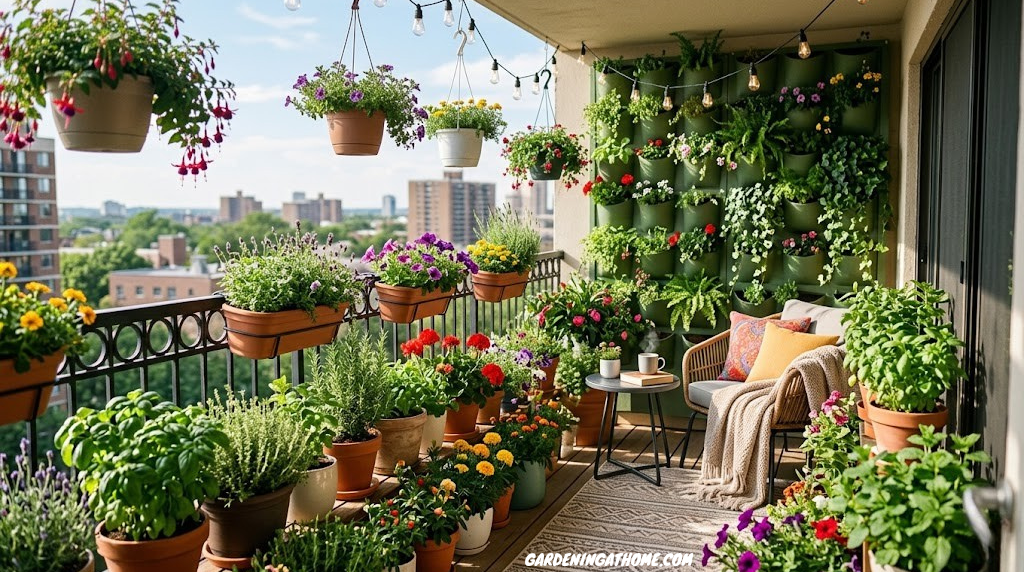
Small Space, Big Harvest: Balcony Gardening Ideas for Apartments
Practical layouts, container picks, and plant choices that turn even a narrow rental balcony into a real garden.
Why a Balcony Can Outperform a Full Backyard
A balcony sounds like a compromise compared to a real yard. In practice, it often grows better plants — here’s why.
It feels counterintuitive at first: a strip of concrete a few feet wide somehow producing tomatoes, herbs, and flowers that rival what a neighbor grows in a full backyard plot. But once you understand what a balcony actually offers, the results make sense. Elevation changes everything about how a garden behaves.
Better drainage control. Ground-level garden beds inherit whatever drainage problems the underlying soil has — clay that holds water, sandy patches that drain too fast, low spots that flood after rain. Every container on a balcony starts with a clean slate. You control the soil mix from the first scoop, which means you’re never fighting inherited soil problems.
Fewer ground-dwelling pests. Slugs, certain burrowing insects, and many soil-borne diseases simply don’t reach a third-floor balcony the way they reach a backyard bed. This doesn’t mean balcony gardens are pest-free — aphids and spider mites still find their way up — but the pest pressure is meaningfully lower for an entire category of garden problems.
Microclimate advantages. Balconies, particularly those with some building overhang or wall reflection, often run slightly warmer than ground-level gardens in the same city. This can extend a growing season by a few weeks on either end, letting balcony gardeners push tender plants out earlier in spring and keep them going later into autumn.
Total environmental control. Because every plant lives in its own container, you can move things. A tomato plant getting scorched by an unexpected afternoon sun spike can be relocated in minutes. A fern struggling in a too-bright spot gets shifted to shade. Ground gardens don’t offer that kind of agility.
None of this means balcony gardening is effortless — it has its own learning curve, covered throughout this guide. But the idea that a balcony is a lesser gardening experience compared to a yard doesn’t hold up once you’ve actually run one through a full season. If you’re completely new to growing things in general, our guide to starting a garden from scratch is a useful companion to this one, and our broader gardening at home hub rounds out the rest of the foundational topics.
The mindset shift that helps most: Stop thinking of your balcony as “not a real garden” and start thinking of it as a high-control growing system. Every constraint — limited space, container-only growing, exposure to wind — has a workaround, and most experienced balcony gardeners will tell you the constraints made them better gardeners overall.
Map Your Balcony’s Light Before You Buy a Single Plant
This is the step almost every beginner skips, and it’s the single biggest reason balcony gardens underperform or die within the first month. Buying plants before understanding your actual light conditions is like buying shoes without knowing your size — something will eventually go wrong.
How to Actually Track Your Light
Pick a clear day and check your balcony every hour from roughly 8am to 6pm, jotting down whether it’s in direct sun, bright shade (no direct sun but clearly lit), or dim shade. Do this for at least one full day, though two days a week apart gives a more reliable picture since the sun’s angle shifts slightly through the season.
Pay attention to a few things people commonly misjudge:
- Reflected light from walls. A white or light-colored wall behind your balcony can bounce meaningful extra light onto plants, sometimes enough to upgrade a “partial shade” spot to functionally “full sun.”
- Overhang shadows that move. If you have a balcony above yours, the shadow line it casts shifts throughout the day and across seasons. What’s shaded in March might be sunny by July.
- Building orientation. South-facing balconies (in the northern hemisphere) get the most consistent all-day sun. East-facing gets gentler morning light. West-facing gets intense, hot afternoon sun. North-facing is the trickiest, often qualifying as full shade.
Full Sun
6+ hours direct sun. Best for tomatoes, peppers, most flowering annuals, and herbs like rosemary.
Partial Sun
4–6 hours direct sun. Good for bush beans, many salad greens, and a wide range of flowering plants.
Partial Shade
2–4 hours direct sun or filtered light all day. Suits lettuce, mint, and most leafy herbs.
Full Shade
Under 2 hours direct sun. Best for ferns, certain houseplants moved outdoors, and shade-tolerant foliage.
Our companion piece on understanding full sun vs partial shade goes deeper into how these categories actually translate to plant performance, including some commonly mislabeled plant tags worth knowing about before you shop.
A common trap: Plant tags often list “full sun” requirements based on in-ground garden conditions. Container plants on a hot, reflective balcony can experience even more intense heat stress than the same plant in soil, so erring toward slightly more shade-tolerant choices on a south- or west-facing balcony in a hot climate is often safer.

📊 Editor’s Tool Pick
3-in-1 Soil Moisture, Light & pH Meter
Take the guesswork out of sun mapping and watering. A simple probe tool that gives you real numbers instead of best guesses for every container on your balcony.
Check Price on Amazon →Space-Saving Layout Styles That Actually Work
There’s no single “correct” balcony layout — the right one depends on your balcony’s shape, your priorities, and how much you want to actually sit out there versus maximize growing space.
The Perimeter Layout
This is the most space-efficient style for balconies under 40 square feet. Containers line the railing and walls, leaving the entire center floor open for walking or a small chair. It works especially well on narrow balconies where floor space is precious and there’s no room to spare on furniture plus plants competing for the same square footage.
Perimeter layout — maximizes open floor space by keeping all containers along edges.
The Tiered Corner Layout
For square or wider balconies, dedicating one corner to a multi-level plant stand or tiered shelving unit concentrates your growing space vertically rather than spreading containers across the whole floor. This frees up the rest of the balcony for a table, chairs, or simply open space, while the corner becomes a dense, jungle-like growing zone.
The Split-Function Layout
This works well for balconies at least 6 feet deep. Half the balcony is dedicated to plants — often the half that gets better light — and the other half stays clear for sitting or dining. It’s the layout most people picture when they imagine a “nice” balcony garden, because it balances the gardening with actually being able to enjoy the space.
| Layout Style | Best Balcony Size | Floor Space Used | Good For |
|---|---|---|---|
| Perimeter | Under 40 sq ft, narrow | Low — edges only | Maximizing open walking space |
| Tiered Corner | 40–80 sq ft | Moderate — one zone | Dense planting without losing the whole floor |
| Split-Function | 80+ sq ft, 6ft+ deep | High — half the floor | Balancing seating with serious growing |
| Full Garden | 100+ sq ft | Very high — most of floor | Gardeners prioritizing yield over lounging |
Whichever layout you land on, the principle that matters most is matching your container placement to the sun map you built in the previous section — not the other way around. A beautifully arranged tiered shelf in a shaded corner will still underperform a scrappy row of pots that happens to sit in six hours of sun.
Choosing the Right Containers for Balcony Growing
Container choice affects everything downstream — how often you’ll water, how big your plants can get, and how much weight your balcony needs to bear. Getting this right early saves a lot of mid-season frustration.
Material Trade-Offs
Plastic & Resin Containers
Plastic and resin pots are the default choice for a reason — they’re light enough that weight limits rarely become an issue, inexpensive enough to buy in bulk, and they retain moisture better than porous materials like terracotta, meaning less frequent watering. Modern resin versions have improved significantly in appearance, with many styles convincingly mimicking stone or ceramic finishes.
✓ Pros
- Lightest material — ideal for upper-floor balconies
- Retains moisture well, fewer watering sessions
- Most budget-friendly option by far
- Wide range of sizes and styles available
✗ Cons
- Can degrade and crack under prolonged UV exposure
- Less breathable — slightly higher root rot risk if overwatered
- Lower-end versions look obviously synthetic
Terracotta & Unglazed Ceramic
Terracotta’s porous walls let excess moisture evaporate, which is genuinely beneficial for plants prone to root rot — Mediterranean herbs like rosemary, thyme, and lavender thrive in it specifically because of this drying effect. The trade-off is exactly the inverse of plastic: terracotta dries out faster, meaning more frequent watering, especially in hot or windy balcony conditions.
✓ Pros
- Excellent drainage reduces root rot risk
- Classic aesthetic that suits most garden styles
- Heavier weight adds stability against wind
✗ Cons
- Dries out quickly — frequent watering required
- Heavier, which matters for weight-restricted balconies
- Can crack in freezing temperatures if left outdoors
Fabric Grow Bags
Fabric grow bags have become a favorite among balcony vegetable growers because the breathable material naturally “air prunes” roots — preventing the circling root patterns that develop in solid-walled pots and that can stunt plant growth. They’re also remarkably lightweight when empty and fold flat for off-season storage, which matters when balcony storage space is already tight.
✓ Pros
- Superior root health through natural aeration
- Folds flat — easy off-season storage
- Lightweight and inexpensive for the size
✗ Cons
- Dries out faster than plastic, similar to terracotta
- Less visually polished than ceramic options
- Fabric degrades over several seasons of UV exposure
Sizing by Plant Type
Choosing depth and volume correctly matters more than most beginners expect. Our detailed guide on how to choose the right pot size for plants walks through this in more depth, but here’s the quick reference:
| Plant Type | Minimum Depth | Minimum Volume |
|---|---|---|
| Lettuce, herbs (basil, cilantro, chives) | 6–8 inches | 1–2 gallons |
| Bush beans, radishes, baby carrots | 8–10 inches | 3 gallons |
| Peppers, dwarf eggplant | 12 inches | 5 gallons |
| Tomatoes (determinate/patio varieties) | 14–18 inches | 7–10 gallons |
| Small fruit shrubs, dwarf citrus | 18+ inches | 15+ gallons |
Always check that any container has functioning drainage holes — this is non-negotiable for plant health, regardless of material. If a decorative pot you love doesn’t have one, use it as an outer cachepot and keep the actual plant in a properly draining nursery pot inside it.

🌿 Top Container Pick
5-Gallon Fabric Grow Bags (Set of 5)
Breathable, lightweight, and fold flat for storage. The favorite container style of serious balcony vegetable growers.
View on Amazon →Vertical & Railing Growing Ideas for Maximum Yield
When floor space runs out, the answer isn’t to stop growing — it’s to start growing up.
Railing Planters
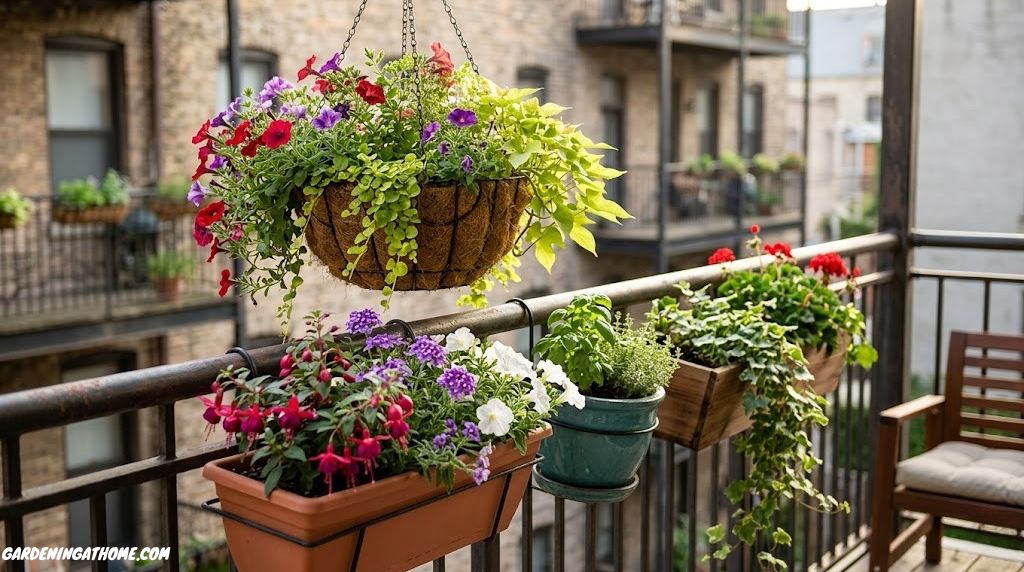
Railing-mounted planters are often the single highest-leverage purchase for a small balcony, because they create an entire new growing surface that costs zero floor space. Most clip or strap onto standard railings between roughly 3.5 and 6 inches wide, though it’s worth measuring your specific railing before buying.
Safety first with railing planters: Always check your lease for restrictions before installing anything on a railing, and use planters rated for the combined weight of soil, plant, and water when fully saturated — that combined weight is often double what the empty planter suggests. A secondary safety strap or bracket, in addition to the primary mounting clips, is strongly recommended, especially on higher floors.
Hanging Baskets
Hanging baskets suspended from a balcony ceiling or overhang use vertical air space that’s otherwise completely wasted. Trailing plants — petunias, certain strawberry varieties, and cascading herbs like creeping thyme — look spectacular in this format and free up rail and floor space for upright growers.
Wall-Mounted Pocket Planters
Fabric or felt pocket planters that hang flat against a wall are particularly good for shallow-rooted herbs and salad greens. A single 12-pocket unit can hold an entire mini herb garden in roughly two square feet of wall space — an enormous efficiency gain compared to the same number of individual pots.
Trellised Vining Plants
Cucumbers, pole beans, and certain compact squash varieties can be trained vertically up a trellis rather than sprawling across the floor. This is one of the most effective tricks for growing genuinely space-hungry vegetables in a footprint as small as a single large container, because the plant’s growth happens upward rather than outward.
Combining several of these techniques — railing planters near the top, a trellis along one wall, hanging baskets overhead, and floor containers below — is how experienced balcony gardeners fit what feels like a full garden’s worth of plants into a space that would otherwise hold only a handful of pots.
The Best Plants for Apartment Balconies
These picks were chosen for container tolerance, forgiving care requirements, and strong performance across the range of light conditions a typical balcony presents.
Mint
Mint is practically unkillable in a container, which is precisely why it earns the top spot for first-time balcony gardeners. It tolerates inconsistent watering, handles everything from partial shade to a few hours of direct sun, and bounces back from neglect faster than almost any other herb. The one rule that actually matters: always keep mint in its own container. Its rapid spreading habit, which is a liability in open garden beds, becomes a complete non-issue when contained — and on a balcony, that containment is built in by default.
A single mint plant in an 8-inch pot will produce far more leaves than most households can use fresh, making it a reliable contributor to drinks, salads, and garnishes all season. For anyone wanting to expand beyond mint into a fuller herb collection, our guide on how to start an indoor herb garden covers companion herbs that pair well in similar conditions.
Nasturtium
Nasturtium does double duty as both an ornamental and an edible — its peppery-flavored flowers and leaves are genuinely good in salads, and the plant itself produces a steady stream of vibrant orange, yellow, and red blooms through most of the growing season. It’s also a vining habit that works beautifully trained over a railing or up a small trellis, making it one of the better dual-purpose plants for balconies trying to do a lot with limited space.
Nasturtium thrives on slight neglect — overly rich soil actually reduces flowering in favor of leaf growth, so resist the urge to over-fertilize this one.
Lavender
Lavender rewards balconies that get strong, consistent direct sun — six or more hours ideally — and actively prefers being a little underwatered rather than overwatered. This makes it an excellent match for terracotta containers specifically, since the material’s fast-drying nature aligns with what lavender wants anyway. Once established, lavender draws a steady stream of bees and butterflies, and the dried flower spikes have a long second life in sachets or simple arrangements.
The main mistake to avoid is planting lavender in rich, water-retentive potting mix. A sandy, fast-draining blend — sometimes labeled as cactus or Mediterranean herb mix — produces a noticeably healthier plant than standard all-purpose soil.
Patio Tomatoes
Patio and dwarf tomato varieties — bred specifically to stay compact while still producing full-flavored fruit — are the gateway vegetable for most balcony growers who want to move beyond herbs. They need consistent sun and a properly sized container (at minimum 5 gallons, ideally larger), but reward that investment with a genuinely meaningful harvest rather than a token few fruits. For a full walkthrough of growing them specifically in a balcony setting, see our dedicated guide on how to grow tomatoes on a balcony.
Ferns & Shade Foliage
For the trickiest balcony orientation — north-facing or heavily shaded by an overhang — ferns and other shade foliage plants fill a gap that flowering and fruiting plants simply can’t. Boston fern, certain begonia varieties, and many plants typically sold as houseplants do remarkably well outdoors in a shaded balcony setting during warm months. Our piece on the best indoor plants for low light overlaps significantly with what thrives here, since many “indoor” plants are really just shade-tolerant plants that happen to be marketed for indoor use.
Zinnias
Zinnias grow easily from direct-sown seed, tolerate heat well, and produce flowers in a color range wide enough to anchor almost any balcony color scheme. They’re also one of the most reliable cut flowers for a small space — regular cutting actually encourages more blooms rather than depleting the plant, so a productive zinnia container can supply a small vase of fresh flowers most weeks through the growing season.
Microgreens
Microgreens deserve a spot on this list because they solve a real psychological problem for new gardeners: the long wait for results. Where a tomato takes months, a tray of microgreens can be sown and harvested within one to three weeks, giving balcony gardeners an early win that builds confidence for the slower-growing plants elsewhere on the balcony. They also don’t require true outdoor soil conditions, which makes them flexible enough to grow on a shaded balcony shelf or even just inside near a bright window if weather turns. Our guide to growing microgreens at home without soil covers the full process.

🍅 Best Vegetable Starter
Patio Tomato Seed Variety Pack
Compact, container-bred tomato varieties that produce full-flavored fruit on a balcony-sized plant. A great entry point into vegetable growing.
View on Amazon →Growing Real Vegetables in a Small Balcony Space
A common assumption is that balconies can only support ornamental plants, with vegetables reserved for people lucky enough to have a yard. That assumption doesn’t hold up against what compact and dwarf vegetable breeding has achieved over the past couple of decades.
The Easiest Vegetables to Start With
Our full breakdown of the easiest vegetables to grow in pots covers this topic comprehensively, but the short version for balcony-specific success looks like this:
- Lettuce and salad greens — fast-growing, tolerate partial shade, and can be harvested leaf-by-leaf rather than all at once, extending the usable harvest window considerably.
- Radishes — among the fastest vegetables from seed to harvest, often ready in three to four weeks, which makes them excellent for testing a new container or soil mix before committing a longer-season plant to it.
- Bush beans — unlike pole beans, bush varieties don’t require trellising and stay compact, producing a steady crop over several weeks.
- Baby carrots — shorter varieties bred for container depth limitations produce real, usable carrots without needing the 12+ inches of depth that full-size carrots demand.
- Peppers — both sweet and hot varieties handle container life well and, once established, produce reliably through a long warm season.
Succession Planting for Continuous Harvests
One technique that dramatically increases the productivity of a small vegetable space is succession planting — sowing a new round of fast-growing crops like lettuce or radishes every two to three weeks rather than planting everything at once. This staggers your harvest window so you’re not flooded with lettuce one week and then have an empty container for the rest of the season.
| Vegetable | Days to Harvest | Sun Needed | Min. Container Depth |
|---|---|---|---|
| Radishes | 21–28 days | Partial to full sun | 6 inches |
| Lettuce / salad mix | 30–50 days | Partial sun | 6–8 inches |
| Bush beans | 50–60 days | Full sun | 8–10 inches |
| Baby carrots | 55–70 days | Full sun | 8 inches |
| Peppers | 60–90 days | Full sun | 12 inches |
| Patio tomatoes | 55–80 days | Full sun | 14–18 inches |
For households leaning toward an entirely edible balcony, mixing in a couple of low-light tolerant plants in the shadier corners alongside sun-loving vegetables on the brighter rail or shelf areas lets every part of the balcony’s available light contribute something useful, rather than leaving shaded zones purely decorative.
Soil, Watering & Feeding Basics for Container Success
More balcony plants fail from soil and water mistakes than from pests, disease, or bad luck combined.
Choosing the Right Soil
Garden soil dug from the ground should never go directly into a container — it compacts too densely without the surrounding soil structure it normally relies on, suffocating roots and draining poorly. A quality bagged potting mix, formulated specifically for container use with built-in aeration from perlite or coconut coir, is essential. Our detailed comparison in best potting soil mix for indoor plants applies almost entirely to balcony container growing as well, since the core requirements — drainage, aeration, and nutrient-holding capacity — are the same regardless of indoor or outdoor placement.
The Finger Test for Watering
Rather than watering on a fixed schedule, the most reliable method is checking actual soil moisture before every watering session. Insert a finger about two inches into the soil — if it feels dry at that depth, water; if it still feels damp, wait. This single habit prevents the two most common container plant killers: chronic overwatering and accidental drought stress.
Recognizing the difference between these two failure modes matters because the visual symptoms can look surprisingly similar — wilting, yellowing leaves, and stunted growth show up in both cases, leading many beginners to water a struggling plant that’s actually already drowning. Our guide on signs of overwatering vs underwatering breaks down the more subtle, distinguishing symptoms in detail.
Heat-driven watering frequency: Container plants on a hot, sun-exposed balcony can need water daily during peak summer heat, sometimes even twice on the hottest days for small pots. The same plants in milder spring or autumn weather might only need water every two to three days. Adjust expectations seasonally rather than assuming one routine works year-round.
Feeding Container Plants
Unlike in-ground gardens where soil nutrients replenish somewhat naturally, container soil’s nutrient supply depletes steadily as plants use it and water leaches some away with each watering. A balanced liquid fertilizer applied every two to four weeks during the active growing season, following label dilution rates, keeps most balcony plants properly fed. Our guide on how and when to fertilize house plants covers timing and product types in more depth, and the same general principles transfer directly to balcony containers.
Managing Common Pest Issues
Fungus gnats are a particularly common balcony container nuisance, usually arising from consistently overwatered soil that creates the moist surface conditions their larvae need. Letting the top inch of soil dry between waterings, along with a few targeted interventions, typically resolves the problem without resorting to harsh chemical treatments — our piece on how to get rid of fungus gnats naturally walks through the full process.

⏱️ Time-Saver Pick
Self-Watering Balcony Planter Set
Built-in reservoirs reduce watering frequency and buffer against the swings between rainy and hot, dry stretches. Great for busy schedules or frequent travel.
View on Amazon →Wind, Weight & Lease Considerations Most People Overlook
These practical, slightly less glamorous topics determine whether a balcony garden survives its first storm season and avoids conflict with property management — worth addressing honestly before you’ve invested a season’s worth of plants.
Wind Exposure
Balconies, especially on upper floors, often experience noticeably stronger and more constant wind than ground-level gardens in the same location, since tall buildings funnel and accelerate airflow along their facades. This wind dries soil faster, can physically damage tall or top-heavy plants, and occasionally topples lightweight pots entirely.
Practical responses include choosing sturdier, lower-profile plants over leggy tall ones, switching from lightweight plastic pots to heavier ceramic or concrete-style containers for anything tall or exposed, and considering a partial windscreen — an outdoor-rated mesh or lattice panel along the most exposed railing section — that cuts wind speed without fully blocking airflow or light.
Weight Limits
Balconies have engineered weight limits, and a fully saturated collection of large containers, soil, and plants can add up to a meaningful load faster than people expect — a single large saturated container can weigh well over 100 pounds. While catastrophic structural failure from a typical balcony garden is rare, checking your building’s documentation or asking property management about load limits is a reasonable precaution, particularly if you’re planning several large containers concentrated in one area rather than distributed across the floor.
Lease and HOA Restrictions
Many rental leases and condo HOA agreements include specific language about balcony modifications — restrictions on visible items from the street, railing attachments, or even plant types in some stricter buildings. Reviewing your lease before installing railing planters or anything that alters the balcony’s appearance from outside saves potential disputes later. Where restrictions exist, freestanding floor containers and hanging baskets that don’t attach to building structures are typically the safest category to fall back on.
A quick precaution worth taking: Photograph your balcony’s current condition before adding anything, and keep receipts for any containers or hardware you install. This makes any eventual move-out inspection or lease dispute considerably easier to navigate.
Drainage and Floor Protection
Water that drains from containers placed directly on a balcony floor can pool and, over time, stain or damage certain flooring materials, especially wood composite decking. Pot feet, simple plastic risers, or a raised plant stand solve this by lifting containers slightly off the surface and improving airflow underneath, which also helps the pot itself dry more evenly between waterings.
Seasonal Care Adjustments for a Year-Round Balcony
A balcony garden isn’t a single static setup — it’s a system that needs different inputs as conditions shift through the year.
Warm Season Priorities
During the hottest stretches, watering frequency increases substantially, sometimes to twice daily for smaller containers in intense, reflective heat. Moving especially heat-sensitive plants temporarily into partial afternoon shade, even just by repositioning a pot a few feet, can prevent scorching on the most extreme days. This is also peak season for most flowering and fruiting plants, so regular feeding matters most during this stretch.
Cooler Season Transition
As temperatures drop, watering frequency should decrease correspondingly — continuing a peak-summer watering schedule into cooler weather is one of the more common causes of root rot in container plants, since the soil simply isn’t drying out at the same rate anymore. This is also the window to bring tender plants that can’t tolerate frost indoors, or to accept their natural end of season and compost the spent material.
Off-Season Planning
The quieter cooler months are an ideal time to plan next season’s layout, order seeds before popular varieties sell out, and do basic container maintenance — cleaning out old soil, checking for cracks in terracotta, and storing fabric grow bags flat. A little off-season preparation consistently produces a smoother, more productive start to the next growing season than scrambling to figure out a plan once warm weather has already arrived.
Don’t fight your climate. A balcony in a consistently mild climate can support certain plants year-round that would need full seasonal rotation elsewhere. Understanding your specific regional patterns, rather than following generic seasonal advice, will always produce better results than a one-size-fits-all calendar.

🍃 Wind Protection Pick
Outdoor Mesh Windscreen for Balcony Railings
Cuts harsh wind exposure on upper-floor balconies without blocking light or airflow entirely. A simple fix for one of the most overlooked balcony garden problems.
View on Amazon →Budget-Friendly Ways to Start Without Overspending
A balcony garden can become an expensive hobby quickly if every purchase is new, premium, and purpose-built. It doesn’t need to be that way, especially in the first season while you’re still learning what actually works in your specific space.
Reuse Before You Buy
Five-gallon buckets, plastic storage crates, and even large food-safe containers from the kitchen can become functional planters with a few drainage holes drilled into the bottom. They won’t win design awards, but they perform identically to a purpose-bought container in terms of plant health, which is the part that actually matters for a first season.
Start From Seed, Not Starts
Nursery starts — young plants already growing in small pots — are convenient but cost significantly more per plant than starting from seed. A seed packet that costs roughly the same as a single nursery start often contains enough seeds for ten or more plants. For naturally fast, forgiving crops like lettuce, radishes, and beans, seed starting is genuinely easy enough for a first-time gardener and represents the single biggest cost-saving lever available.
Propagate From Cuttings and Scraps
Many common herbs — mint, basil, and rosemary among them — root readily from cuttings placed in a glass of water on a windowsill before being potted up. Even kitchen scraps like the root end of green onions or the base of romaine lettuce can regrow several rounds of harvest with minimal effort, turning what would otherwise be kitchen waste into a small ongoing supply.
Low-Cost Layout Ideas
Our broader collection of cheap gardening ideas for beginners covers many more budget-conscious approaches that apply just as well to balcony spaces as to ground-level gardens, including community seed swaps, secondhand container sourcing, and simple homemade trellis builds using materials many households already have on hand.
| Approach | Typical Savings | Best For |
|---|---|---|
| Repurposed buckets/crates | 60–80% vs new pots | First-season experimentation |
| Seed starting vs nursery starts | 70–90% per plant | Fast crops: lettuce, beans, radishes |
| Herb propagation from cuttings | Near 100% for that plant | Mint, basil, rosemary |
| Kitchen scrap regrowing | Near 100% for limited rounds | Green onions, romaine, celery |
Once you’ve confirmed what genuinely thrives in your specific balcony conditions through a low-investment first attempt, that’s the right time to invest in nicer containers, purpose-built vertical systems, or a wider plant variety — spending deliberately rather than guessing upfront.

💰 Best Budget Pick
Balcony Garden Seed Starter Collection
A curated mix of fast, forgiving herb and vegetable seeds suited to small container growing. The most cost-effective way to fill a balcony for an entire season.
View on Amazon →Frequently Asked Questions
What is the easiest plant to grow on an apartment balcony?
Herbs like mint, chives, and basil are among the easiest balcony plants, along with cherry tomatoes and marigolds. They tolerate container life well, need minimal pruning expertise, and bounce back quickly from beginner mistakes like inconsistent watering.
How much sunlight does a balcony garden need?
Most fruiting vegetables and flowering plants need 6 or more hours of direct sun daily. Leafy greens and many herbs can manage on 3 to 4 hours, and a wide range of foliage plants tolerate partial shade. Mapping your balcony’s actual light pattern before buying plants, as covered earlier in this guide, prevents the most common cause of balcony garden failure.
Can I have a vegetable garden on a small balcony?
Yes. Compact and dwarf vegetable varieties bred specifically for containers — patio tomatoes, bush beans, baby carrots, and salad greens — produce real harvests in as little as 9 to 16 square feet of balcony space when paired with vertical growing techniques like trellising and railing planters.
How do I maximize space on a small balcony for gardening?
Layer your growing space vertically with railing planters, wall-mounted pockets, and tiered shelving rather than relying only on floor-level pots. Hanging baskets and trellised vining plants also add growing area without consuming square footage, which is often the limiting factor on a small balcony.
Do I need permission to garden on my apartment balcony?
Many leases and HOA agreements include restrictions on balcony weight loads, railing attachments, or visible items, so checking your lease before installing planters, especially railing-mounted ones, is a wise first step to avoid conflicts with property management.
What is the best container size for balcony vegetables?
Shallow-rooted herbs and lettuces do well in containers as small as 6 to 8 inches deep, while tomatoes, peppers, and other fruiting vegetables need at least 12 to 18 inches of depth and a minimum 5-gallon volume to develop properly. Our sizing table earlier in this guide breaks this down by specific plant type.
How often should I water balcony container plants?
Container plants typically need water more often than in-ground gardens because pots dry out faster, often daily in hot weather and every two to three days in milder conditions. Checking soil moisture with a finger test is more reliable than following a fixed schedule, since heat, wind, and container material all change the actual drying rate.
Will a balcony garden damage the floor or railing?
Pots placed directly on a balcony floor can trap moisture and stain or damage flooring over time, so using pot feet, saucers, or a raised plant stand is recommended. Railing planters should always include a secondary safety strap or bracket rated for the planter’s full watered weight, which is typically much heavier than it appears empty.
What flowers attract pollinators to a balcony garden?
Lavender, marigold, salvia, and zinnia are reliable pollinator draws that also tolerate container life and variable balcony conditions well, helping support bee and butterfly visits even several stories above ground level.
How do I deal with wind on a high-rise balcony garden?
Choose sturdier, low-profile plants over tall top-heavy ones, use heavier ceramic or weighted containers instead of lightweight plastic, and consider a partial windscreen made from outdoor-rated mesh or lattice to reduce desiccating gusts without blocking all airflow or light.
Can balcony gardens help with privacy in an apartment?
Yes, tall trellised plants, bamboo screens, and tiered plant arrangements along a railing can create a natural visual buffer from neighboring units or walkways while still allowing airflow and light through, which a solid screen alone often doesn’t manage as well.
What is the cheapest way to start a balcony garden?
Reusing containers like buckets and crates, starting plants from seed rather than nursery starts, and propagating herbs from kitchen scraps or cuttings are the most budget-friendly ways to build a balcony garden without a large upfront investment, often cutting first-season costs by more than half.
Your Balcony Is Already a Garden Waiting to Happen
Every idea in this guide — sun-mapping before buying, choosing containers deliberately, layering vertically, and starting small with forgiving plants — points toward the same conclusion: the size of your outdoor space was never really the limiting factor. The limiting factor is simply getting started with a plan suited to what you actually have.
Pick one corner. Map its light for a single day. Choose one or two plants from this guide that match what you find. That’s the entire first step, and it’s smaller than it feels from the outside looking in.
Shop Balcony Garden Starter Kits on Amazon →Affiliate disclosure: This article contains affiliate links to Amazon products. If you purchase through these links, we may earn a small commission at no extra cost to you. This does not influence our recommendations. All editorial opinions are our own.