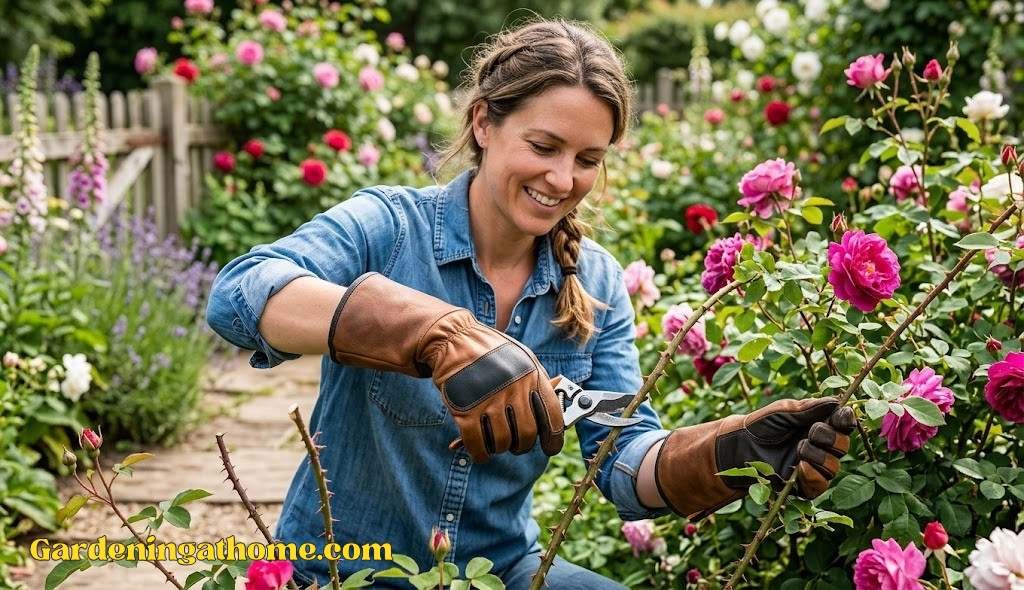
The Only Gardening Gloves That Actually Stand Up to Rose Thorns
We compared gauntlet length, leather thickness, puncture resistance, and dexterity across seven of the toughest gloves on the market so your hands never have to pay the price for a beautiful rose bed again.
Why Regular Gardening Gloves Fail Against Roses
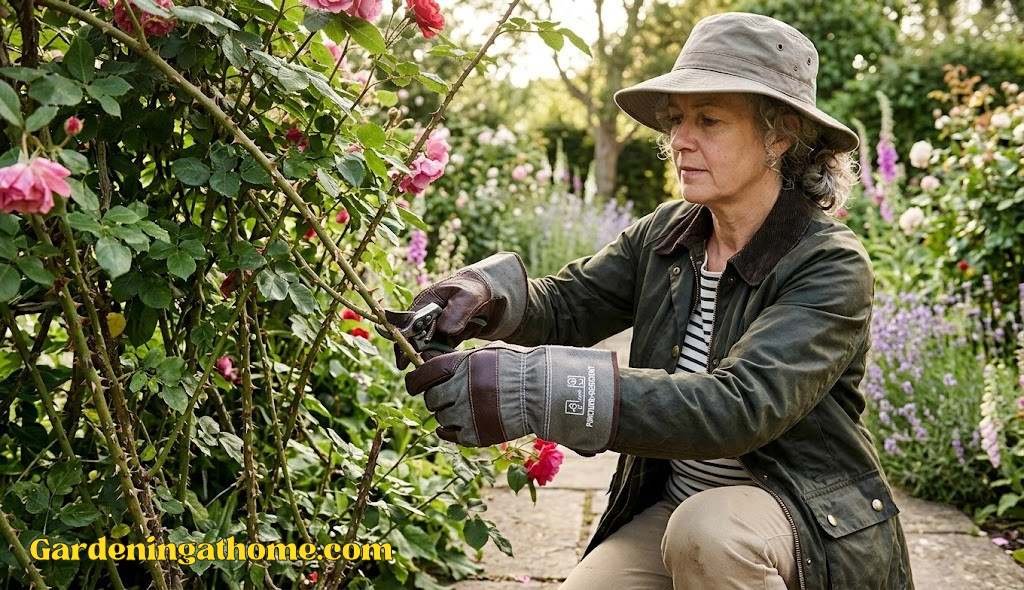
Anyone who has spent an afternoon pruning a hedge of climbing roses knows the particular sting of a thorn that finds its way through fabric that was supposed to protect you. Rose thorns are not like the soft resistance of a blackberry cane or the gentle scratch of a tomato vine. They are stiff, curved, and often hidden beneath foliage, which means they catch gloves at odd angles and drive straight through material that would stop a simple scrape. Standard cotton gardening gloves, the kind sold in three-packs at almost any hardware store, are built for light dirt work — weeding, potting, seed starting — not for repelling a hooked barb backed by the weight of your own hand pressing into a cane.
The problem compounds when you consider how roses grow. Established bushes send out long, arching canes covered in thorns of varying size, and many of the most beautiful varieties, like climbing roses and old garden roses, are also the most heavily armed. Reaching into the center of a rose bush to deadhead, prune out crossing branches, or train a climber onto a trellis means your hands and forearms are moving through a thicket of thorns from multiple directions at once, not just brushing against a single stem. A glove that protects only the palm is nearly useless in this scenario, because the backs of the hands and the forearms take just as much punishment.
It helps to picture the actual mechanics of a thorn puncturing skin. A rose thorn tapers to a genuinely sharp point, and because it curves backward along the stem, the harder you pull away from it, the deeper it tends to dig in rather than release cleanly, unlike a straight splinter that often slides free with steady pressure. This is part of why brushing against a rose cane while wearing thin gloves so often results in a scratch rather than a clean poke — the curved thorn catches fabric or skin and drags as the hand moves, tearing rather than simply piercing. A glove with a dense, resistant palm interrupts that dragging motion before it ever reaches skin, which is a meaningfully different kind of protection than a glove that merely cushions a single point of impact.
This is exactly why a dedicated rose-gardening glove exists as its own category, distinct from all-purpose gardening gloves. The best ones combine a puncture-resistant palm material — usually goatskin, cowhide, or a synthetic equivalent — with an extended gauntlet cuff that runs well past the wrist, sometimes all the way to the elbow. That gauntlet is not a gimmick. It is the single feature that separates a glove that merely survives a light pruning session from one that lets you plunge your arm into a thicket of canes without flinching.
Beyond puncture resistance, there is also the question of dexterity. Roses require precision work: cutting at the correct angle above a bud, removing suckers close to the base, and untangling canes without snapping them. A glove that is thick enough to stop thorns but too stiff to bend at the knuckle defeats its own purpose, because gardeners simply take it off to do the fine work, exposing themselves to the very thorns the glove was meant to block. The gloves in this list were chosen in part because they balance genuine thorn protection with enough flexibility to still use pruners, tie twine, and grip canes precisely.
There’s also an emotional cost to under-protecting your hands that’s easy to overlook until it happens. Gardeners who get scratched or jabbed repeatedly during rose season often start subconsciously avoiding the exact maintenance tasks — deadheading, thinning crossing branches, clearing suckers — that keep a rose bush healthy and blooming vigorously. A rose bed that isn’t pruned properly because its owner dreads the pain tends to become leggy, disease-prone, and less floriferous over time. In that sense, the right pair of gloves isn’t just about comfort; it directly affects how consistently you’re willing to give your roses the care they need to thrive season after season.
It’s also worth acknowledging that thorn injuries carry a small but real risk beyond the immediate sting. Rose thorns can carry soil-borne bacteria and fungal spores, and a puncture wound that isn’t cleaned properly can occasionally lead to minor infections, a phenomenon sometimes referred to informally among gardeners as “rose thorn fever.” While serious complications are uncommon, any deep puncture from a thorn should be washed thoroughly and monitored for redness or swelling in the following days. Reliable gloves reduce how often you’re exposed to this risk in the first place, which is one more reason serious rose growers treat glove selection as more than a minor accessory decision.
How We Tested and Chose These Picks
We evaluated each pair against four practical criteria that matter most to rose gardeners: puncture resistance, gauntlet coverage, breathability, and dexterity. Puncture resistance was assessed by handling actual thorny canes — climbing roses, rambling roses, and a few particularly vicious rugosa varieties known for their dense, needle-like thorns. Gauntlet coverage was measured by how far the cuff extended up the forearm, since forearm scratches are one of the most common complaints among rose growers who use standard wrist-length gloves.
Breathability came into play because rose pruning often happens in the heat of late spring and summer, and a glove that traps heat becomes uncomfortable within minutes, encouraging gardeners to remove it prematurely. Finally, dexterity was tested by attempting typical rose-care tasks: making clean 45-degree pruning cuts, tying canes to a trellis with garden twine, and pulling small suckers from the base of a bush. Gloves that scored well in three or more categories made this list; gloves that only protected the palm, lacked any gauntlet, or were so stiff that fine motor tasks became impossible were excluded regardless of price.
We also weighed practical everyday factors that reviewers consistently mention: whether the gloves run true to size or need to be sized up, whether the stitching holds up after repeated exposure to thorns, and whether the material becomes uncomfortably hot or stiff after use. If you’re also comparing broader options outside of rose-specific work, our general guide to the best gardening gloves covers a wider range of tasks beyond thorny plants.
Price was considered, but deliberately weighted less heavily than performance, since a cheaper glove that fails to protect the forearm ultimately costs more in wasted time nursing scratches, and in some cases in medical attention for a deep puncture, than a slightly pricier pair that does the job properly the first time. That said, none of the picks in this guide are positioned at the extreme high end of the market; all seven represent a reasonable value for the level of protection and dexterity they provide, and none require a specialty purchase beyond a standard online order.
We also paid attention to how each glove performed across multiple pruning sessions rather than judging based on a single use. Gloves that felt comfortable and protective on day one sometimes revealed weaknesses after repeated exposure to moisture, dirt, and the mechanical stress of gripping pruners for extended periods — seams that started to loosen, leather that developed unexpected stiff spots, or mesh panels that began to fray at the edges. Only gloves that held up reasonably well across repeated, realistic use were included in this final list, since a pair that performs beautifully once but degrades quickly isn’t a genuinely good long-term investment for anyone maintaining a rose garden across an entire growing season.
Quick Comparison: Top Picks at a Glance
Before diving into full reviews, here is a side-by-side snapshot of how each pair stacks up on the factors that matter most for rose care.
| Glove | Best For | Gauntlet Length | Material | Dexterity |
|---|---|---|---|---|
| COOLJOB Pruning Gloves | All-around rose care | Mid-forearm | Goatskin leather + cowhide | High |
| Long Forearm Protection Gloves | Deep thicket pruning | Extended, near-elbow | Breathable synthetic | Medium |
| SAVJOB Touchscreen Gloves | Light pruning + phone use | Wrist-length | Genuine leather | High |
| Legacy Gardens Gauntlet | Heavy-duty rose beds | Full gauntlet | Leather palm, canvas cuff | Medium |
| HANDLANDY Cowhide Gauntlet | Maximum protection | Extra-long gauntlet | Cowhide leather | Medium |
| Florist-Style Rose Gloves | Cut flower gardeners | Mid-forearm | Goatskin + puncture liner | High |
| MSUPSAV Digging Gloves | Combined digging + pruning | Wrist-length | Nitrile-coated fabric | High |

1. COOLJOB Gardening Pruning Gloves
★★★★★
The COOLJOB gloves consistently come up as the pair most rose gardeners reach for first, and after handling them ourselves it’s easy to understand why. The palm and fingers are constructed from a tough goatskin leather blend that resists punctures far better than the cotton-poly gloves most people default to, while the breathable mesh backing on the fingers keeps hands from overheating during long pruning sessions in warm weather.
What sets this pair apart for thorny rose work specifically is the non-slip texture across the palm, which matters more than most people expect. Wet stems, morning dew, and sap can all make canes slippery, and a glove that loses its grip mid-cut is far more likely to slip into a thorn than one with reliable traction. The cuff extends comfortably past the wrist, offering solid protection for light-to-moderate thicket work, though gardeners tackling especially dense, overgrown rose hedges may want to pair these with a separate sleeve for full forearm coverage.
Reviewers consistently mention how quickly the leather softens with use rather than staying stiff the way some competing pairs do, which shortens the break-in period considerably. The stitching along the fingertips, an area that tends to fail first on cheaper gloves due to the repetitive motion of gripping pruners, has held up well across multiple seasons of regular use according to long-term owners. For gardeners who want one reliable, versatile pair that handles the bulk of everyday rose maintenance without needing to be swapped out for different tasks, this remains the pick most likely to satisfy that goal.
Pros
- Excellent balance of puncture resistance and dexterity
- Breathable mesh prevents overheating
- Non-slip palm grip for wet or sappy stems
- True-to-size fit for most hand shapes
Cons
- Cuff doesn’t reach as far up the forearm as dedicated gauntlet styles
- Mesh backing isn’t puncture-proof
Check current pricing and available sizes for the COOLJOB Gardening Pruning Gloves on Amazon.
Check Price on Amazon
2. Long Forearm Protection Gardening Gloves
★★★★☆
If your rose bushes have grown into a wide, arching thicket that requires you to reach deep into the center to remove old canes, this is the pair built for exactly that scenario. The extended gauntlet runs nearly to the elbow, and the breathable fabric construction means you can wear that extra coverage for an entire afternoon without your arms overheating the way they would in a full leather sleeve.
The trade-off for that extra length and breathability is a slight reduction in fine dexterity compared to shorter, more form-fitting gloves. Precision tasks like deadheading individual blooms or making delicate pruning cuts near a bud are still manageable, but gardeners doing detailed floral arranging work may prefer to switch to a shorter glove for that portion of the task. For deep pruning, thorn removal, and general thicket-clearing, though, the forearm protection here is difficult to match.
The adjustable closure near the top of the gauntlet is worth calling out specifically, since it lets you cinch the cuff snugly around the upper forearm rather than leaving a gap where thorns or debris could work their way inside during overhead reaching. Owners with larger forearms or those who prefer to wear a long sleeve underneath report that the sizing accommodates layering reasonably well, which is a detail smaller, more tailored gauntlets sometimes get wrong. For anyone whose rose collection has outgrown quick touch-up pruning and now demands a genuine hedge-clearing session a few times a year, this is the pair built specifically for that heavier workload.
Pros
- Near-elbow coverage protects the entire forearm
- Breathable material stays cool in summer heat
- Great for reaching deep into overgrown thickets
Cons
- Slightly reduced dexterity for detailed work
- Bulkier fit may feel restrictive to some users
See sizing options and current price for these long forearm protection gloves.
Check Price on Amazon
3. SAVJOB Leather Touchscreen Gardening Gloves
★★★★☆
The SAVJOB gloves are aimed at gardeners who move constantly between tasks — checking a phone for a watering reminder, snapping a photo of a new bloom, then going right back to pruning. The touchscreen-compatible fingertips mean you don’t have to strip the glove off every time your phone buzzes, which sounds like a minor convenience until you’re thirty minutes into a pruning session with dirt-covered hands.
On the protection side, the genuine leather construction handles light-to-moderate thorn exposure well, and the fit is snug enough to preserve real dexterity for detailed cuts. This is not the pair to reach for when tackling a fully overgrown, aggressive rose hedge with the densest thorns, since the cuff is wrist-length rather than an extended gauntlet, but for regular maintenance pruning, deadheading, and general rose bed upkeep, it’s a comfortable, practical daily-use option.
The leather used here also breaks in noticeably faster than the thicker cowhide options later in this guide, which makes it a popular pick among gardeners who want a glove that feels comfortable within the first few uses rather than after a lengthy adjustment period. Several long-term owners note that the seams around the thumb, often a weak point on lighter leather gloves, have held up better than expected even after regular exposure to thorns and repeated hand-washing. It’s a strong choice for anyone who wants a single everyday glove for a moderately sized, well-maintained rose bed rather than an occasional deep-clearing session.
Pros
- Touchscreen-compatible fingertips
- Genuine leather offers solid everyday protection
- Snug fit preserves dexterity
Cons
- Wrist-length cuff, not ideal for dense thickets
- Less padding than dedicated heavy-duty gauntlet gloves
Check available colors and current pricing for the SAVJOB gloves on Amazon.
Check Price on Amazon
4. Legacy Gardens Gauntlet Gloves
★★★★☆
For gardeners who maintain multiple rose beds or a long hedge of climbing roses, the Legacy Gardens gauntlet gloves offer the kind of full-coverage protection that turns a dreaded pruning chore into a straightforward task. The leather palm handles direct thorn contact confidently, while the extended canvas gauntlet cuff shields the forearm from the kind of glancing scratches that accumulate when you’re repeatedly reaching in and out of a dense bush.
The canvas cuff, while not as puncture-resistant as full leather, is breathable enough to wear comfortably through a long session, and it laces or cinches at the top on most versions to keep debris and stray thorns from working their way inside. Dexterity is moderate rather than exceptional — this is a glove built for coverage first, precision second — so gardeners who need to do detailed grafting or delicate cutting work may want to switch to a lighter glove for those specific steps.
One detail that stands out among reviewers is how well this pair handles multi-hour maintenance days that combine pruning with other yard work, since the canvas gauntlet doesn’t trap nearly as much heat as a full leather sleeve would across an entire afternoon. The reinforced leather palm also extends slightly up the base of the fingers rather than stopping abruptly at the palm line, which reviewers say provides a bit of extra confidence when gripping a thorny cane firmly rather than gingerly. For gardeners managing an entire hedge or multiple rose beds rather than a single specimen bush, the combination of coverage and all-day comfort here is a genuinely useful trade-off.
Pros
- Full gauntlet coverage for dense, thorny hedges
- Leather palm holds up to repeated puncture attempts
- Breathable canvas cuff prevents overheating
Cons
- Reduced dexterity for fine detail work
- Canvas cuff is less puncture-resistant than the leather palm
Check current price and sizing for the Legacy Gardens gauntlet gloves on Amazon.
Check Price on Amazon
5. HANDLANDY Cowhide Gauntlet Gloves
★★★★★
When puncture resistance is the only priority — say, you’re reclaiming a rose bed that’s been neglected for a season or clearing an overgrown thicket of rambling roses — the HANDLANDY cowhide gauntlet gloves are the pair we’d reach for. The cowhide leather is noticeably thicker than most of the other gloves on this list, and the extra-long gauntlet extends well past the elbow on most wearers, leaving almost no exposed skin between glove and sleeve.
That thickness does come with a learning curve. Fresh out of the packaging, the leather can feel stiff, and it benefits from a short break-in period of light use before it flexes naturally at the knuckle. Once broken in, the gloves handle everyday pruning reasonably well, though anyone doing detailed floral work will still want a lighter pair on hand for that portion of the job. For raw, uncompromising thorn protection, though, this pair is hard to beat.
Owners who’ve used this pair for reclaiming badly neglected rose beds — the kind left unpruned for a year or more, where canes have grown into a genuinely tangled thicket — describe it as the only glove in their collection they fully trust for that specific job. The reinforced double-layer construction across the palm and fingers means that even prolonged, repeated contact with hardened, woody thorns doesn’t lead to the same fatigue-driven punctures that thinner gloves eventually suffer during a long clearing session. It’s a specialist’s tool rather than an everyday glove, but for the specific job of taming an overgrown, heavily thorned rose hedge, nothing else in this guide matches it.
Pros
- Thickest, most puncture-resistant leather in this roundup
- Extra-long gauntlet covers past the elbow
- Ideal for reclaiming heavily overgrown rose beds
Cons
- Stiff out of the box, requires a break-in period
- Bulkier fit reduces fine dexterity
Check available sizes and current price for the HANDLANDY cowhide gauntlet gloves.
Check Price on Amazon
6. Florist-Style Rose Gardening Gloves
★★★★☆
Designed with cut flower growers and florists in mind, this pair leans into a slimmer, more tailored fit than the heavy-duty gauntlet styles above. The goatskin construction with an internal puncture-resistant liner is thin enough to allow real precision when snipping individual stems for arrangements, while still providing meaningfully more thorn protection than a standard all-purpose glove.
The mid-forearm gauntlet strikes a reasonable middle ground: not as extensive as the full-elbow options, but noticeably better than wrist-length gloves for reaching into a bush to select the best blooms. This is the pair we’d recommend to anyone who grows roses primarily for cutting and arranging rather than for hedge-scale landscaping, since the dexterity-to-protection ratio is tuned specifically for that kind of detailed, repetitive stem work.
The slimmer profile through the fingers also makes it noticeably easier to feel exactly where a stem needs to be cut for arranging purposes, something bulkier gauntlet gloves make more difficult. Gardeners who cut roses several times a week during peak bloom season particularly appreciate that the fit doesn’t loosen or stretch out of shape after repeated use the way some thinner synthetic gloves do over a full season. If your rose garden exists mainly to fill vases rather than to be viewed as a landscaped hedge, this pair’s balance of protection and precision is difficult to beat among the options reviewed here.
Pros
- Tailored fit designed for precision stem cutting
- Puncture-resistant liner without excessive bulk
- Mid-forearm gauntlet balances reach and dexterity
Cons
- Not built for the heaviest thicket-clearing work
- Thinner material than dedicated cowhide gauntlets
Check current pricing for these florist-style rose gardening gloves on Amazon.
Check Price on Amazon
7. MSUPSAV Digging & Planting Gloves
★★★★☆
Not every rose gardener needs a dedicated thorn-proof gauntlet for every task, and the MSUPSAV gloves fill the gap for gardeners who move between digging, planting, and light rose maintenance in the same session. The nitrile-coated fabric grips tools and wet stems reliably, and the fingertips retain enough sensitivity to handle detail work like planting bare-root roses or working compost into the soil around an established bush.
Where this pair falls short of the dedicated rose gloves above is in raw thorn resistance — the coating handles light thorn contact well but isn’t designed to withstand repeated direct punctures from mature, hardened canes. Think of it as the reliable everyday glove you wear for ninety percent of your garden tasks, then swap out for one of the heavier gauntlet options above when you’re doing a serious pruning session on an established, thorny rose hedge.
The breathable back panel on this pair also makes it a comfortable choice for long stretches of general yard work that only occasionally involves brushing past a rose bush, rather than dedicated pruning sessions. Reviewers who split their time between vegetable beds, flower borders, and roses appreciate having one versatile glove that performs reasonably well across all of it, rather than switching pairs constantly throughout a single gardening session. Just keep a heavier gauntlet pair within reach for the specific moments when you’re working directly with mature, thorny canes.
Pros
- Excellent grip for tools and wet stems
- Comfortable for extended digging and planting sessions
- Good sensitivity for detailed handling tasks
Cons
- Not rated for heavy, repeated thorn puncture
- Wrist-length cuff offers minimal forearm protection
Check current price and colorways for the MSUPSAV digging and planting gloves.
Check Price on AmazonBuying Guide: What Actually Matters When Choosing Rose Gloves
With so many gloves marketed toward gardeners, it helps to know which specifications genuinely affect how well a pair performs against rose thorns, and which are mostly marketing language. The single most important factor is palm material. Genuine leather — goatskin, cowhide, or pigskin — remains the gold standard for puncture resistance, because the dense fiber structure resists a thorn’s point far better than woven synthetic fabric, even when that fabric is reinforced. If you’re specifically weighing leather options, our dedicated guide to the best leather gardening gloves goes deeper into which hides and tanning methods hold up best over time.
The second major factor is gauntlet length, which we’ve emphasized throughout this guide because it’s so frequently underestimated by first-time buyers. A glove that stops at the wrist protects only the hand, but most thorn injuries during rose maintenance actually happen on the forearm, as gardeners reach past the outer canes to access the center of the bush. If you only remember one piece of advice from this guide, let it be this: buy the longest gauntlet that still allows the dexterity your specific tasks require.
Fit matters more than most buyers expect as well. A glove that’s too loose bunches at the fingertips, reducing your ability to feel the exact position of your pruners relative to a bud, while a glove that’s too tight restricts blood flow during long sessions and tends to tear at the seams faster. Most of the gloves in this guide run true to size, but a handful — noted in the individual reviews above — benefit from sizing up by half a size, particularly for gardeners with wider palms.
Breathability is the buying criterion most often ignored until it becomes a problem. Full leather gauntlets that lack any ventilation can turn uncomfortably hot within twenty minutes of pruning in direct sun, which leads many gardeners to remove protective gloves prematurely — exactly when they’re most needed. Look for gloves with mesh panels on the back of the hand or fingers, or a breathable canvas gauntlet paired with a leather palm, as several pairs in this guide demonstrate.
Closure style at the cuff is a smaller detail but one worth checking before you buy. Elastic cuffs are the simplest and cheapest option, but they can loosen over time and eventually stop keeping debris and small thorns out. Adjustable straps, buckles, or drawstring closures hold their shape longer and let you customize the fit around a jacket sleeve or bare forearm, which matters if you plan to wear the gloves across different seasons with different amounts of clothing underneath.
Finally, consider how the glove performs when it’s not brand new. A pair that looks impressive in product photos but loosens at the seams after a handful of uses isn’t a good long-term value regardless of its initial price point. The reviews in this guide specifically weigh durability over repeated use, not just first impressions, because a rose garden is a long-term commitment and your gloves should be built to match that timeline rather than needing replacement every few months.
Gauntlet-Length vs. Wrist-Length Gloves: Which Do You Actually Need?
Gauntlet-length gloves extend anywhere from mid-forearm to past the elbow, and they exist specifically to solve the problem of thorns catching skin during the reach-and-retreat motion of pruning inside a dense bush. If your rose bushes are mature, heavily branched, or trained as climbers with long canes woven through a trellis, a gauntlet glove is close to essential. The extra material does add some bulk and, in the case of full leather gauntlets, some stiffness, but for gardeners doing serious pruning several times a season, the trade-off is worthwhile.
Wrist-length gloves, by contrast, are lighter, cooler, and better suited to precision tasks: deadheading spent blooms, cutting individual stems for a vase, or doing quick touch-up work on a bush that’s already well maintained. The risk with wrist-length gloves is that gardeners often underestimate how far their forearm will end up inside a bush once they start working, and a few scratches on the forearm are a common complaint among reviewers who chose a shorter glove for what turned out to be gauntlet-length work.
A practical solution many experienced rose gardeners land on is owning both: a wrist-length pair like the SAVJOB gloves reviewed above for routine maintenance and detail work, and a full gauntlet pair like the HANDLANDY or Legacy Gardens gloves for the twice-a-year deep pruning sessions when canes are thickest and most tangled. If you’re building out a gardening toolkit for family use, our guide to the best gardening gloves for kids and our separate breakdowns for men’s and women’s gardening gloves can help you find the right fit and length across every member of the household.
Leather vs. Synthetic vs. Rubberized: Material Breakdown
Leather remains the benchmark for thorn resistance, and within leather there’s a meaningful difference between goatskin, cowhide, and pigskin. Goatskin tends to be thinner and more flexible while still offering strong puncture resistance, which is why it shows up in gloves aimed at precision tasks, like the florist-style pair reviewed above. Cowhide is thicker and more rigid, trading some dexterity for maximum durability and protection, which explains why it’s the material of choice in the heaviest-duty gauntlet gloves on this list.
Synthetic materials, often marketed under names like “puncture-resistant polyester” or “reinforced synthetic leather,” have improved considerably in recent years, but they still generally underperform genuine leather when tested directly against hardened, mature rose thorns. Where synthetics shine is breathability and weight — they’re typically lighter and cooler than leather, which is why the long forearm protection gloves reviewed above use a synthetic gauntlet rather than a full leather sleeve, prioritizing comfort during extended wear over absolute maximum puncture resistance.
Rubberized or nitrile-coated gloves, like the MSUPSAV pair in this guide, occupy a different niche entirely. They excel at grip and moisture resistance, making them ideal for digging, planting, and general soil work, but the coating is not designed to resist a hardened thorn driven directly into the palm the way leather is. Think of nitrile coating as protection against scrapes, dirt, and dampness rather than true puncture defense.
It’s also worth noting that thickness alone doesn’t guarantee protection; construction quality matters just as much. Two gloves made from the same weight of cowhide can perform very differently depending on how the panels are stitched together, whether reinforcement patches are added at high-wear points like the base of the thumb, and whether the lining bunches up in a way that creates thin spots where the leather stretches. This is part of why the individual reviews above focus heavily on real-world handling experience with actual thorns rather than relying purely on advertised material specifications, since two “genuine leather” gloves can feel meaningfully different once you’re actually gripping a thorny cane.
| Material | Puncture Resistance | Breathability | Best Use Case |
|---|---|---|---|
| Cowhide leather | Excellent | Low | Heavy thicket clearing |
| Goatskin leather | Very Good | Moderate | Precision pruning & cutting |
| Synthetic reinforced fabric | Good | High | Long sessions in heat |
| Nitrile-coated fabric | Fair | High | Digging, planting, light thorns |
Caring for Your Gardening Gloves So They Last
Leather gardening gloves are an investment, and neglecting basic care shortens their lifespan considerably. After each use, especially following a session in damp soil or morning dew, gloves should be left to air dry away from direct heat sources like radiators or car dashboards, which can cause leather to crack and stiffen prematurely. Stuffing damp gloves into a drawer or garden bag traps moisture and encourages mildew, which weakens the fibers over time.
Periodic conditioning with a leather-safe balm keeps the material supple and helps maintain its resistance to punctures, since dried-out leather becomes brittle and is actually more prone to cracking under the pressure of a thorn than well-conditioned leather. For a full step-by-step routine, including which products to avoid and how often to condition your gloves based on how frequently you garden, see our detailed guide to cleaning leather gardening gloves.
Synthetic and nitrile-coated gloves require less maintenance overall but still benefit from a gentle rinse and air dry after muddy sessions. Avoid machine washing or drying leather-palmed gloves, since the heat and agitation break down stitching and cause leather to shrink unevenly. A quick wipe-down and proper storage in a ventilated spot, out of direct sunlight, is usually enough to keep most pairs performing well season after season.
Storage location matters more than most gardeners think about until a pair of gloves is ruined by it. A garage shelf near a window that gets direct afternoon sun, for instance, can slowly dry out and discolor leather over the course of a season, even when the gloves themselves aren’t in use. A drawer, closed cabinet, or a hook inside a shed away from direct light and extreme temperature swings is a far better long-term home for a leather glove collection, and it’s a simple change that meaningfully extends how many seasons a quality pair will last.
Common Mistakes Gardeners Make When Choosing Rose Gloves
The most frequent mistake is buying based on price alone and assuming any glove labeled “gardening” will hold up against thorns. General-purpose cotton or thin synthetic gloves are built for light dirt work, not for the specific mechanical challenge of a hooked, hardened rose thorn, and using the wrong category of glove is the single biggest reason gardeners end up with scratched hands despite wearing protection.
A second common mistake is underestimating gauntlet length, as discussed earlier — choosing a wrist-length glove because it looks more comfortable in photos, then discovering during actual pruning that the forearm is just as exposed as the hand would have been without any glove at all. A third mistake is ignoring fit and sizing charts, leading to gloves that bunch at the fingertips or restrict movement at the wrist, both of which push gardeners to remove the gloves partway through a task out of frustration.
Finally, many gardeners buy a single pair and expect it to handle every task from digging to deadheading to heavy pruning, then feel disappointed when it underperforms outside its intended use. As covered in the materials breakdown above, different gloves genuinely excel at different tasks, and owning two complementary pairs — a light, dexterous glove and a heavier gauntlet — solves this far more effectively than searching for one glove to do everything.
A less obvious mistake is neglecting to check the sizing chart against your own measurements before ordering, instead guessing based on a standard small, medium, or large label that may run differently across brands. Leather gloves in particular have very little stretch compared to fabric gloves, so a size that’s slightly too small won’t loosen up with wear the way a cotton glove might, and a size that’s too large will bunch at the fingertips in exactly the spot where precise control matters most during a pruning cut. Taking two minutes to measure your palm width before ordering saves the hassle of an exchange and ensures the glove performs the way it’s reviewed here from the very first use.
Pruning Technique and Glove Habits That Actually Prevent Injuries
Even the best gloves on this list perform better when paired with a few simple technique adjustments that reduce the number of times a thorn actually makes contact with the glove in the first place. One of the most effective habits is working from the outside of the bush inward, removing the easily accessible outer canes first before reaching toward the center. This approach means that by the time your arm needs to go deeper into the bush, much of the surrounding thorny growth has already been cleared away, reducing the number of angles from which a thorn can catch your glove or sleeve.
Another habit worth building is supporting the cane you’re cutting with your non-dominant hand slightly below the cut point, rather than gripping directly where the blade will pass. This keeps your gloved hand further from the pruner’s cutting edge and also gives you more control over which direction the cut cane falls, preventing it from springing back unpredictably into your forearm or face. Many experienced rose growers also recommend rotating your wrist slightly so the back of a gauntlet-style cuff, rather than the thinner underside of the wrist, faces outward toward the densest part of the thicket, since the back of most gauntlets tends to be reinforced more heavily than the inner seam.
Timing your pruning sessions also matters more than most gardeners realize. Roses are typically easier and safer to work with in the cooler parts of the day, both because the plant itself is less brittle and prone to sudden snapping, and because gloves — particularly leather ones — perform better and feel less restrictive before they’ve absorbed several hours of heat. Taking short breaks to remove and briefly air out gloves during long pruning sessions also helps maintain grip, since sweat inside a glove reduces friction against pruner handles and can make canes harder to control precisely.
Finally, resist the temptation to prune quickly through overgrown sections just to get the job finished. Most thorn injuries happen not during careful, deliberate cuts but during the rushed moments when a gardener yanks a tangled cane free rather than tracing it back to its point of attachment and removing it cleanly. Slowing down during the most tangled portions of a hedge, even if it takes longer, consistently produces fewer scratches than working quickly through the same section.
Matching Your Gloves to the Rose Variety You’re Growing
Not all roses present the same level of thorn danger, and matching your glove choice to the specific varieties in your garden can make a noticeable difference in comfort. Rugosa roses, prized for their hardiness and fragrant blooms, are also notorious among gardeners for an unusually dense covering of small, needle-like thorns along the entire length of every cane. Working with rugosas typically calls for the thickest, most puncture-resistant gloves in this guide, such as the HANDLANDY cowhide gauntlet gloves, since the sheer density of thorns means gloved hands will make contact with dozens of them during even a short pruning session.
Climbing roses and ramblers, meanwhile, present a different challenge: their thorns may be less densely packed than a rugosa’s, but the long canes themselves require reaching well beyond arm’s length to train onto a trellis or arch, which is exactly the scenario extended gauntlet gloves like the Long Forearm Protection Gloves or Legacy Gardens gauntlet gloves were designed to handle. The combination of overhead reaching and thorny canes brushing across the entire forearm makes wrist-length gloves particularly poorly suited to climbers.
Hybrid tea roses and floribundas, the varieties most commonly grown for cut flowers and formal rose beds, tend to have larger but more sparsely distributed thorns positioned predictably along the stem. This predictability makes them a reasonable match for the more tailored, precision-oriented gloves in this guide, such as the florist-style rose gardening gloves or the SAVJOB touchscreen gloves, since gardeners working with these varieties are usually doing detailed cuts rather than fighting through dense, tangled growth.
Old garden roses and species roses vary considerably depending on the specific cultivar, but many heirloom varieties were bred before thornlessness became a popular trait to select for, meaning they often combine the dense thorn coverage of a rugosa with the long, arching canes of a climber. For these varieties, a heavy-duty gauntlet glove paired with careful, outside-in pruning technique, as described above, offers the most reliable protection.
Frequently Asked Questions
What material is best for gloves that protect against rose thorns?
Genuine leather, particularly cowhide or goatskin, provides the strongest resistance to rose thorns because its dense fiber structure resists puncture far better than woven or synthetic materials. Cowhide offers maximum protection for heavy pruning, while goatskin balances protection with flexibility for detailed work.
Do I need gauntlet-length gloves for pruning roses?
If you’re working with mature or climbing roses that require reaching deep into a bush, gauntlet-length gloves are strongly recommended, since most thorn scratches happen on the forearm rather than the hand itself. For light deadheading and touch-up work, wrist-length gloves are often sufficient.
Are leather or synthetic gloves better for thorny roses?
Leather generally outperforms synthetic materials in raw puncture resistance against hardened thorns, but synthetic gloves offer better breathability and are lighter for extended wear. Many gardeners choose leather for heavy pruning sessions and synthetic or nitrile-coated gloves for lighter, everyday tasks.
How do I know what size gardening gloves to buy?
Measure around the widest part of your palm, excluding the thumb, and compare it against the manufacturer’s sizing chart. Most gloves in this guide run true to size, though a few benefit from sizing up half a size for a more comfortable, less restrictive fit during long sessions.
Can rose thorns puncture leather gardening gloves?
Well-made leather gloves significantly reduce the chance of a thorn fully puncturing through to the skin, though extremely sharp or hardened thorns can occasionally penetrate thinner leather under direct, forceful pressure. Thicker cowhide gloves offer the highest resistance to full punctures.
How often should I replace my gardening gloves?
Most well-maintained leather gardening gloves last multiple seasons with proper care, but they should be replaced once seams start separating, the leather develops visible cracks, or puncture resistance noticeably declines, since a compromised glove offers a false sense of protection.
Are gauntlet gloves too hot to wear in summer?
Full leather gauntlets can trap heat, particularly in direct sun, but many modern designs use breathable canvas or mesh panels on the cuff and finger backs to reduce this issue while still maintaining palm-level thorn protection.
Can I use the same gloves for pruning and digging?
You can, but it’s rarely ideal. Gloves optimized for thorn puncture resistance tend to sacrifice some grip and flexibility needed for digging, while digging-focused gloves generally lack the puncture protection needed for heavy pruning. Owning a dedicated pair for each task tends to produce better results.
Do touchscreen-compatible gloves reduce puncture protection?
Touchscreen compatibility is achieved through conductive threading in the fingertips and generally does not meaningfully reduce puncture resistance, since it’s a thin addition layered onto the existing glove material rather than a replacement for it.
What’s the difference between latex, nitrile, and leather gloves for gardening?
Latex and nitrile-coated gloves prioritize grip, flexibility, and moisture resistance, making them well suited to digging and planting, while leather prioritizes puncture resistance and durability against thorns. For a deeper breakdown of how these materials compare across a range of gardening tasks, see our nitrile vs. latex gardening gloves comparison.
Should kids wear gauntlet-length gloves too?
For children helping with light rose maintenance like watering or light deadheading under supervision, a smaller, lighter glove is usually more appropriate than a bulky adult gauntlet. Our gardening gloves for kids guide covers sizing and safety considerations specific to younger gardeners.
Is it worth owning more than one pair of rose gardening gloves?
Yes, for most regular rose gardeners. A lighter, dexterous pair for detail work like deadheading and cutting stems, paired with a heavier gauntlet pair for deep pruning sessions, covers the full range of tasks better than any single glove can manage on its own.
Final Verdict: Which Rose Gardening Gloves Should You Buy?
If you want one pair that handles the widest range of everyday rose care with genuine thorn protection, the COOLJOB Gardening Pruning Gloves are the most well-rounded choice reviewed here. For gardeners tackling seriously overgrown or heavily thorned rose hedges, the HANDLANDY Cowhide Gauntlet Gloves offer the deepest, most reliable protection available in this roundup. Whichever pair matches your garden and your tasks, the right gloves mean you can finally prune, train, and shape your roses without dreading the thorns waiting inside every bush.
Shop Our Top Pick on Amazon